
Conceptual Designer Nicole McLaughlin Uses Ceramics Artwork to Explore her Dual Heritage

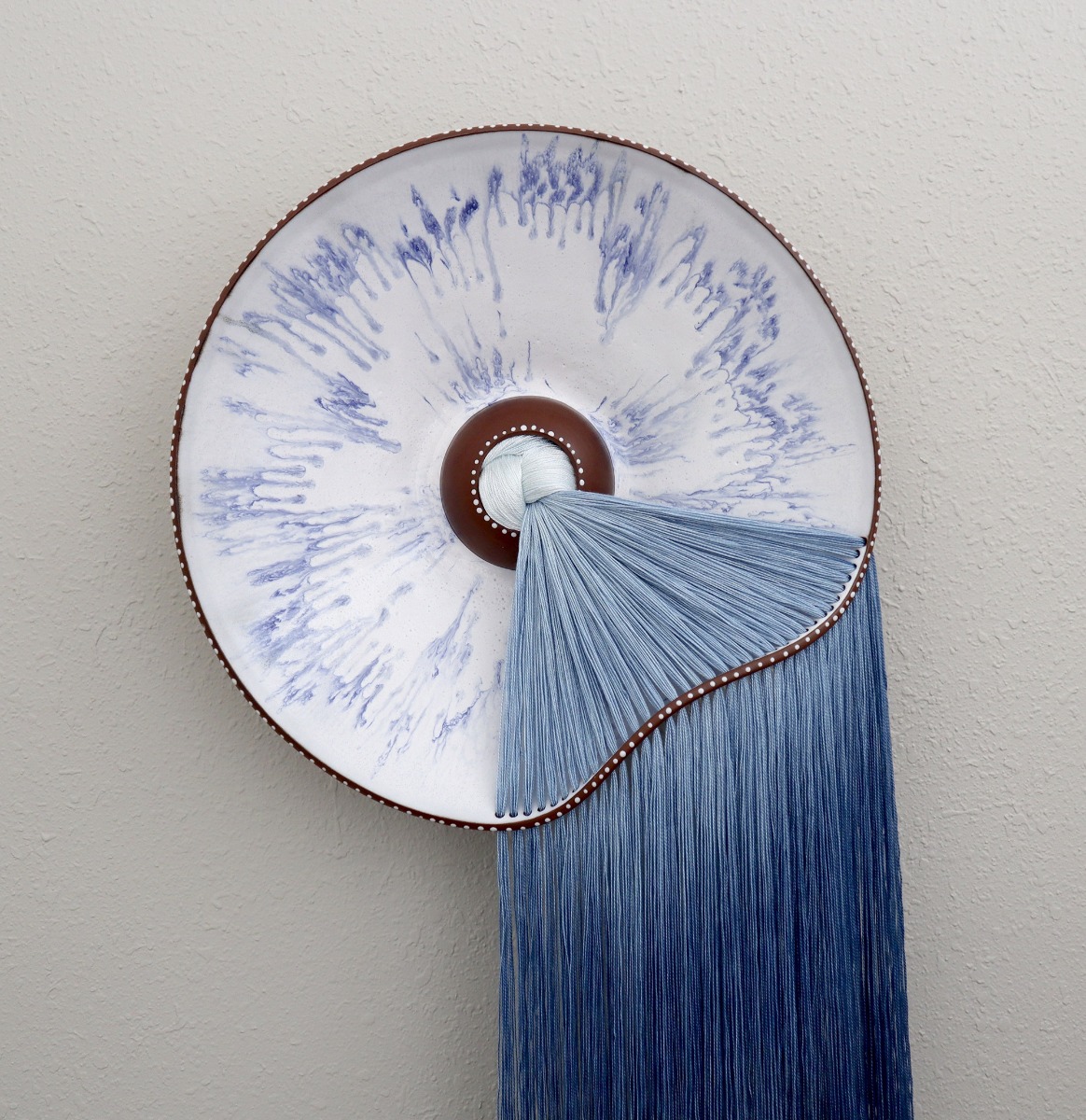
Navigating two different cultures may be challenging but that’s exactly what sets Nicole McLaughlin apart from other conceptual designers in her generation. She blends together ceramics and fiber, both of which are historically domestic crafts, to create stunning pieces that explore identity, heritage, and traditions.
While born and raised in Massachusetts, McLaughlin spent her early childhood years in her mother’s hometown of Cuernavaca, Mexico. She went on to study at the Kansas City Art Institute, where she received a Bachelor of Fine Arts. Since then, her work has been included in exhibits across the world and has fetched high prices from private collectors.
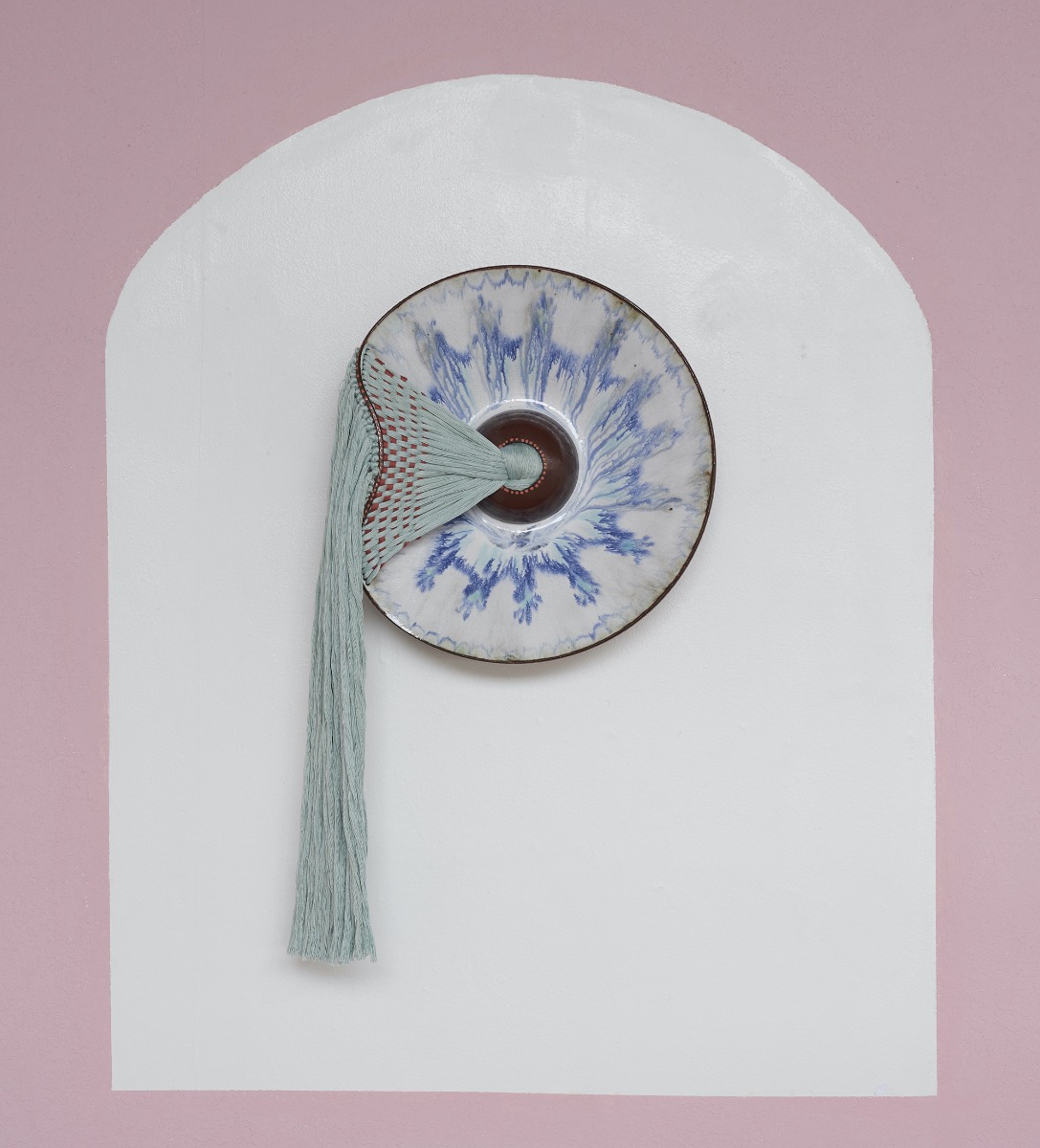
A first generation Mexican-American, McLaughlin uses her art to explore the similarities and differences between her two cultural identities.
“As a product of an American father and a Mexican mother, I am influenced by the conflicting expectations I have received as a woman within my two cultures,” she says in her artist statement. “My studio practice, a ritualization that celebrates and questions my cultural inheritance as a woman, depicts the dichotomies of my heritage through the combination of ceramics and fiber. With a manipulation of traditional processes and materials of domesticity, I begin to bridge the misunderstandings present between the maternal generations of my lineage.”
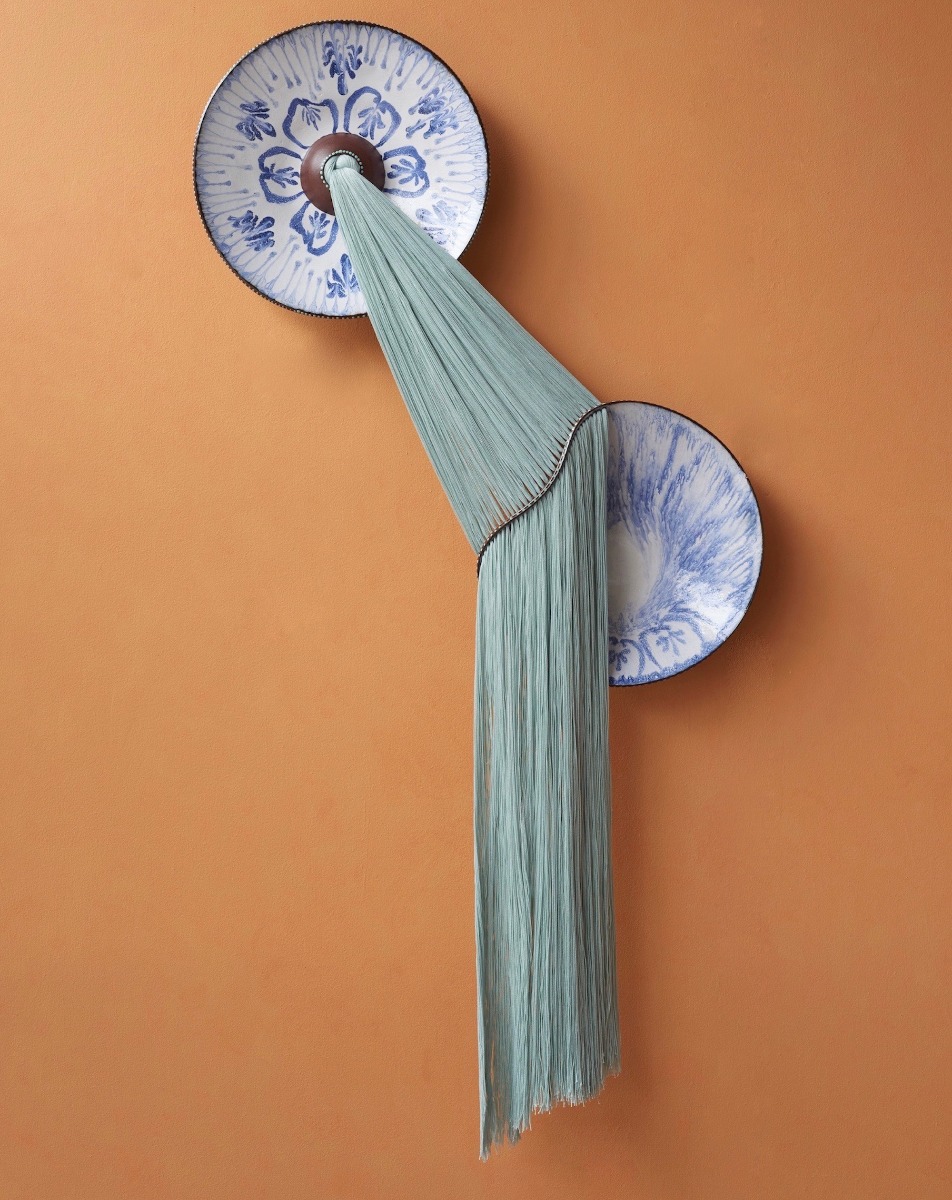
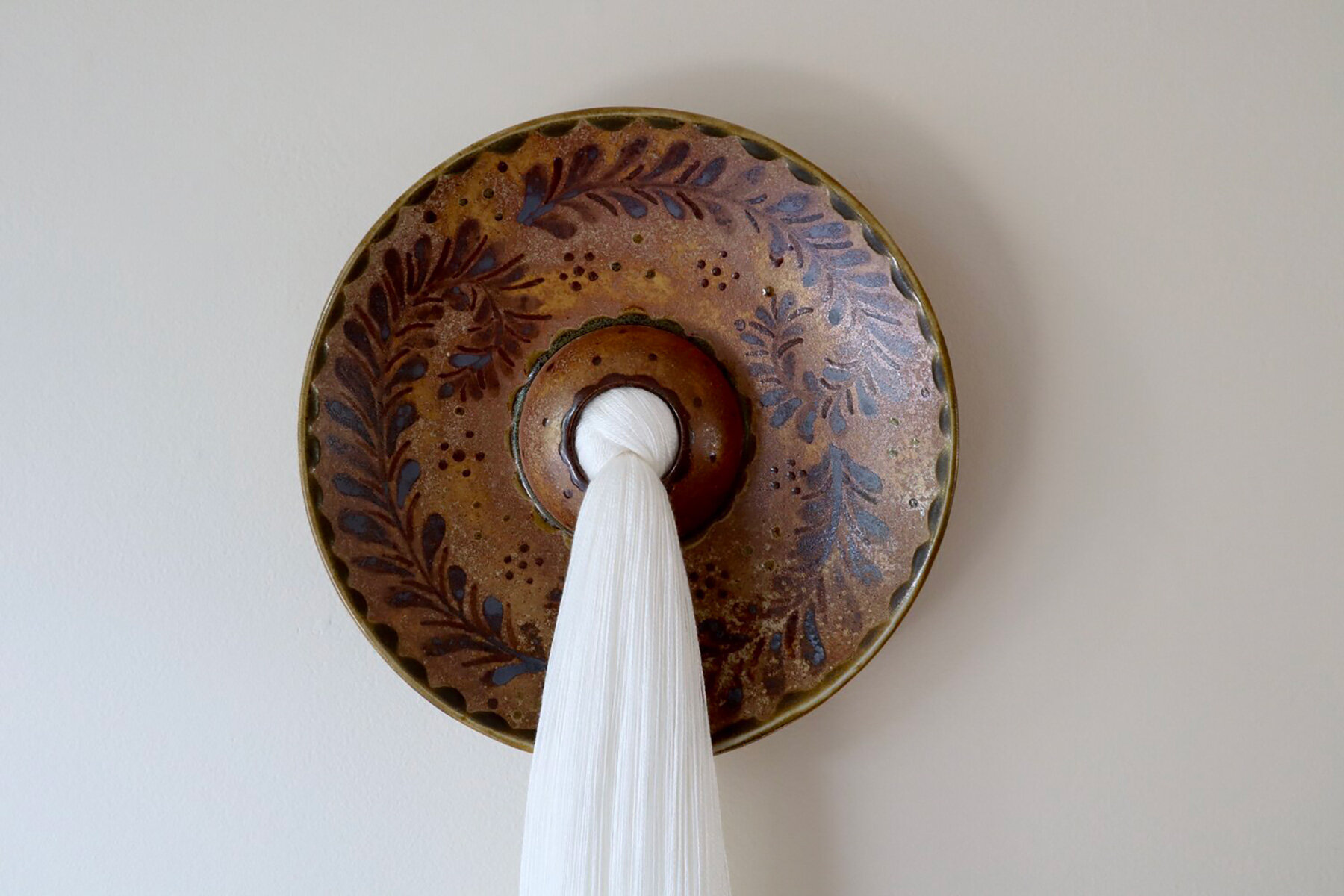
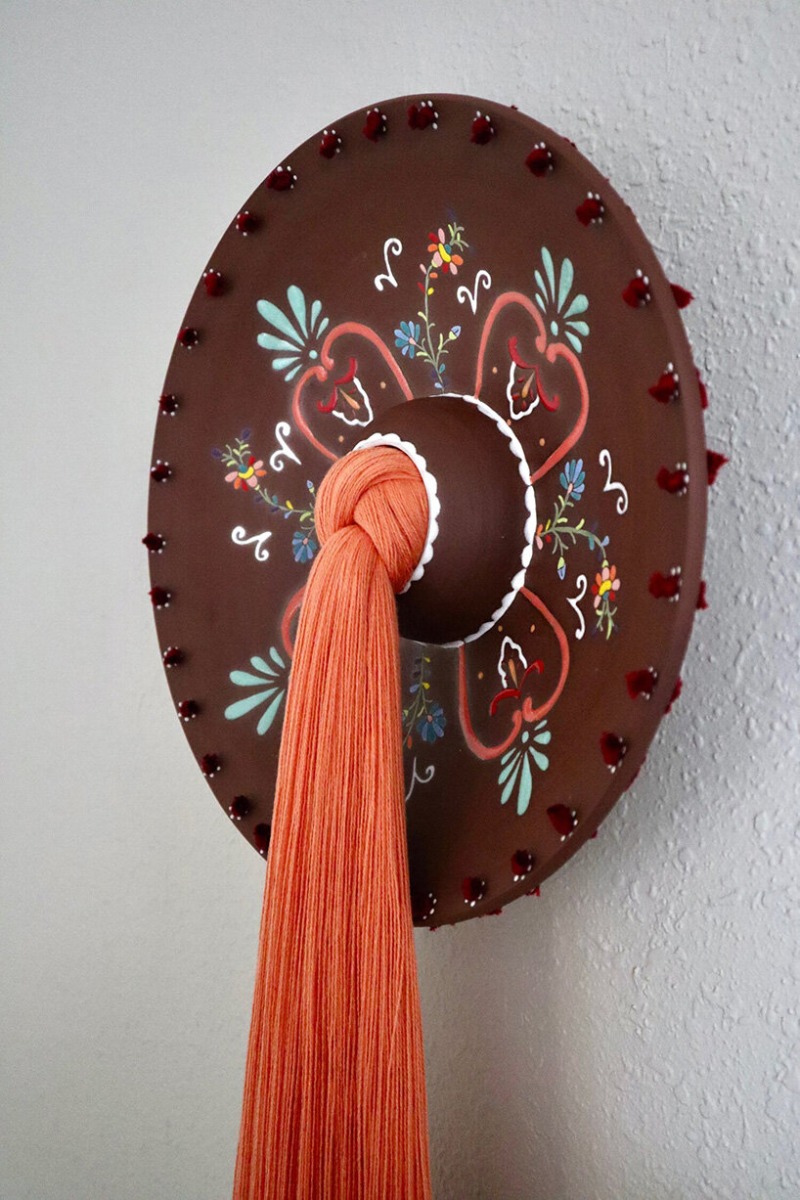
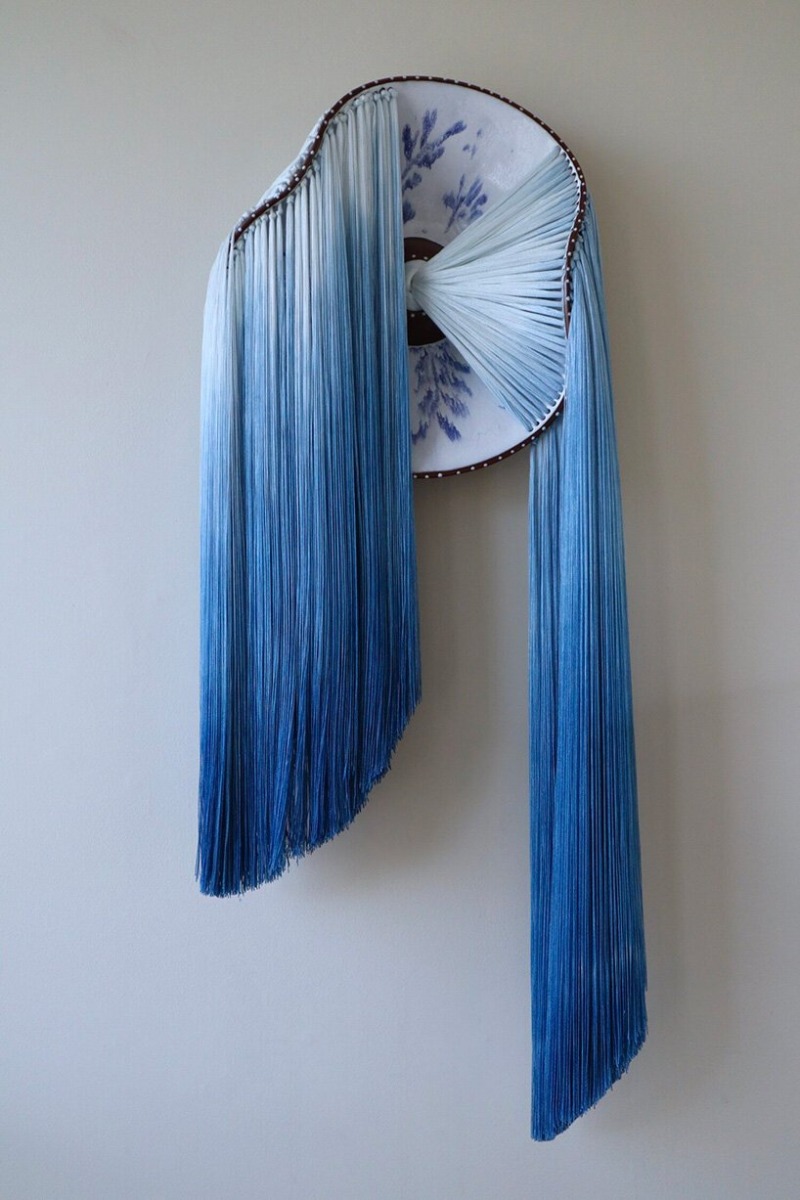
Using ceramics and fiber, McLaughlin creates dynamic sculptural installations that reflect the interwoven traditions and expectations that she has inherited as a Mexican-American woman. Apart from her background, the pieces also explore questions of memory and personal history, as well as ideas of femininity.
“In her mixed-media works, the artist contrasts the soft, pliable fibers with the fragility of the plates painted with blue-and-white motifs,” writes journalist Grace Ebert, who recently published a feature article on McLaughlin. “Dyed in subtle gradients and earth tones, the loose threats are woven through the sloping ceramic edges and knotted in the center.”
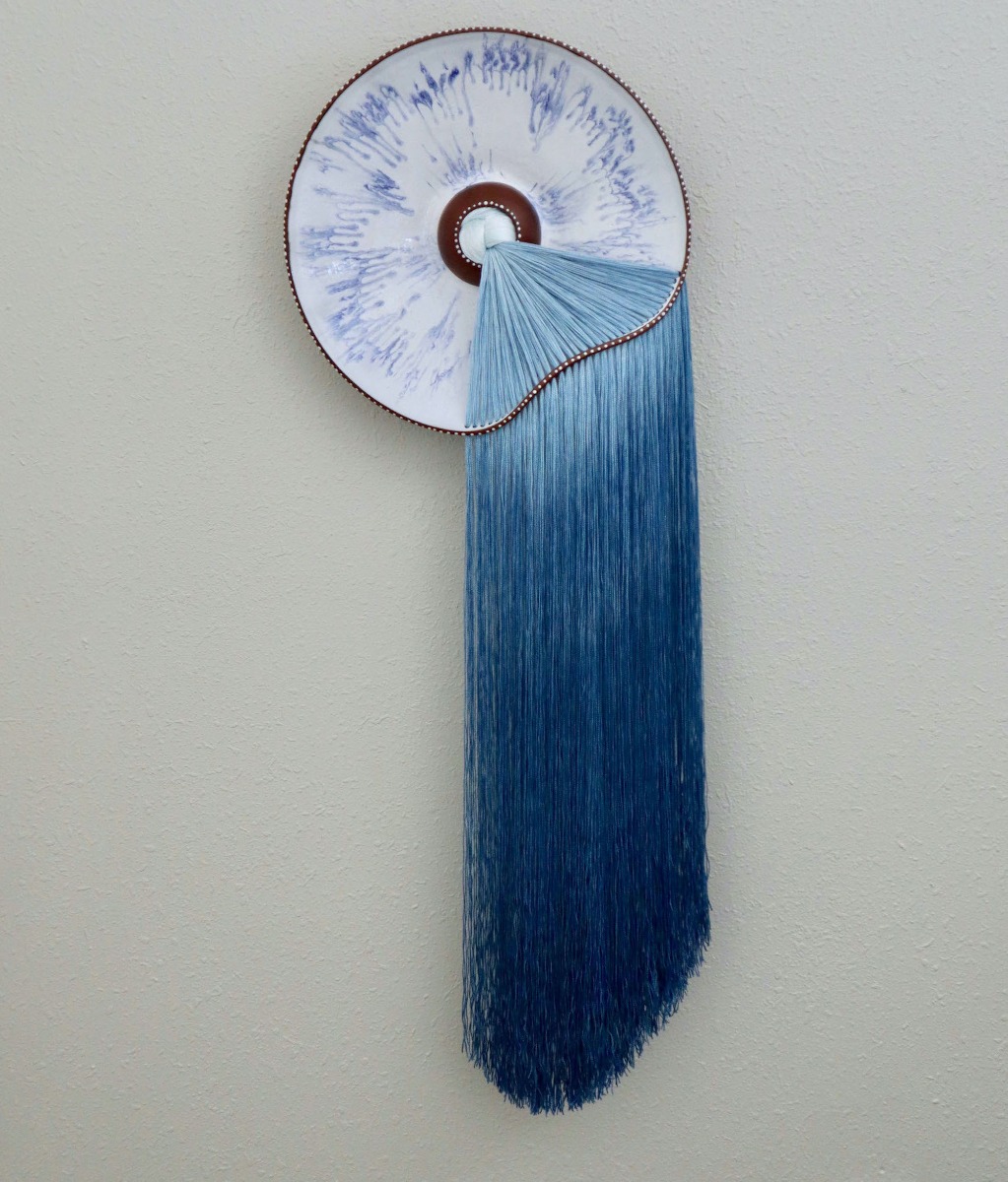
“[The vessels] serve as vehicles for fiber,” explains McLaughlin. “As the fiber flows from, weaves into, or frames the ceramic, it distorts the functionality but becomes a meaningful component as plate and cloth merge. The vessels contain an expression of femininity an an essence of personal and cultural history.”
McLaughlin’s interest in ceramics began in high school; however, only in college did she begin finding deeper and more significant meaning in the traditionally domestic media.
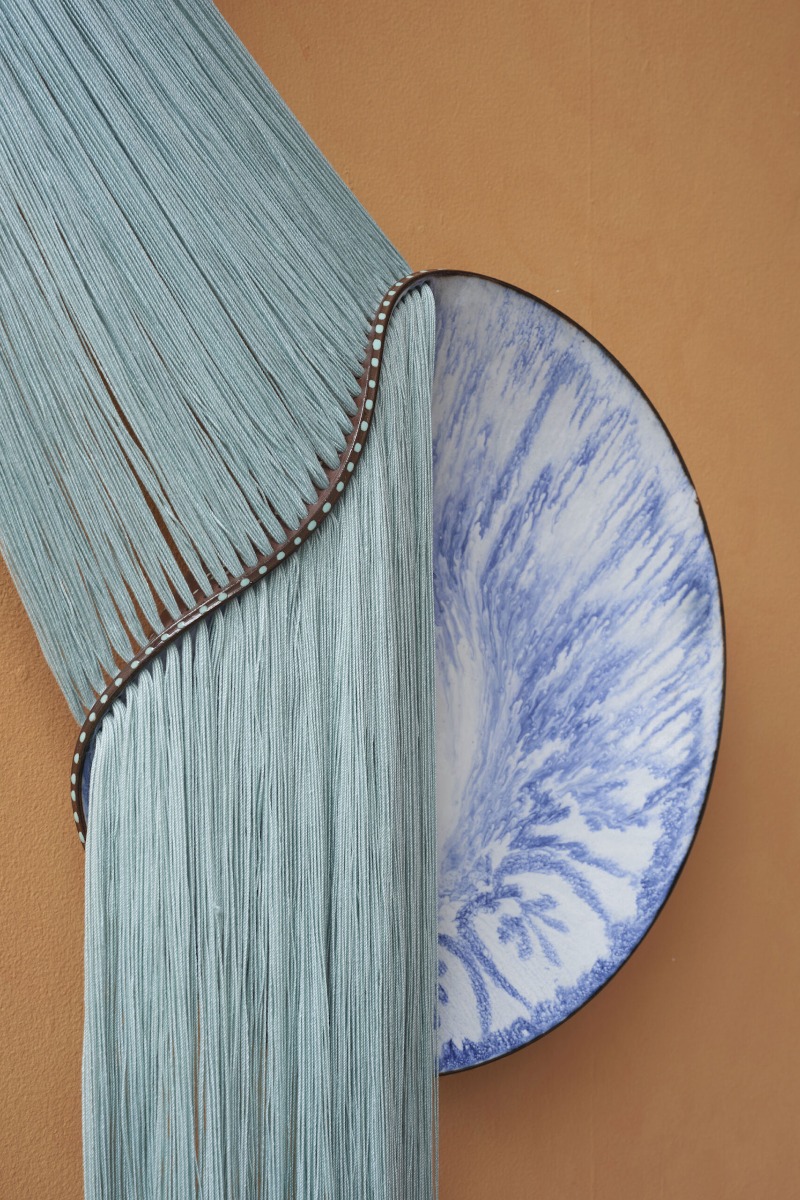
“I began thinking about my work in relation to my own personal history and experience,” she says in an interview. “Once I did that, the materials and processes I was using in my studio practice started to hold huge conceptual weight, which [brought] me to the incorporation of fiber. It really came out of this need to add another layer to my work. At the time, I was doing a lot of research into craft traditions in Mexico and the history of those techniques. Clay and fiber have since become a symbol of how my life was shaped by a collision of two cultures.”
Given the inclusion of thread and fibers, McLaughlin’s sculptural installations are far from functional. But the string adds movement to them, turning their rigid and static forms into dynamic pieces that audiences can’t look away from.
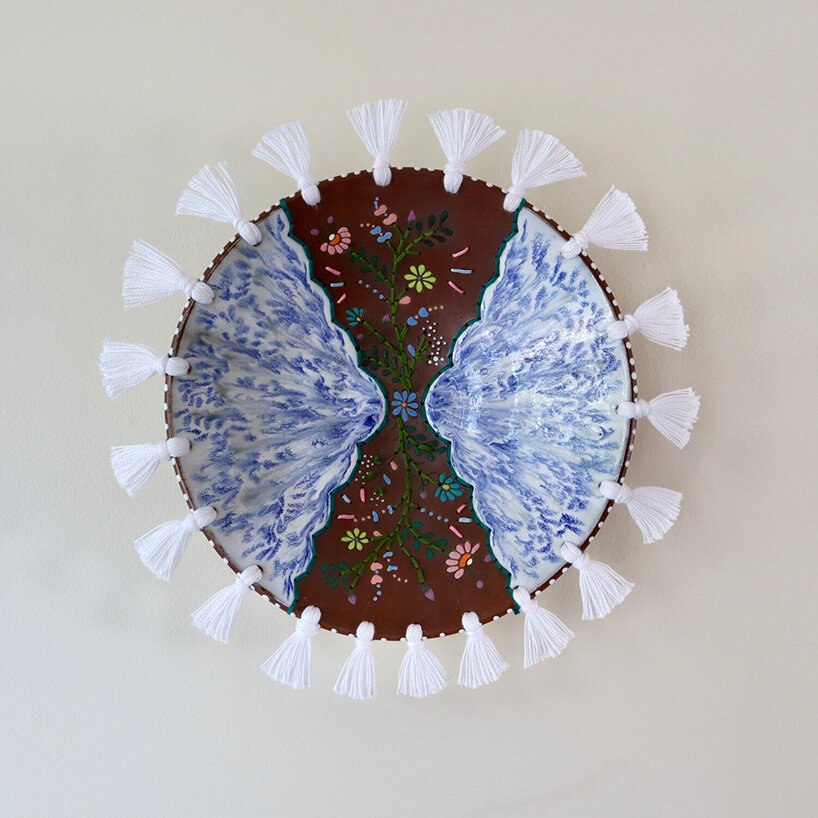
“In the end, my work serves as a way to explore and pay tribute to the traditions of womanhood in the Mexican culture – through a contemporary expression true to my own identity,” explains McLaughlin. “My life looks very different from what can be seen as traditional but that doesn’t mean I reject those values. My grandmother and mother have made huge efforts, in order for me to experience my culture and heritage. They, as the women who raised me, are the biggest influences on my creativity and drive. Although we may not see eye to eye at times, we are all grounded in our cultural roots.”
For mixed-race individuals, it’s often difficult to find the middle ground between their two cultures but McLaughlin believes that art is a medium that allows her to explore her Mexican-American heritage.
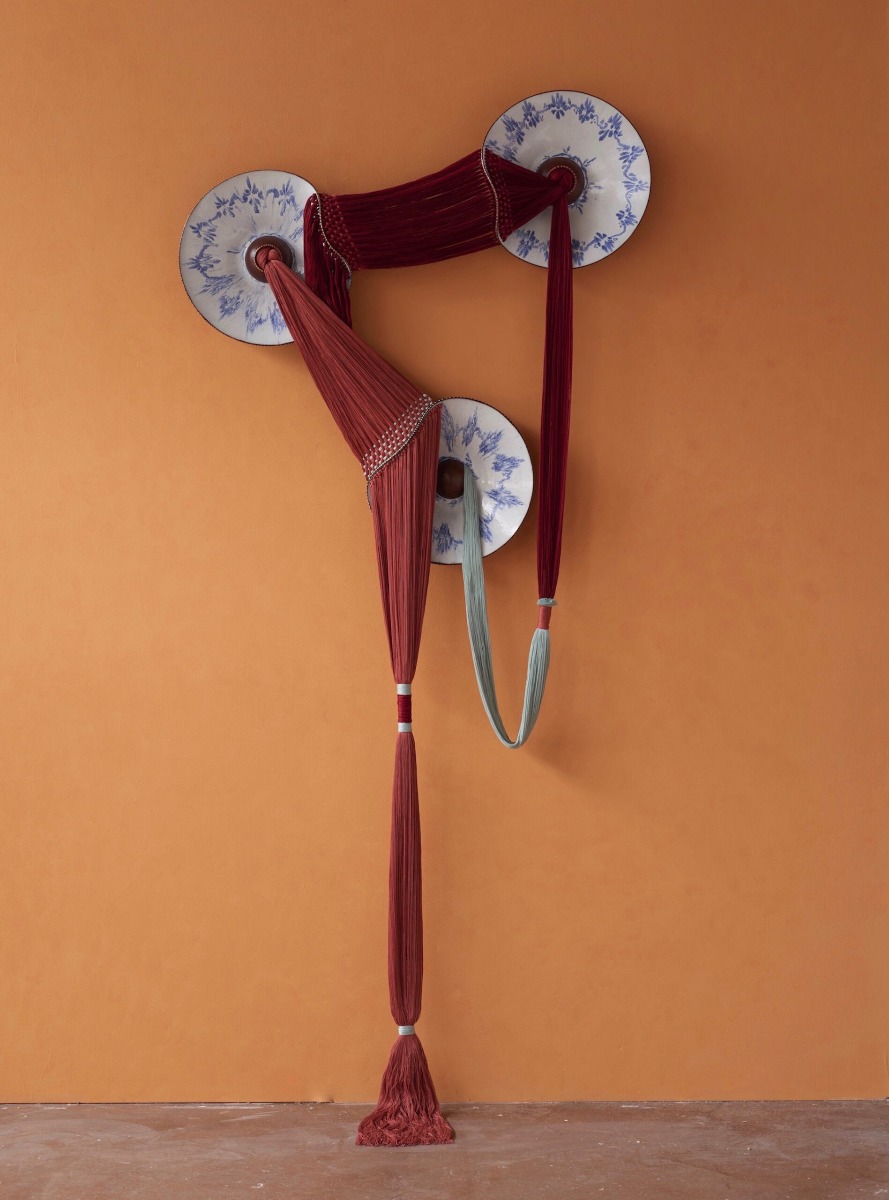
“I began making this work because I had many unanswered questions about myself, my identity, and my role as a woman within the two cultures I was raised,” says McLaughlin. “The work has really served as a way to self-discovery, a reflection of what values are important to me, and the traditions I hope to continue in my life. For that reason, I would describe myself and my work in the same way – as a collision of two cultures.”
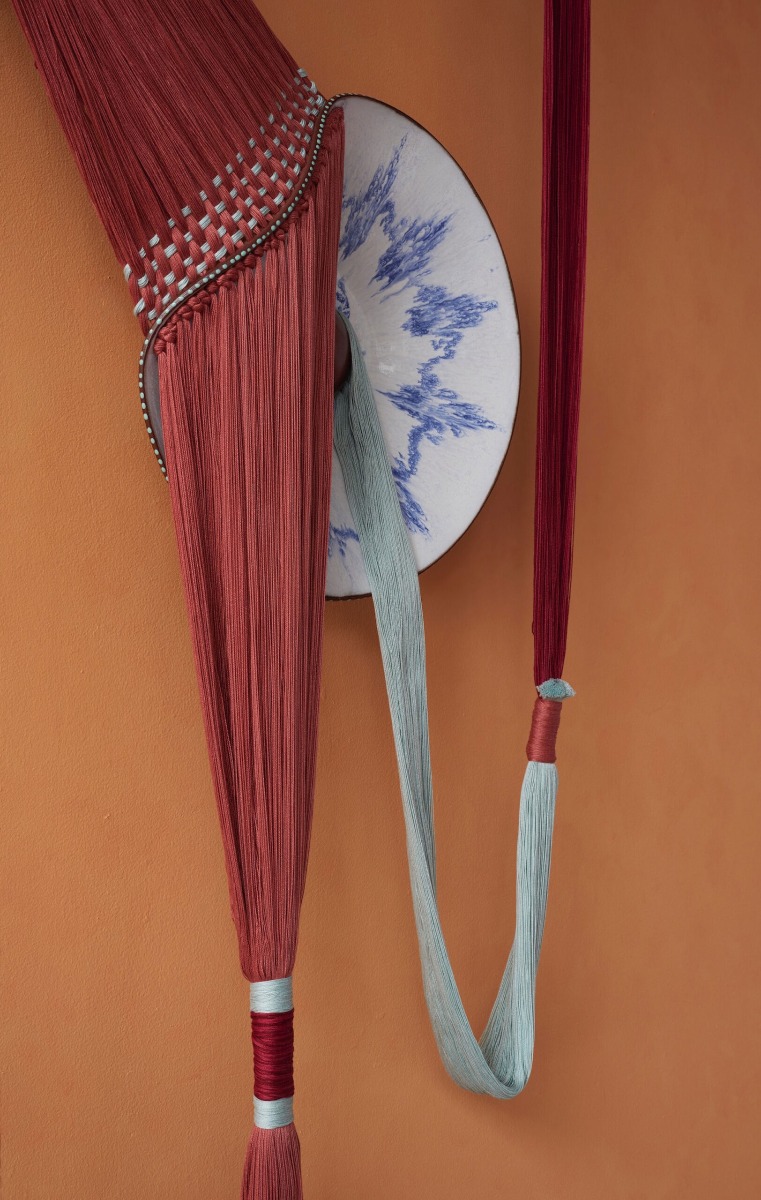
“Continuing the conversations woven into the tapestry of Mexican craft, I pick up the threads of those who came before and add my own voice,” she says in her artist statement. “Through an introspection of values, I begin to understand how clay and fiber directly relate to my lifestyle, cultures, traditions, and expectations. I simultaneously question and celebrate my identity as a woman across the generational and cultural boundaries in my life.”
Nicole McLaughlin currently serves as the Ceramics Teaching Fellow at Tabor Academy in Marion, Massachusetts. She continues to draw inspiration from her Mexican-American heritage to manipulate ceramics and fiber into beautiful sculptural installations.
Source: © Nicole McLaughlin
-END-