
Famous Artist
-
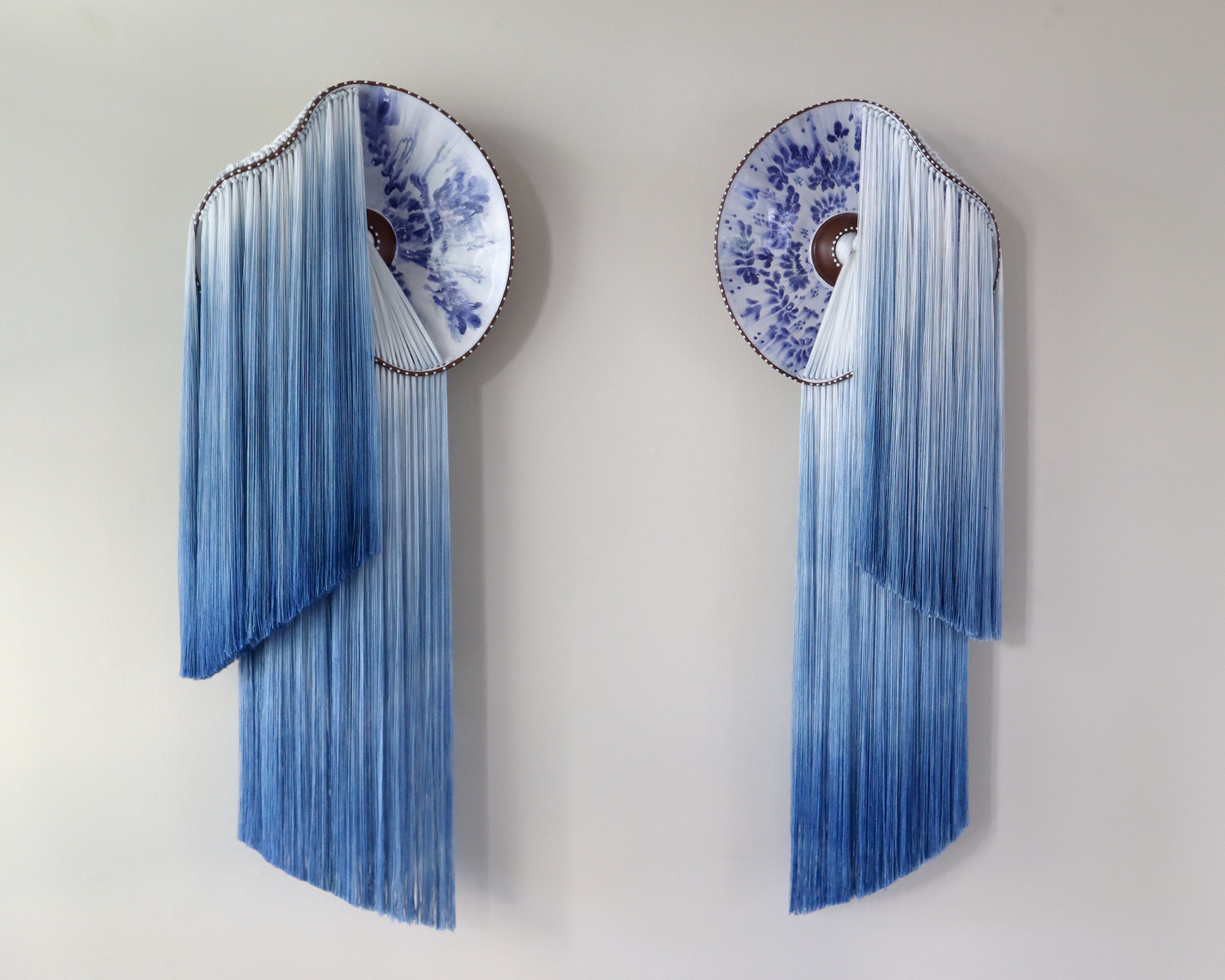
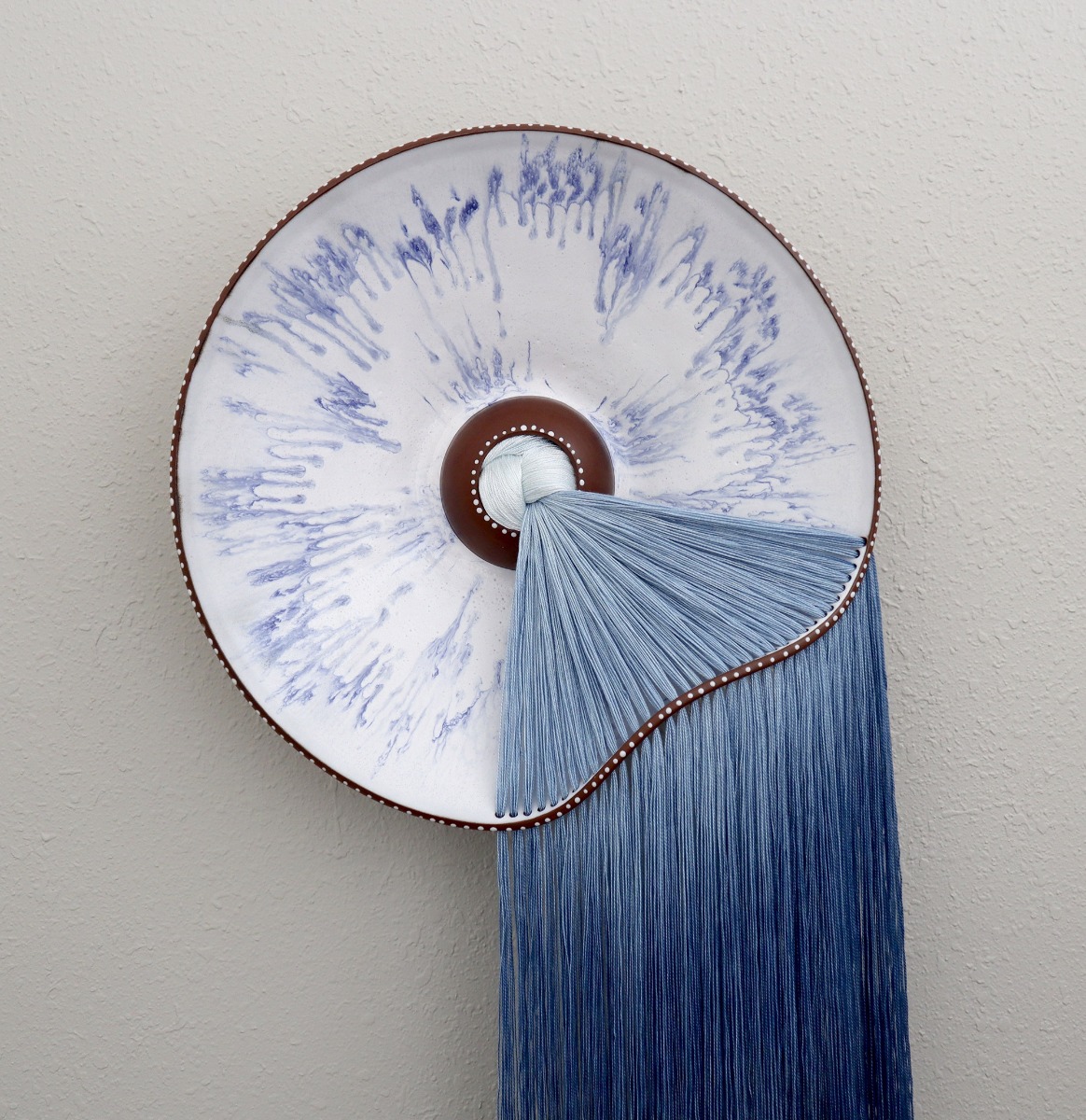
Navigating two different cultures may be challenging but that’s exactly what sets Nicole McLaughlin apart from other conceptual designers in her generation. She blends together ceramics and fiber, both of which are historically domestic crafts, to create stunning pieces that explore identity, heritage, and traditions.
While born and raised in Massachusetts, McLaughlin spent her early childhood years in her mother’s hometown of Cuernavaca, Mexico. She went on to study at the Kansas City Art Institute, where she received a Bachelor of Fine Arts. Since then, her work has been included in exhibits across the world and has fetched high prices from private collectors.
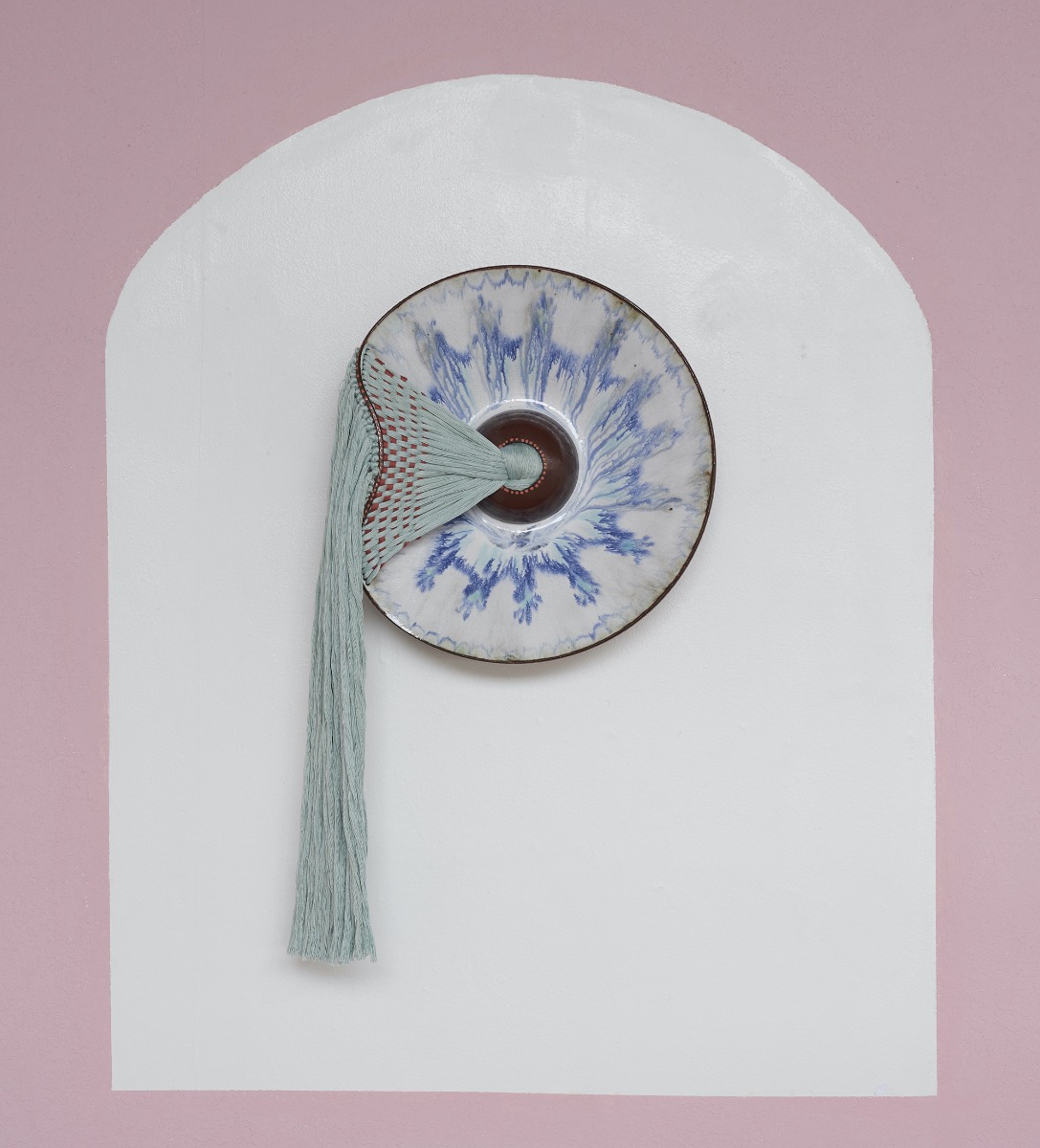
A first generation Mexican-American, McLaughlin uses her art to explore the similarities and differences between her two cultural identities.
“As a product of an American father and a Mexican mother, I am influenced by the conflicting expectations I have received as a woman within my two cultures,” she says in her artist statement. “My studio practice, a ritualization that celebrates and questions my cultural inheritance as a woman, depicts the dichotomies of my heritage through the combination of ceramics and fiber. With a manipulation of traditional processes and materials of domesticity, I begin to bridge the misunderstandings present between the maternal generations of my lineage.”
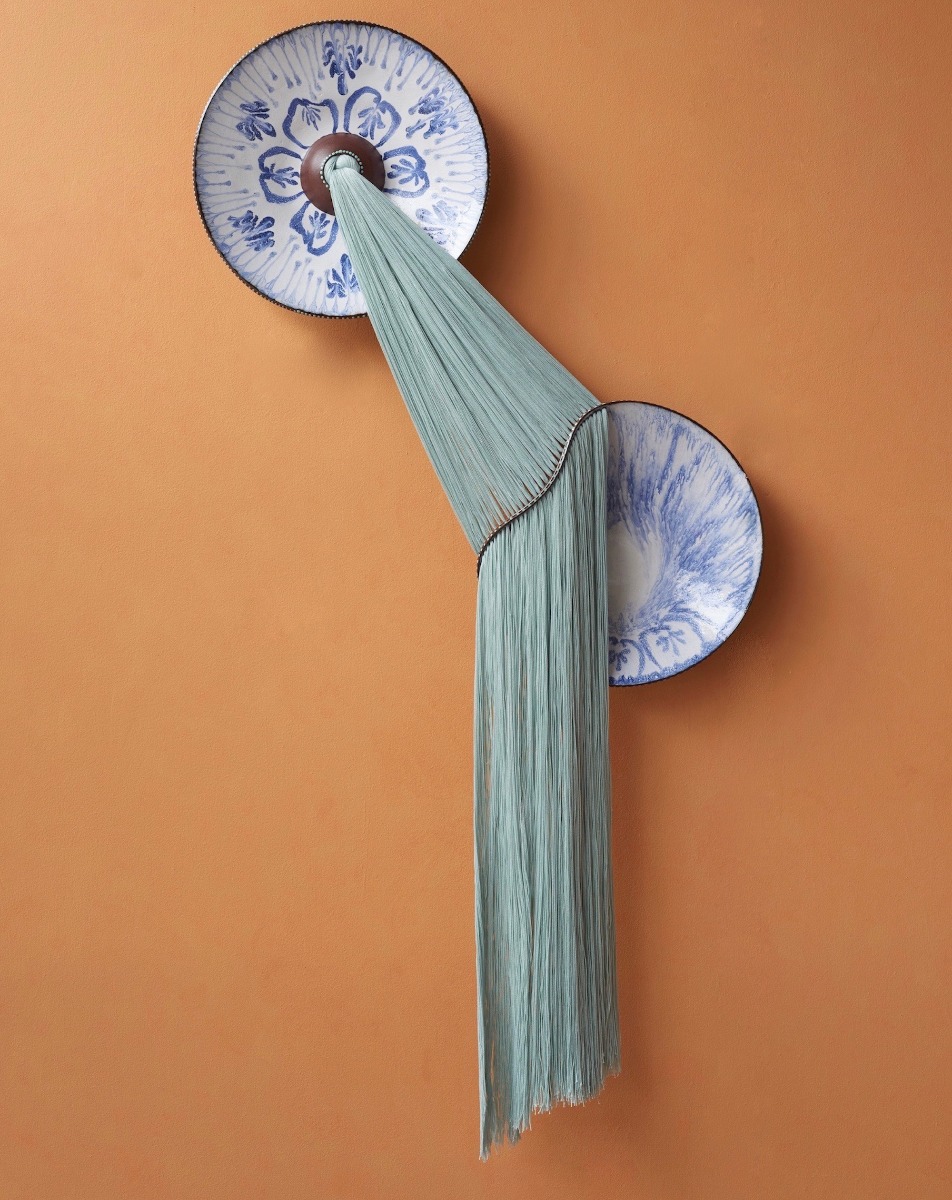
Using ceramics and fiber, McLaughlin creates dynamic sculptural installations that reflect the interwoven traditions and expectations that she has inherited as a Mexican-American woman. Apart from her background, the pieces also explore questions of memory and personal history, as well as ideas of femininity.
“In her mixed-media works, the artist contrasts the soft, pliable fibers with the fragility of the plates painted with blue-and-white motifs,” writes journalist Grace Ebert, who recently published a feature article on McLaughlin. “Dyed in subtle gradients and earth tones, the loose threats are woven through the sloping ceramic edges and knotted in the center.”
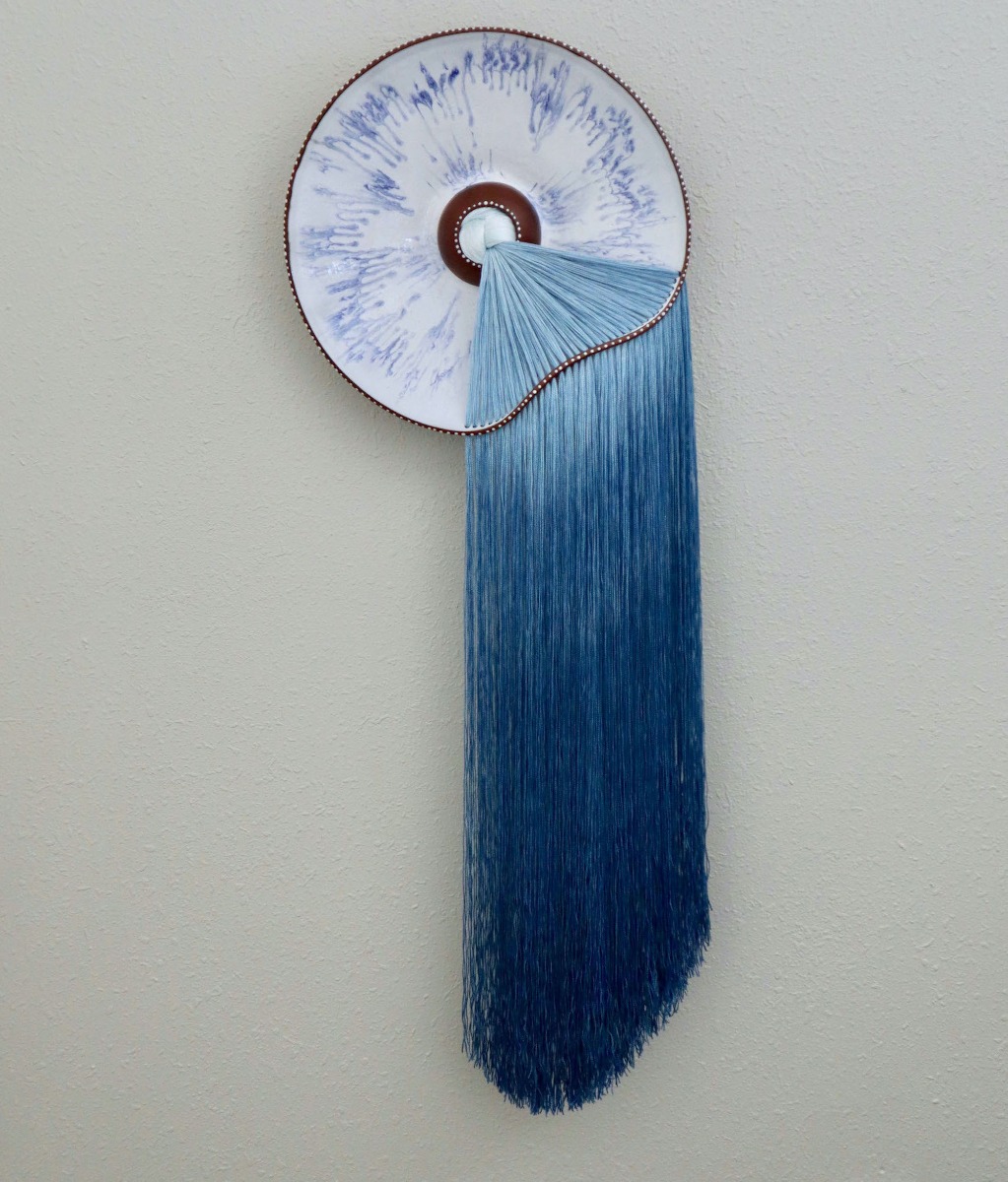
“[The vessels] serve as vehicles for fiber,” explains McLaughlin. “As the fiber flows from, weaves into, or frames the ceramic, it distorts the functionality but becomes a meaningful component as plate and cloth merge. The vessels contain an expression of femininity an an essence of personal and cultural history.”
McLaughlin’s interest in ceramics began in high school; however, only in college did she begin finding deeper and more significant meaning in the traditionally domestic media.
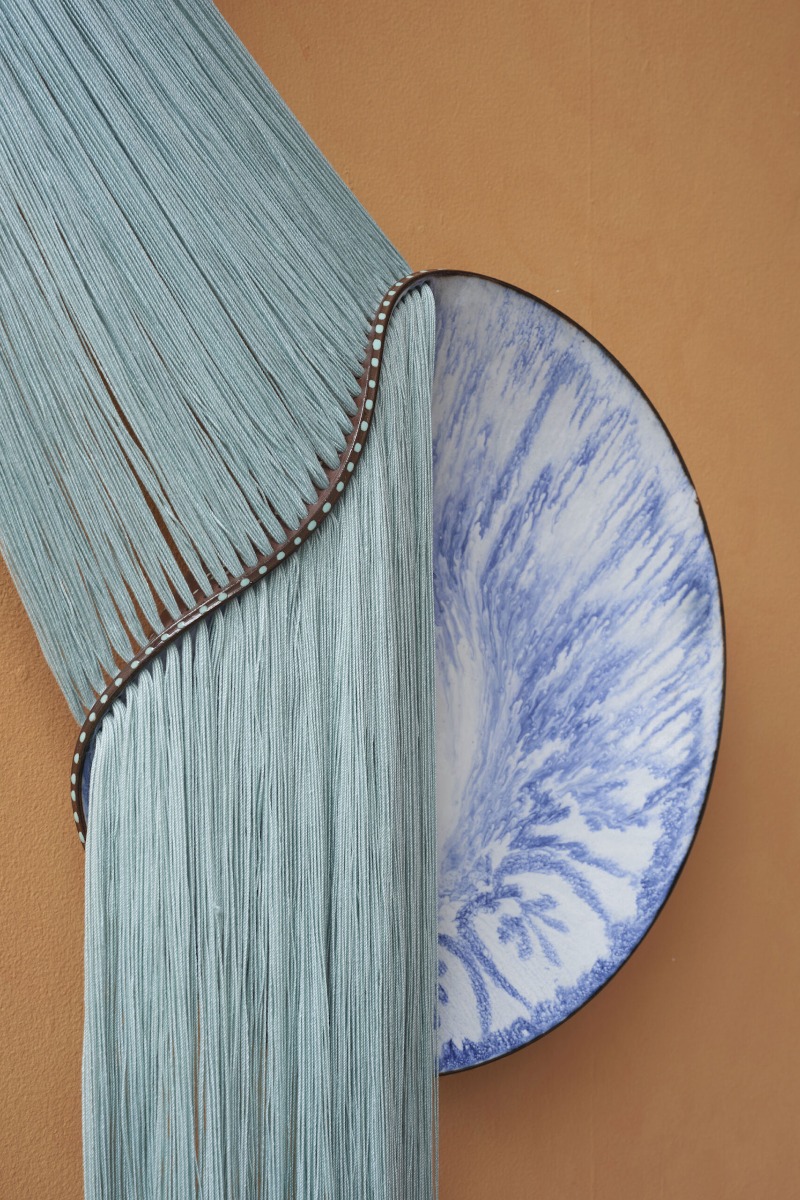
“I began thinking about my work in relation to my own personal history and experience,” she says in an interview. “Once I did that, the materials and processes I was using in my studio practice started to hold huge conceptual weight, which [brought] me to the incorporation of fiber. It really came out of this need to add another layer to my work. At the time, I was doing a lot of research into craft traditions in Mexico and the history of those techniques. Clay and fiber have since become a symbol of how my life was shaped by a collision of two cultures.”
Given the inclusion of thread and fibers, McLaughlin’s sculptural installations are far from functional. But the string adds movement to them, turning their rigid and static forms into dynamic pieces that audiences can’t look away from.
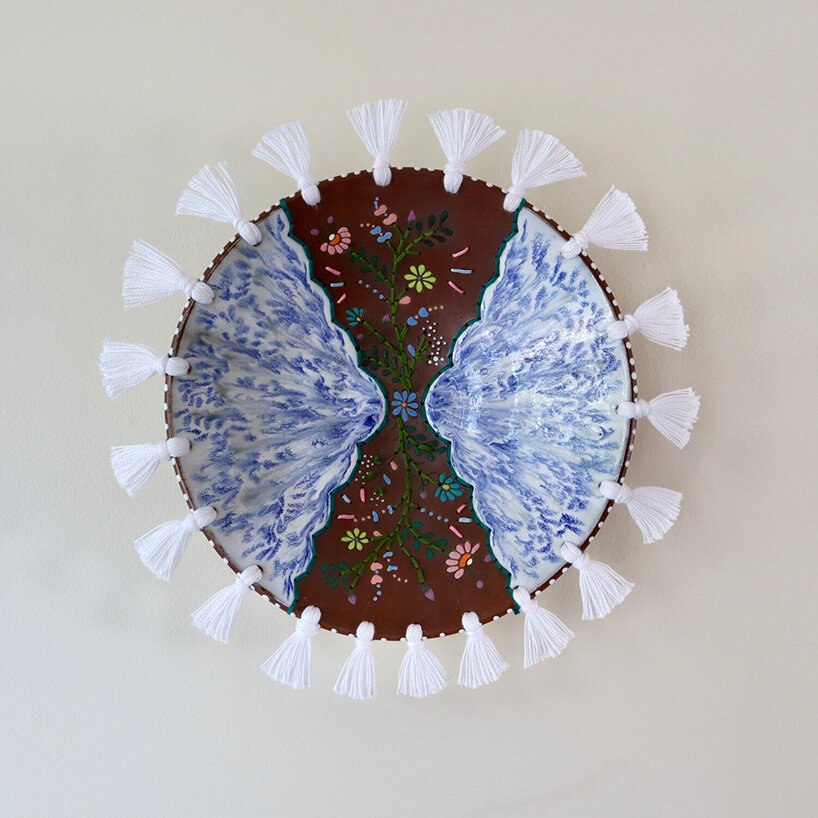
“In the end, my work serves as a way to explore and pay tribute to the traditions of womanhood in the Mexican culture – through a contemporary expression true to my own identity,” explains McLaughlin. “My life looks very different from what can be seen as traditional but that doesn’t mean I reject those values. My grandmother and mother have made huge efforts, in order for me to experience my culture and heritage. They, as the women who raised me, are the biggest influences on my creativity and drive. Although we may not see eye to eye at times, we are all grounded in our cultural roots.”
For mixed-race individuals, it’s often difficult to find the middle ground between their two cultures but McLaughlin believes that art is a medium that allows her to explore her Mexican-American heritage.
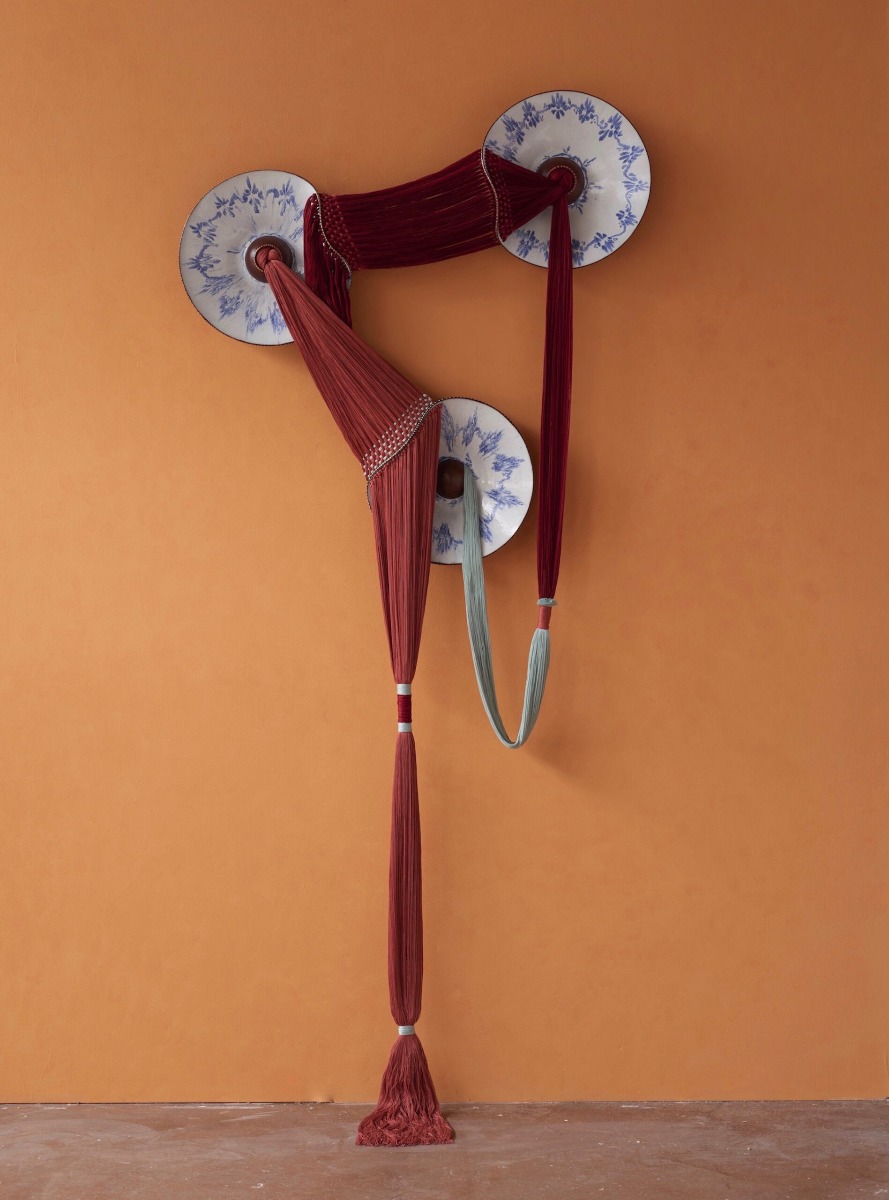
“I began making this work because I had many unanswered questions about myself, my identity, and my role as a woman within the two cultures I was raised,” says McLaughlin. “The work has really served as a way to self-discovery, a reflection of what values are important to me, and the traditions I hope to continue in my life. For that reason, I would describe myself and my work in the same way – as a collision of two cultures.”
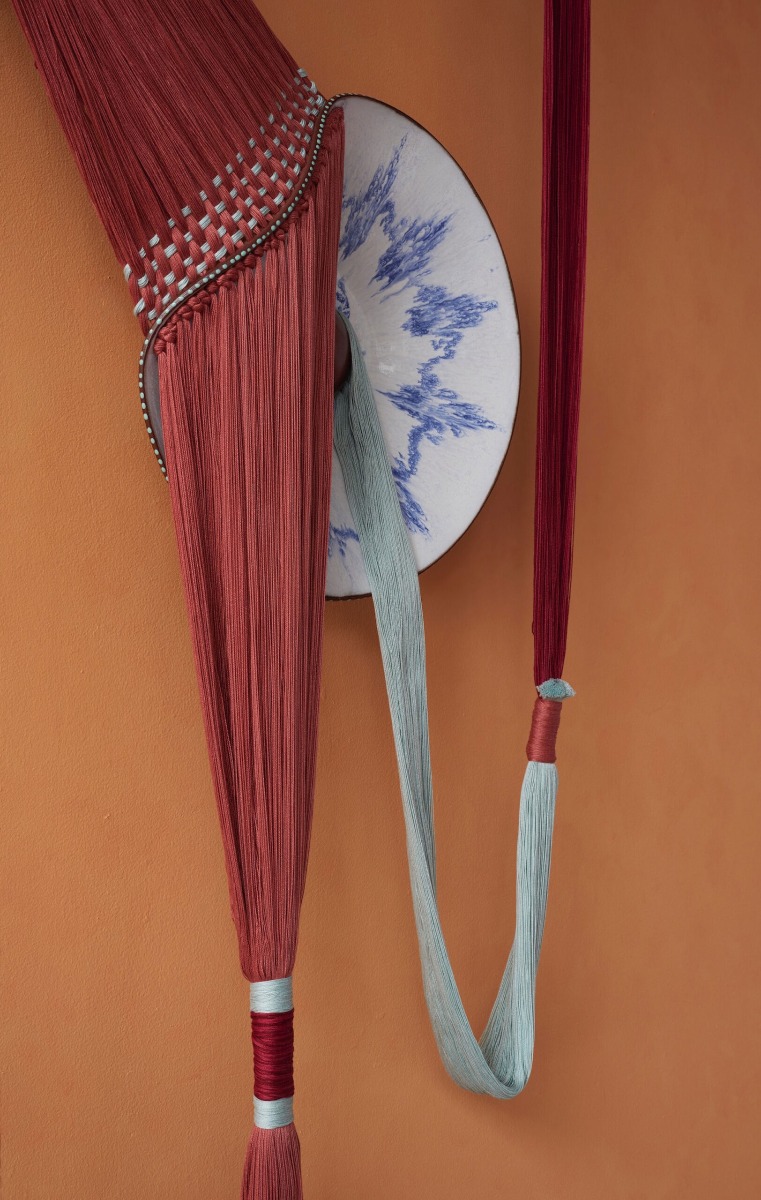
“Continuing the conversations woven into the tapestry of Mexican craft, I pick up the threads of those who came before and add my own voice,” she says in her artist statement. “Through an introspection of values, I begin to understand how clay and fiber directly relate to my lifestyle, cultures, traditions, and expectations. I simultaneously question and celebrate my identity as a woman across the generational and cultural boundaries in my life.”
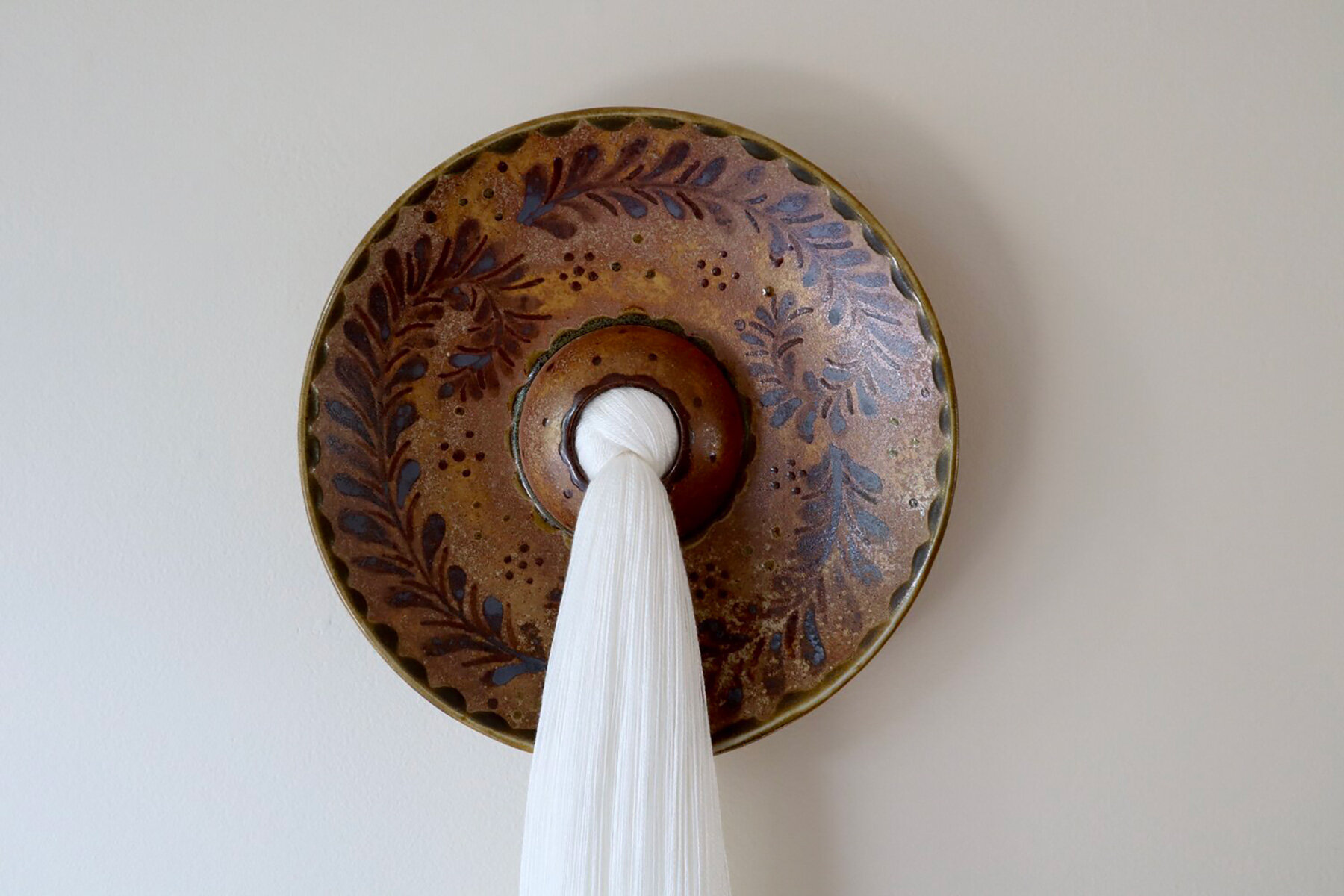
Nicole McLaughlin currently serves as the Ceramics Teaching Fellow at Tabor Academy in Marion, Massachusetts. She continues to draw inspiration from her Mexican-American heritage to manipulate ceramics and fiber into beautiful sculptural installations.
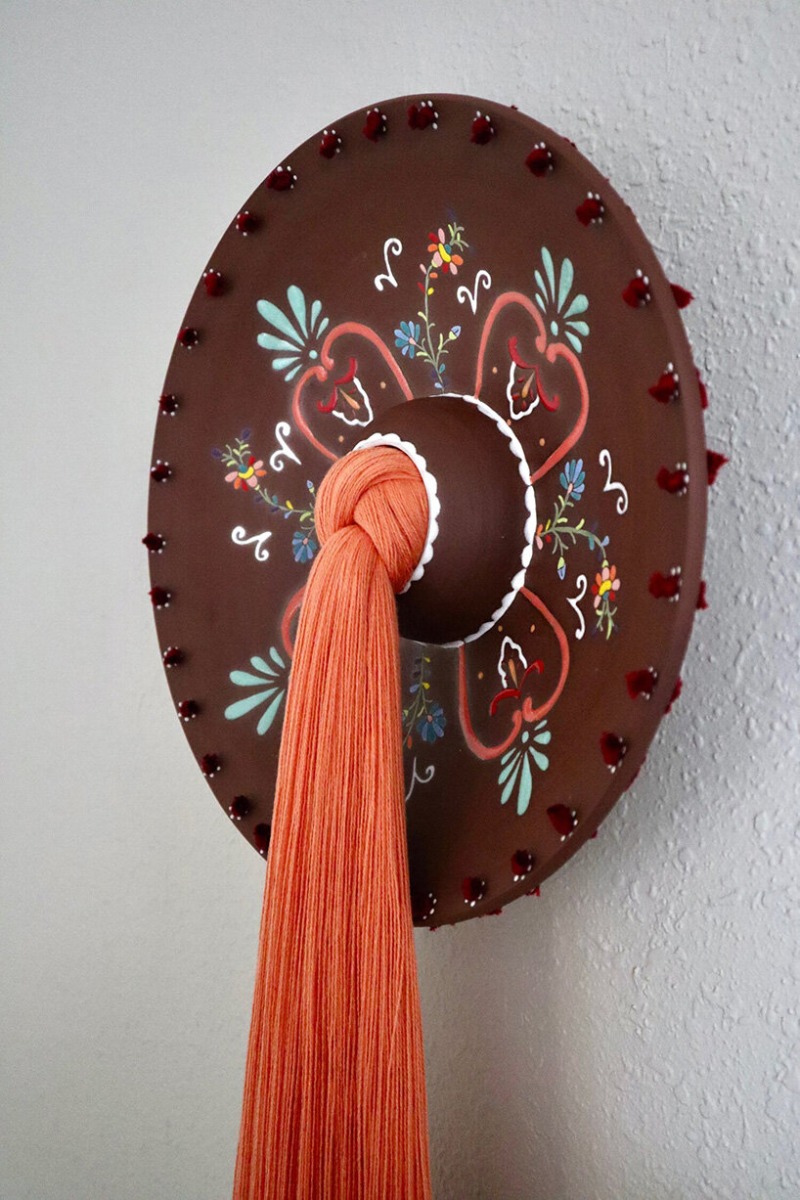
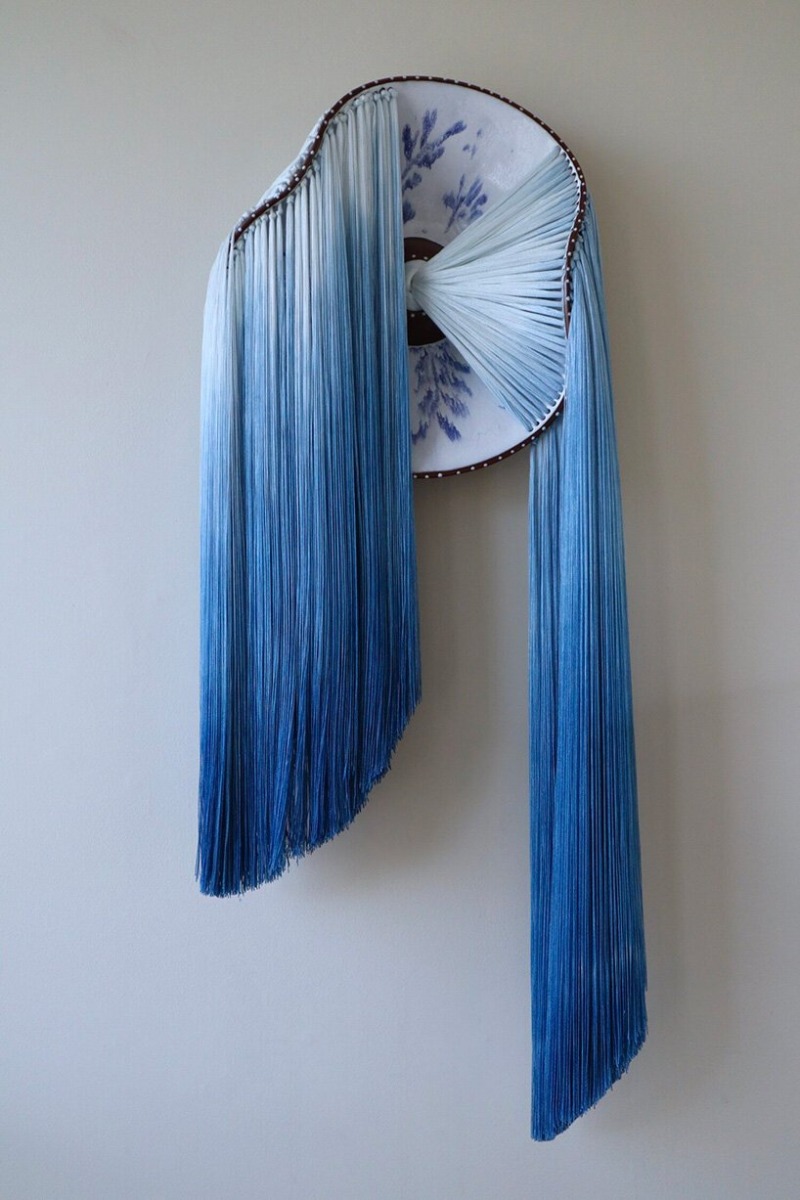
Source: © Nicole McLaughlin
-END-
-
Netherlandish Jan Maarten Voskuil
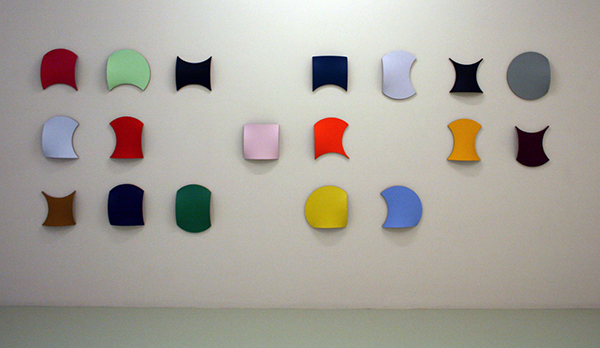
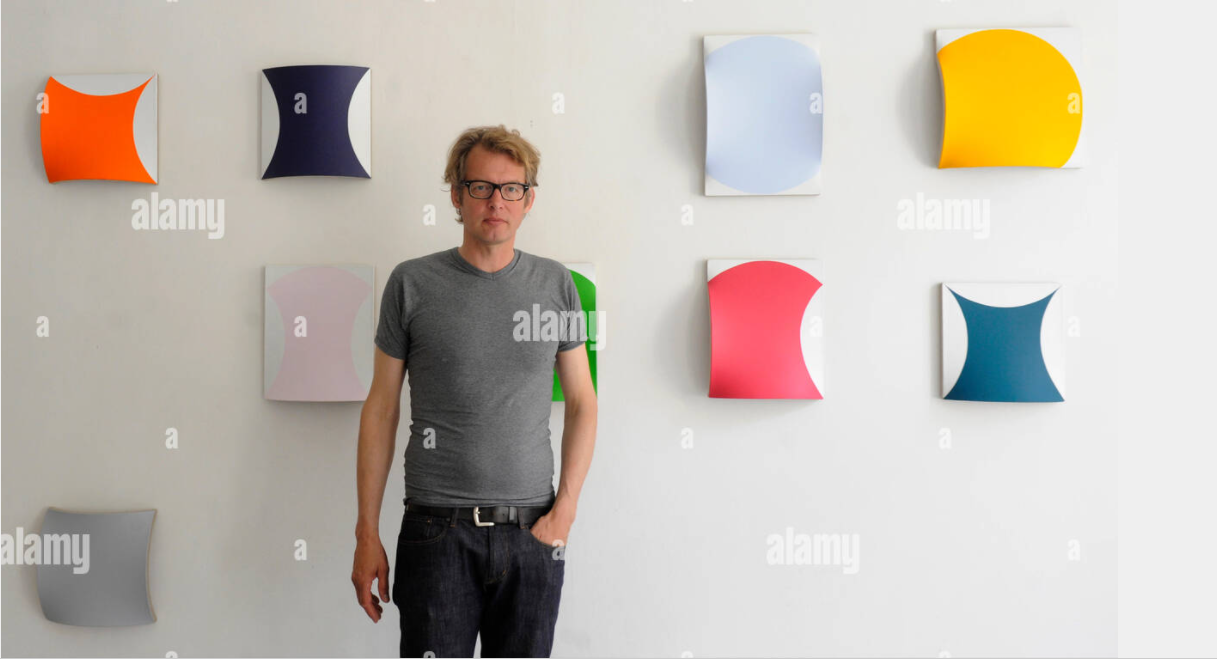
There are thousands of contemporary artists across the globe, but none are as influential as Jan Maarten Voskuil. Born in Arnhem in 1964, he graduated from the Rijks University of Groningen in the Netherlands and went on to study at the prestigious Ateliers Arnhem, which – at the time – was the postgraduate program of the Art Academy of Arnhem.
Since then, his work has been featured in a wide variety of exhibits, including at the Peter Blake Gallery in Laguna Beach, the Dr. J Art Projects in Berlin, the Gallery Rob de Vries in Haarlem, and the Pentimenti Gallery in Philadelphia.
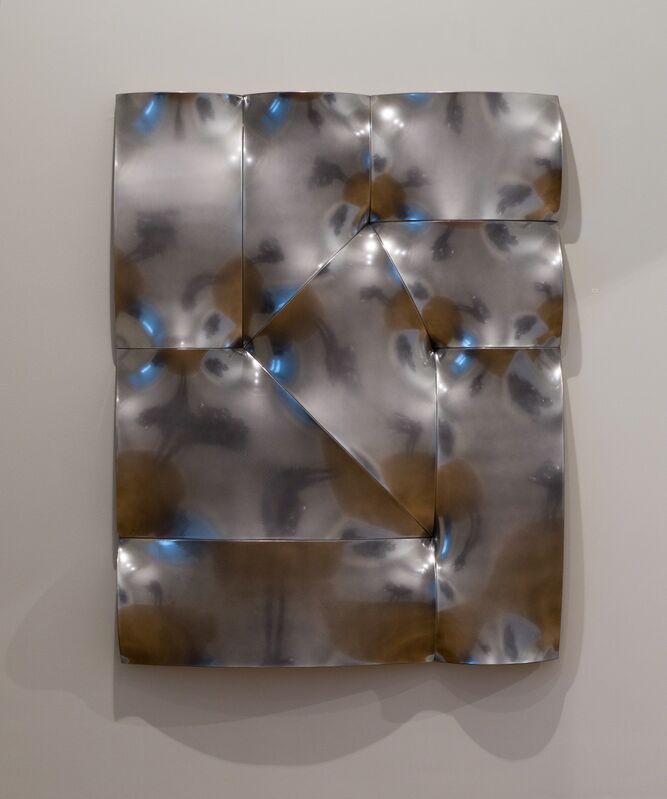
Many regard Voskuil as a contemporary artist; however, he considers himself more like a “spatial painter,” due to his use of paint, stretchers, and linen in his work. The combination of these three materials results in beautiful contemporary art installations that are simultaneously both sculpture and architecture.
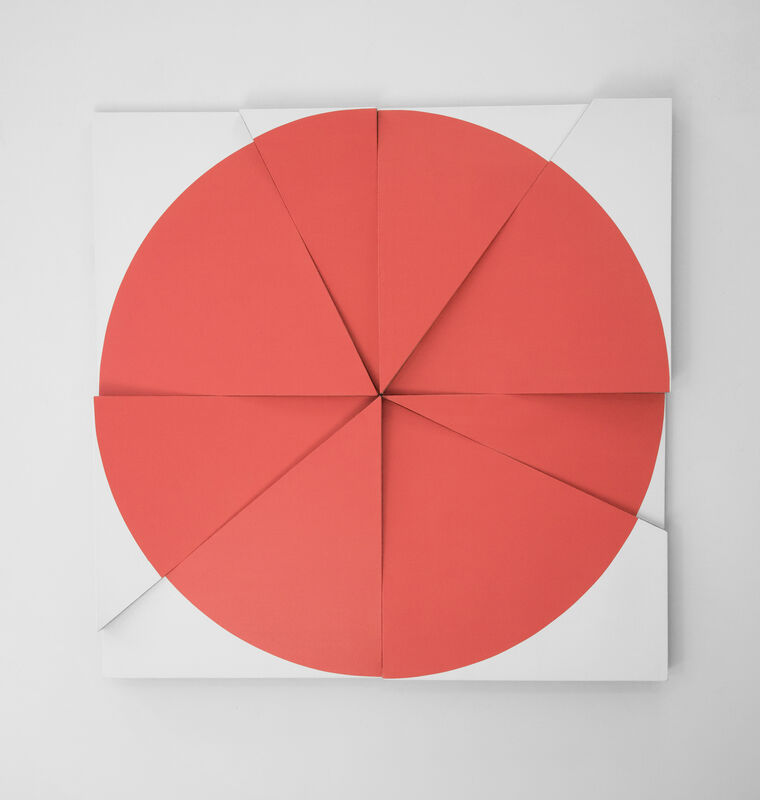
“Voskuil’s paintings are constructed from multiple panels of different shapes and dimensions unified into a whole,” reads an article from the website Dutch Culture USA. “His frames are always three-dimensional and his surfaces are never quite flat. The individual components of the works are some assortment of convex, concave, beveled, and arched, with the edges of the works lifting up, down, and away from the wall.”
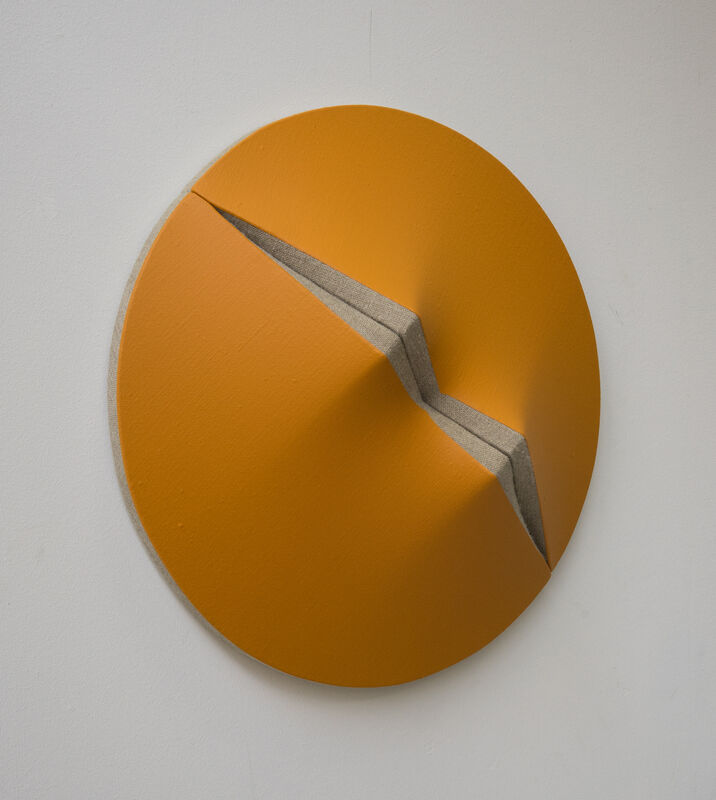
It added, “Despite the many disparate elements, the individual parts of the paintings come to fit together in seemingly perfect congruity. As such, his multipart works require an exacting process of preliminary design that is then followed from building the frame to finalizing the complete work.”
While Voskuil is best known for his incredibly vast portfolio of contemporary art installations, his most notable works include “Broken Sea Blue (2015),” “Modern Times are Fading Away (2019),” and “Roundtrip Dirty Pink (2020).” Most of these have fetched thousands of dollars from galleries and private collectors alike.
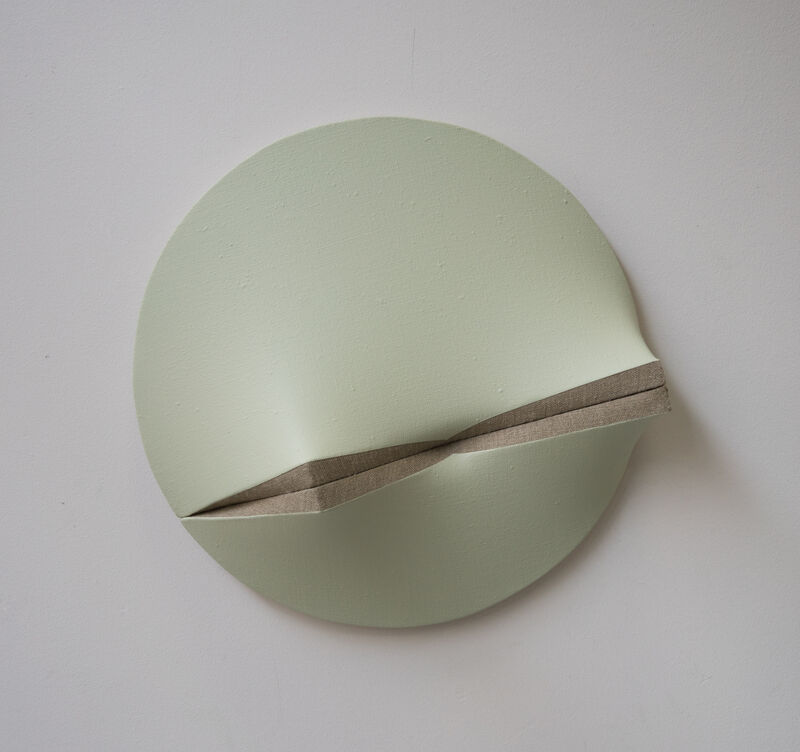
Besides the eye-catching beauty of his 3D Wall Art, many are also fascinated by how Voskuil is able to manipulate unorthodox materials. He makes it seem effortless, even though it’s far from that.
“[The] most challenging is to get rid of the structure of the linen,” said Voskuil. “This requires a lot of layers of primer and sanding. As industrial as it looks, it actually intensifies the craft. Everything I aimed for in my work, so far, comes together in the spraying; from the initial wish to avoid the handwriting and individualism of postmodernism to the merging of design, painting, and space.”
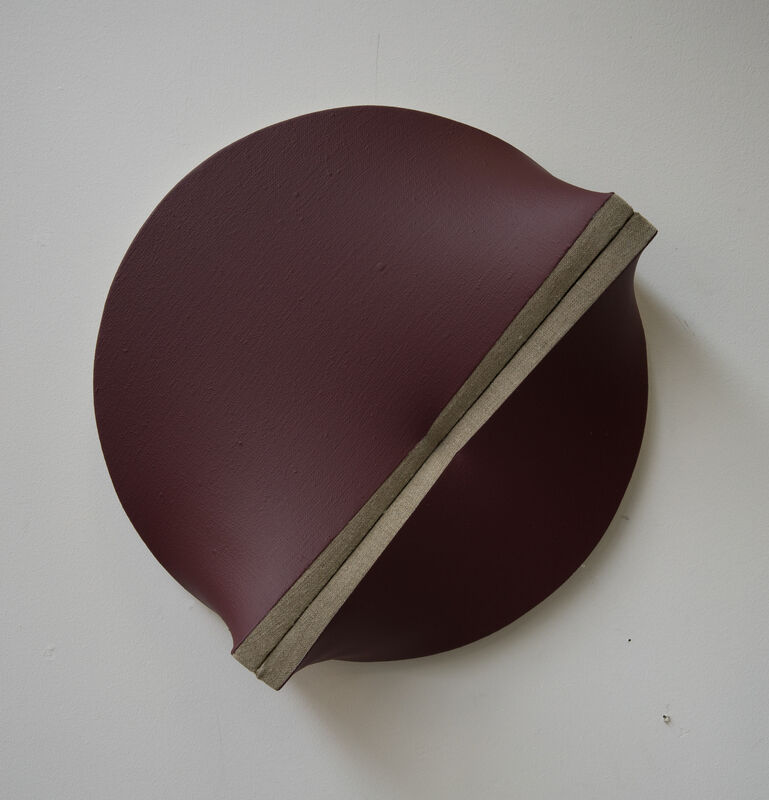
Because of this process, most – if not, all – of Voskuil’s projects are time-consuming and strenuous. He embraces this, though.
“If there are no challenges, there is no fun,” explained Voskuil. “The whole idea of being able to continue an artistic production is being able to find challenges. If there is no problem, you have to create one. The magnitude of it doesn’t matter, it’s just about locating and resolving it.”
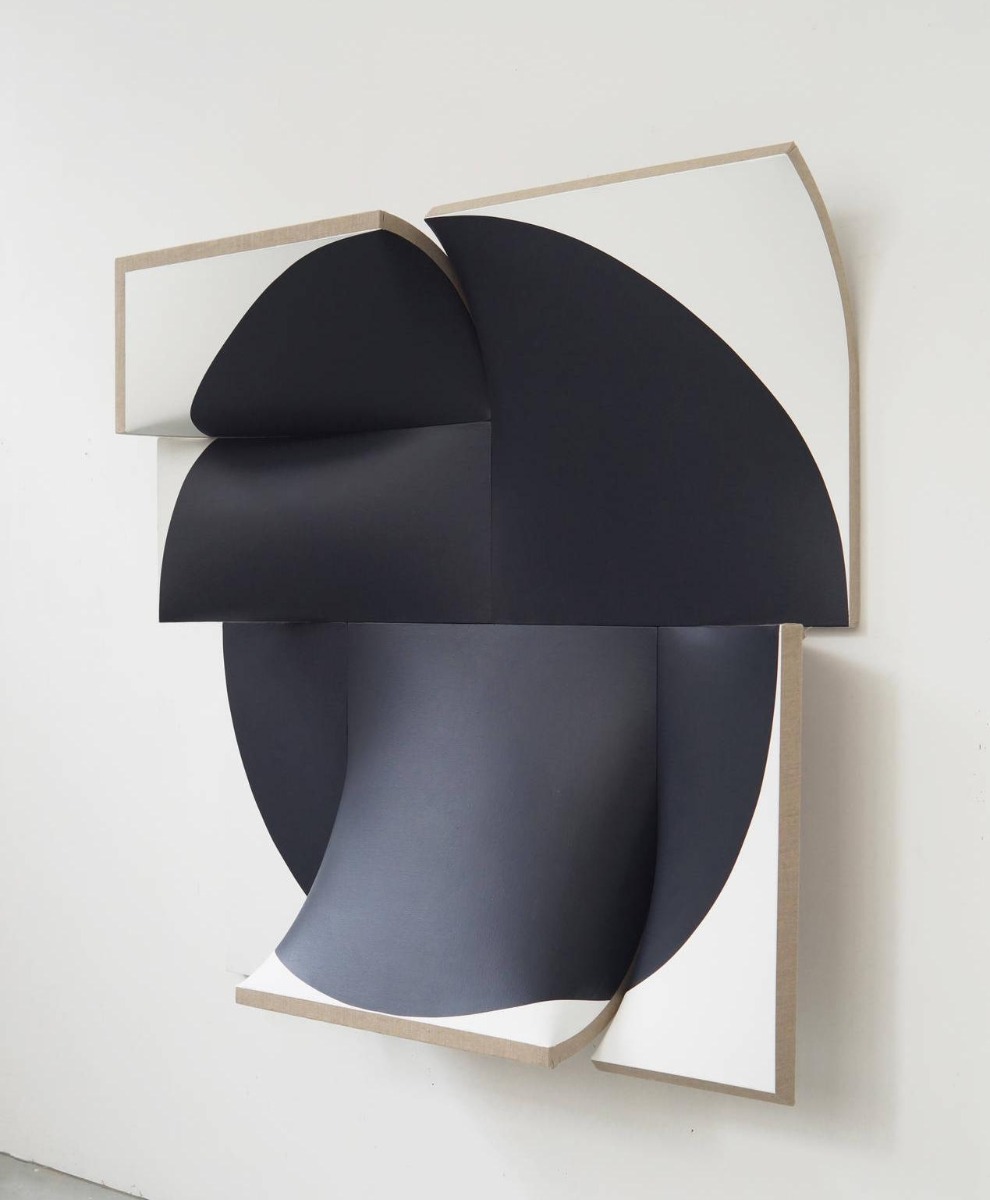
The contemporary art installations that Voskuil creates are breathtaking in their subtle elegance. For some, it’s his use of unorthodox materials that make them so eye-catching. Others, however, believe that their uniqueness is rooted in the mathematical principles that Voskuil uses to bring his visions to life.
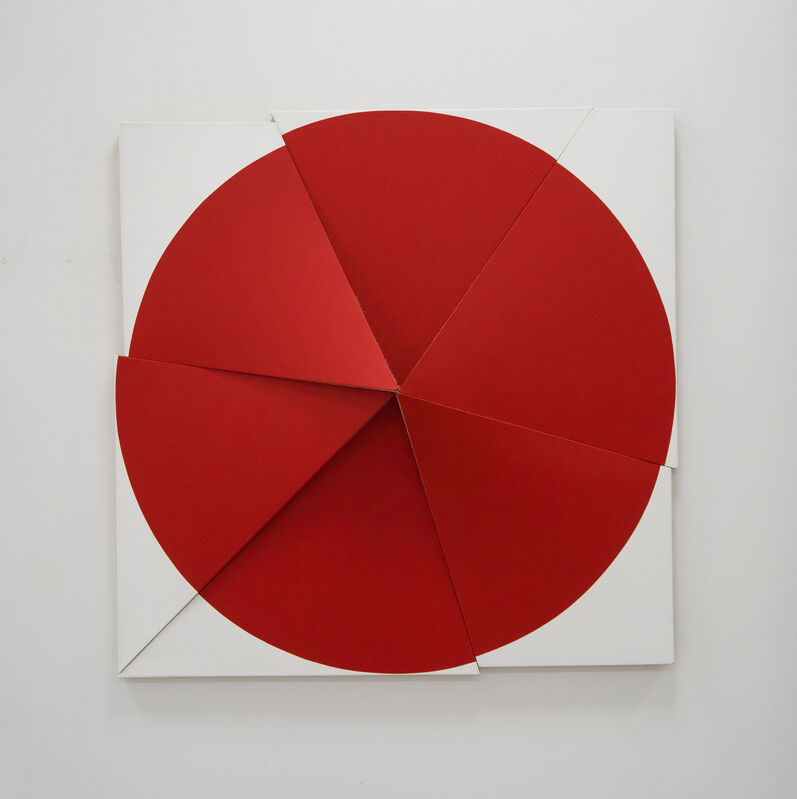
Utilizing these geometrical concepts, he distorts the rigid forms of circles and rectangles, stretching them out on monochromatic canvases before incorporating vibrant colors and other textures.
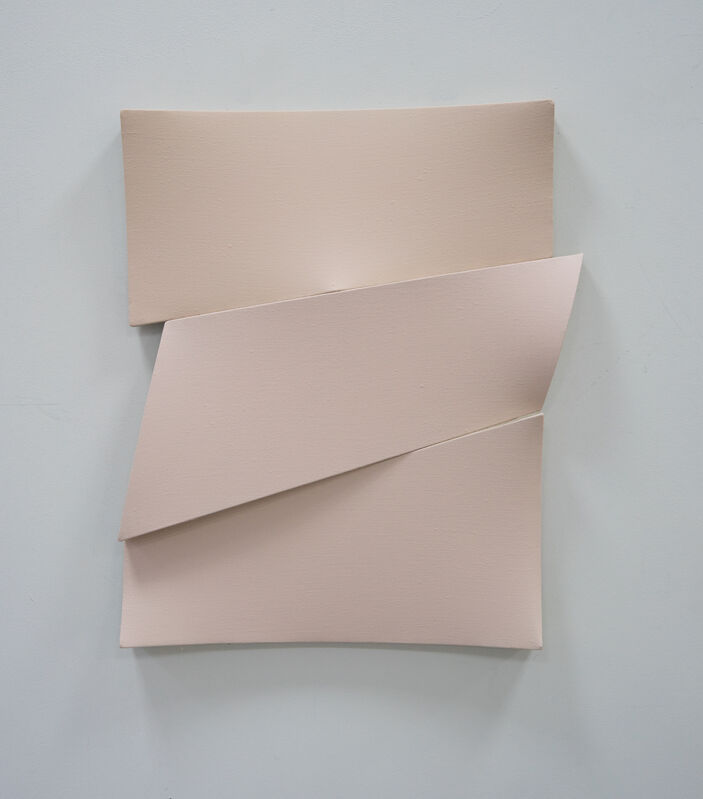
“Because of the meticulous nature of his paintings’ designs, Voskuil’s practice is inevitably rooted in geometry, but the artist insists on limiting the role of mathematics in the works to a practical necessity,” reads a press release from Artnet. “Voskuil’s shining distinction is his ability to bring playfulness to his monochromes. For a process as demanding as his, the works somehow manage to put forth a carefree presence.”
The press release continues, “His precise approach ultimately embraces the beauty of irregularity.”
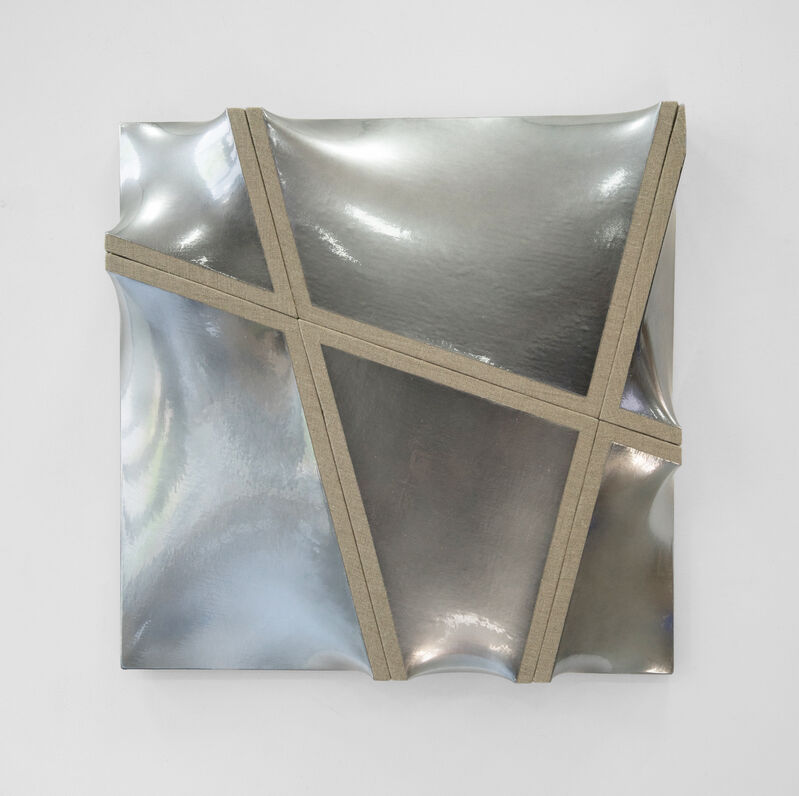
Now based in Haarlem, Voskuil continues to meticulously create contemporary art installations and abstract paintings-cum-sculptures whose unique forms challenge the audience. Many have called them “shape-shifters” because of how they appear to either stretch, collapse in on themselves, or peel off of the wall.
It’s not every day that you come across an artist like Jan Maarten Voskuil, who uses unorthodox materials and mathematical principles to create playful masterpieces that seem to defy gravity. This is perhaps the reason why his work has entranced the art world.
Source: Jan Maarten Voskuil
Custom Interior Design Online – SOA Arts
Liked something that you’ve seen here today? Want to replicate their results or even buy something similar? We’re here to help. At SOA Arts, we have more than 10 years of experience in curating, producing, and sourcing incredible works of art.Whether you’re looking to revamp your building’s interior design or just want to expand your private collection, get in touch and we can make it happen.
-End-
-
As an art factory and interior design company, we’re huge fans of Michele Mariaud. We think her work as an artist, art collector, and gallery owner deserves a tonne of praise. In this post, we’ll be exploring who she is, what she does, and why she’s worth paying attention to.
For all your art news, custom interior design online, and general inspiration, rely on SOA Arts.
Who is Michele Mariaud?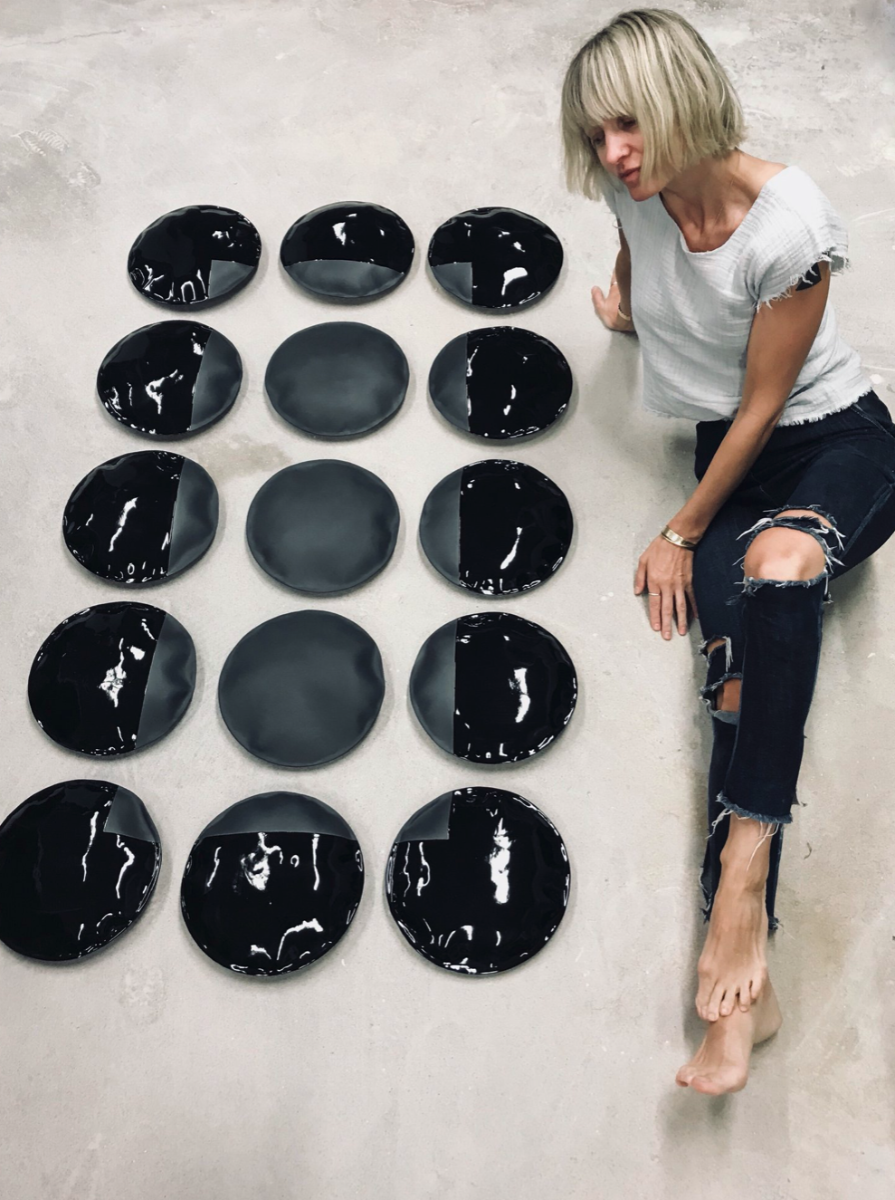
Michele Mariaud first entered the world of art as an artist, musician, and music teacher. Though she was originally based in Canada, her unique flair for business savvy and creativity soon brought her to Europe where she was solicited to help businesses grow in France and beyond.As a curator and artist, her skill helped these businesses grow from strength to strength. In the early 2000s, she moved to the United States. This is where her career and prominence really took off.
The Art-Buying Process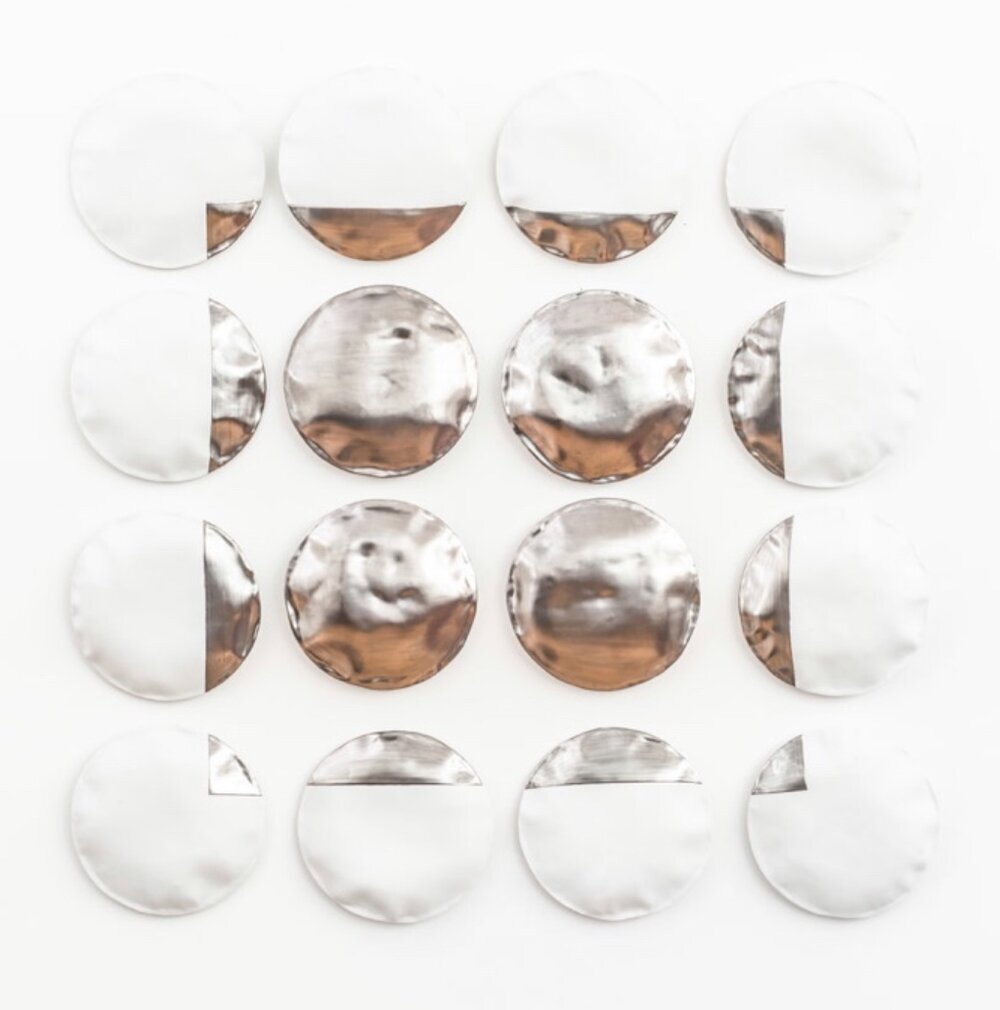
In 2005, Mariaud opened her renowned art gallery in New York City. It’s still enjoyed by thousands of satisfied clients today! Whether you’re a budding art enthusiast or an established collector, the 2000-square-foot gallery probably has something for you.
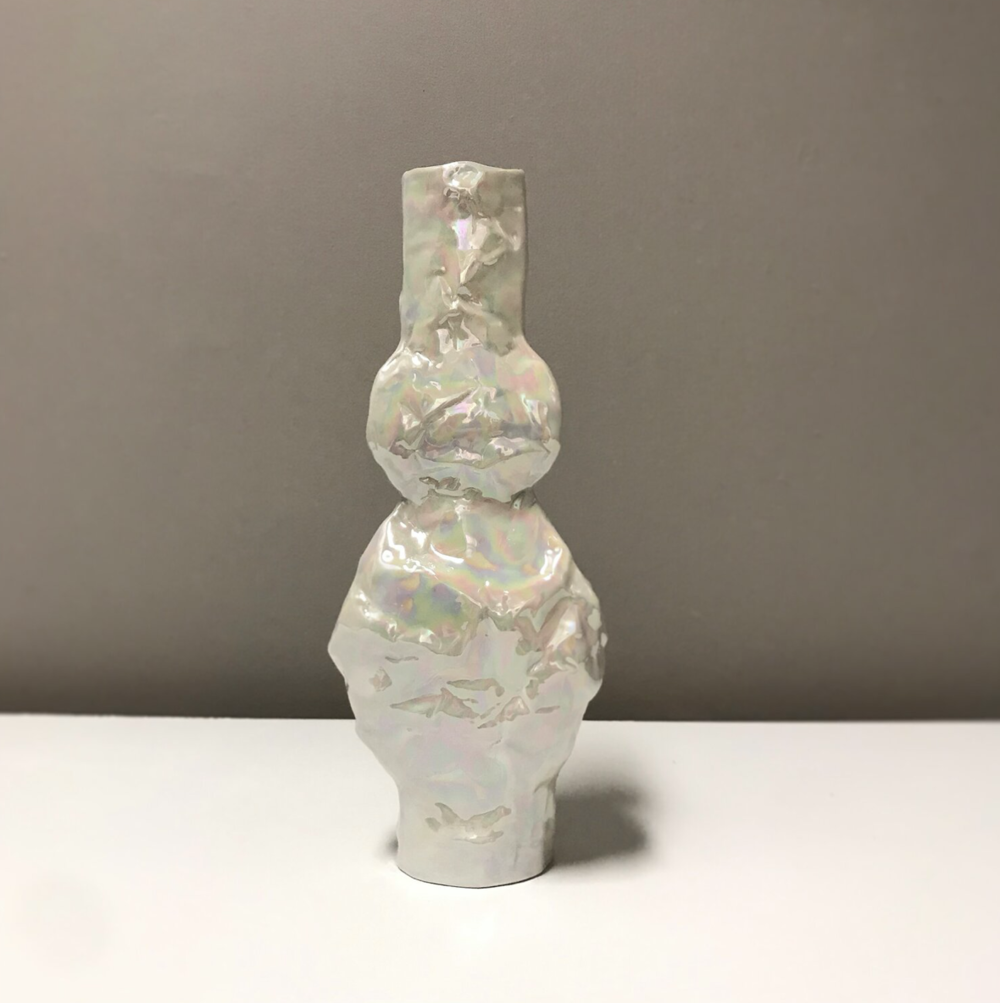
Mariaud is dedicated to making the art-buying process as simple and enjoyable as possible. Her space is set up to feel like an ‘art fair encounter’. Guests can peruse the works at their leisure or rely on the collector’s wealth of experience.
The sizable collection of 300 pieces rotates every 6 weeks, so there’s always something new to discover.
Her Signature Style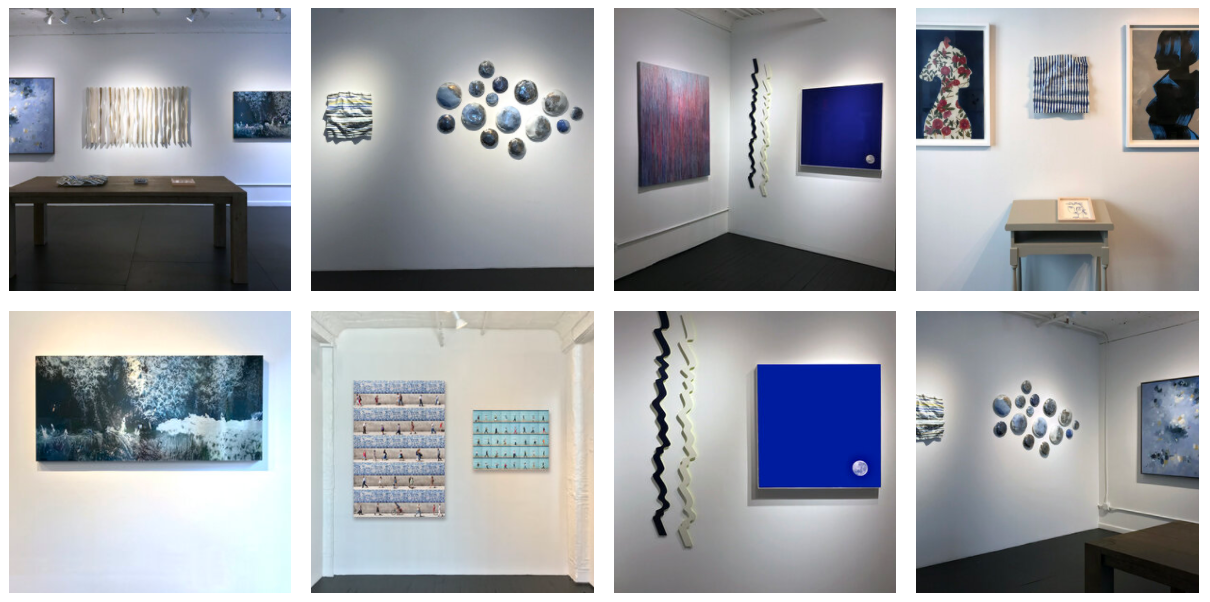
COLOR FOCUS: BLUE
Over the years, Mariaud has developed a signature style for her art space. From incredible 3D wall art, to sensational contemporary works from upcoming artists, the quality and impact of each exhibition are undeniable. Each new collection is tied together with a unifying theme.Some past examples include the color blue, contemporary Texan works, and fragments. The goal is to showcase a measured balance of established and new artists. Mariaud’s skills as a curator and gallery owner are self-evident once you lay eyes on her exhibitions.
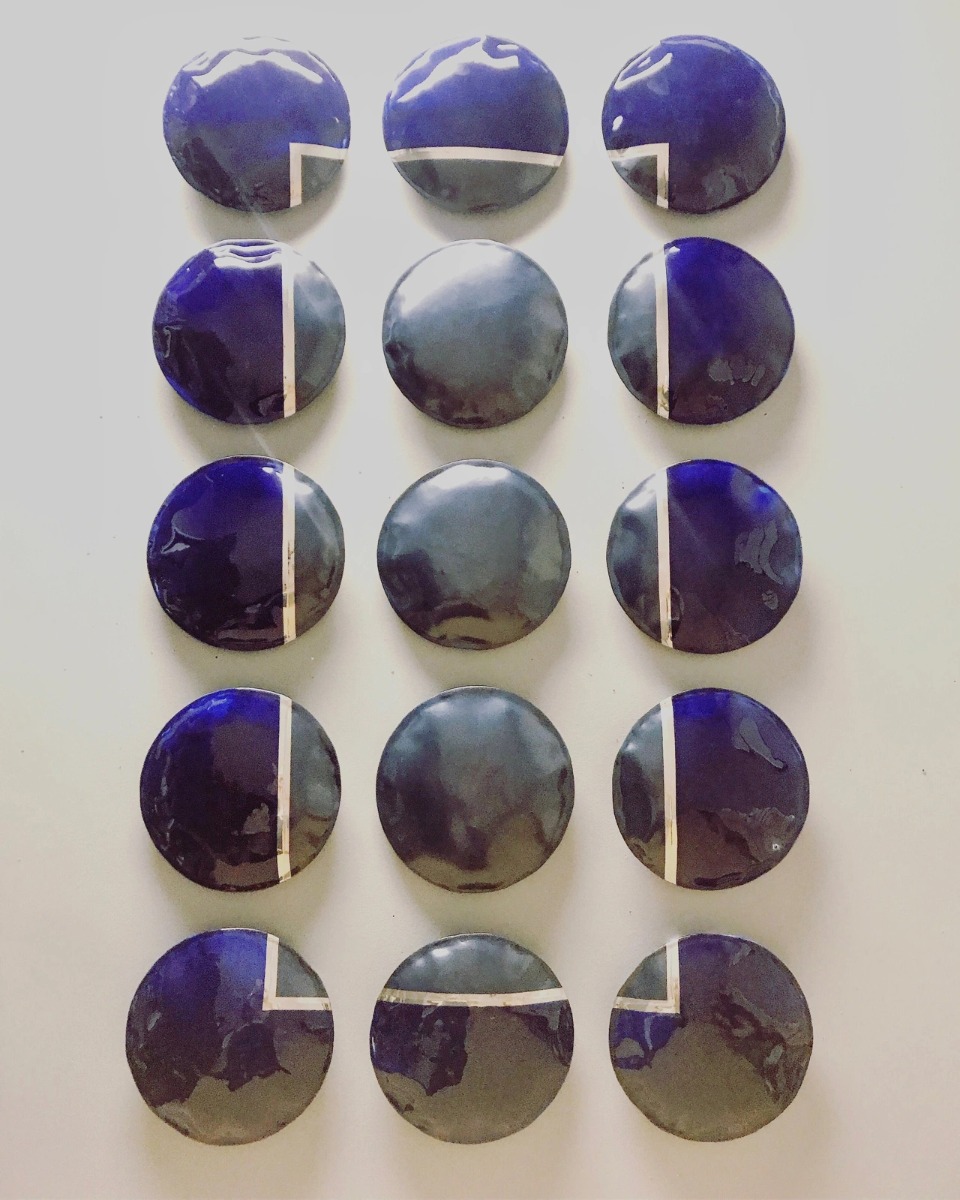
Each piece is there for a specific reason and exists to elevate and ‘complete’ the other work in the room rather than distract from it. The main problem when visiting her gallery isn’t finding something to buy – it’s deciding which option to pick!
3D Wall Art
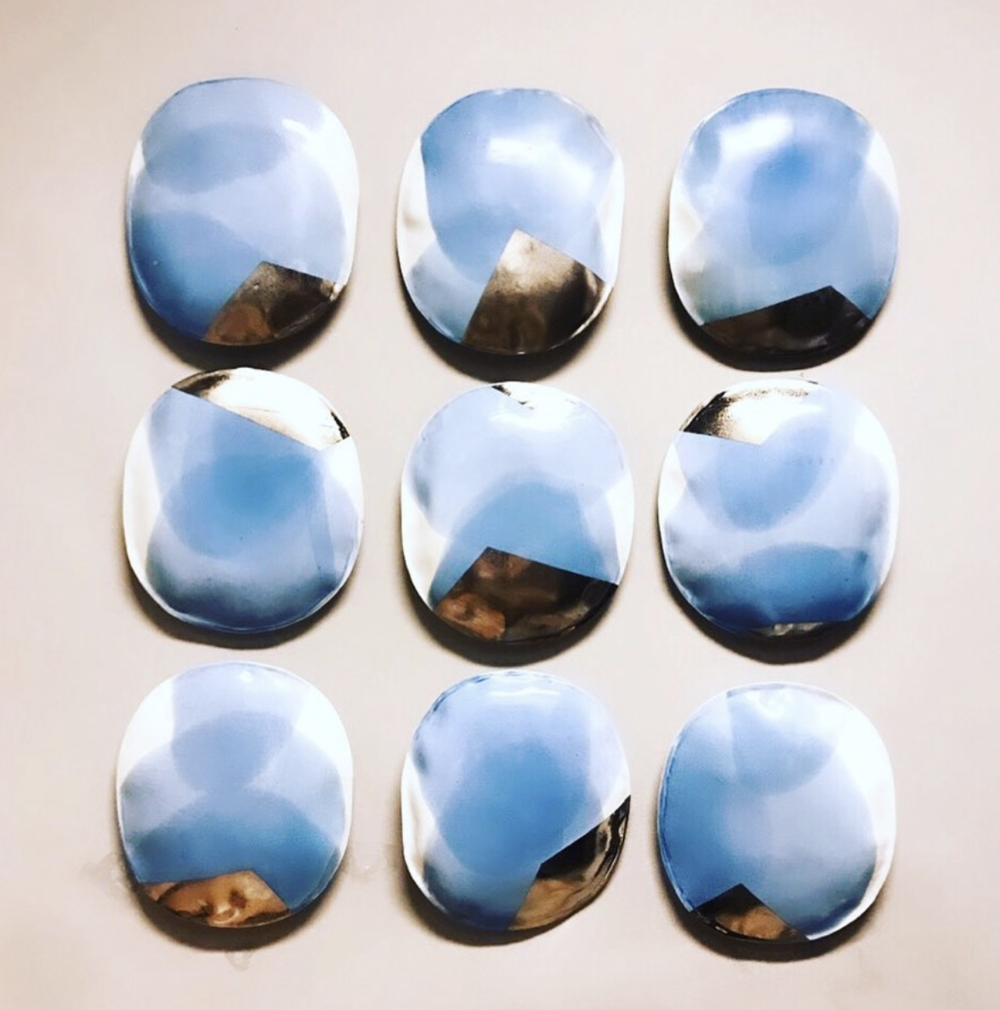
Connoisseurs of 3D wall art will find a lot to appreciate at the Mariaud gallery. Many 3D and sculpted pieces can be found at the space year-round. Some notable examples include the work of Pascal Pierme and Stepanka Summer.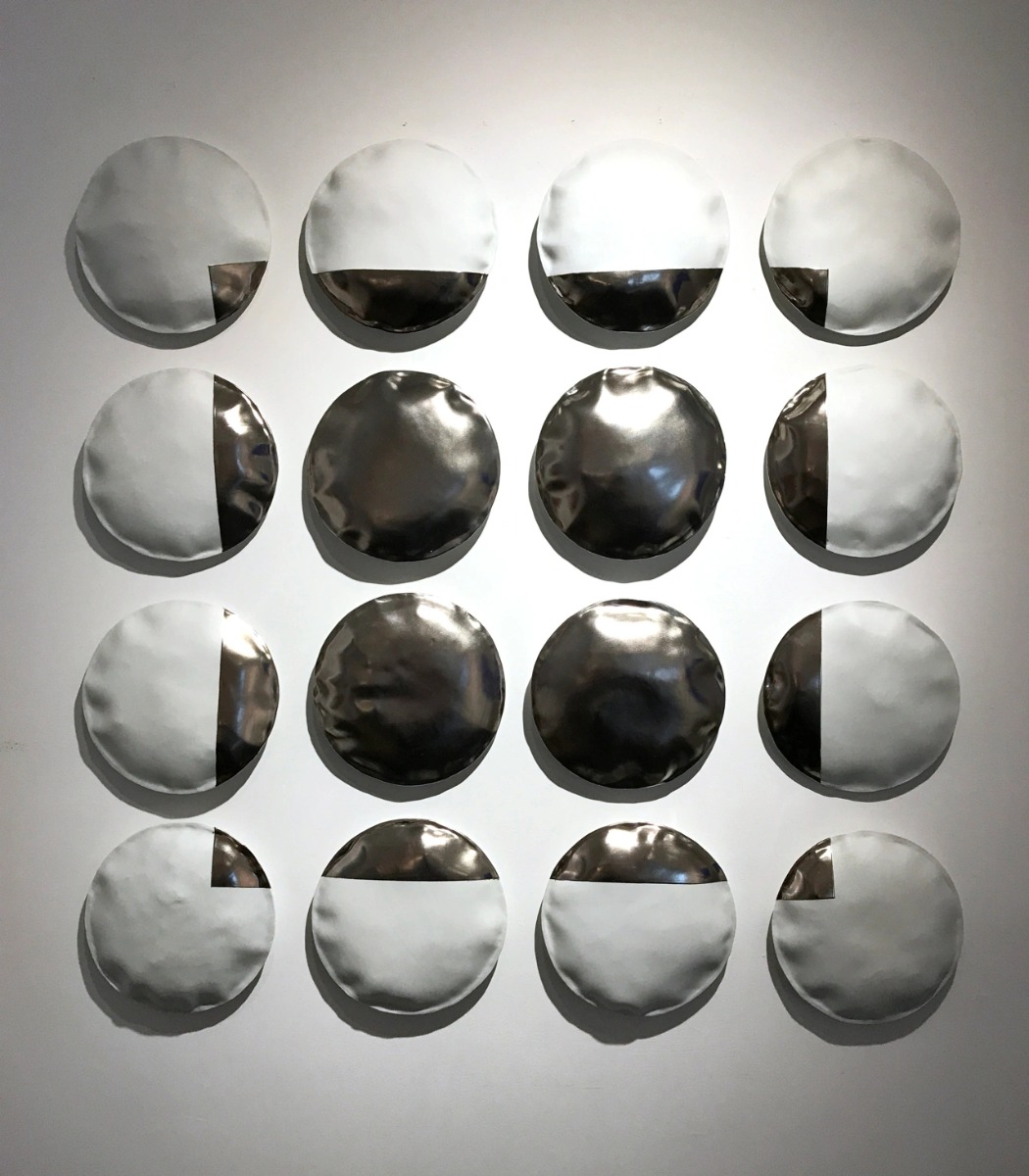
These pieces, in particular, draw one’s attention immediately and refuse to let it go. They would look incredible in any hotel lobby, waiting room, or business interior. The shapes and colors implemented by these artists truly elevate any room they adorn.
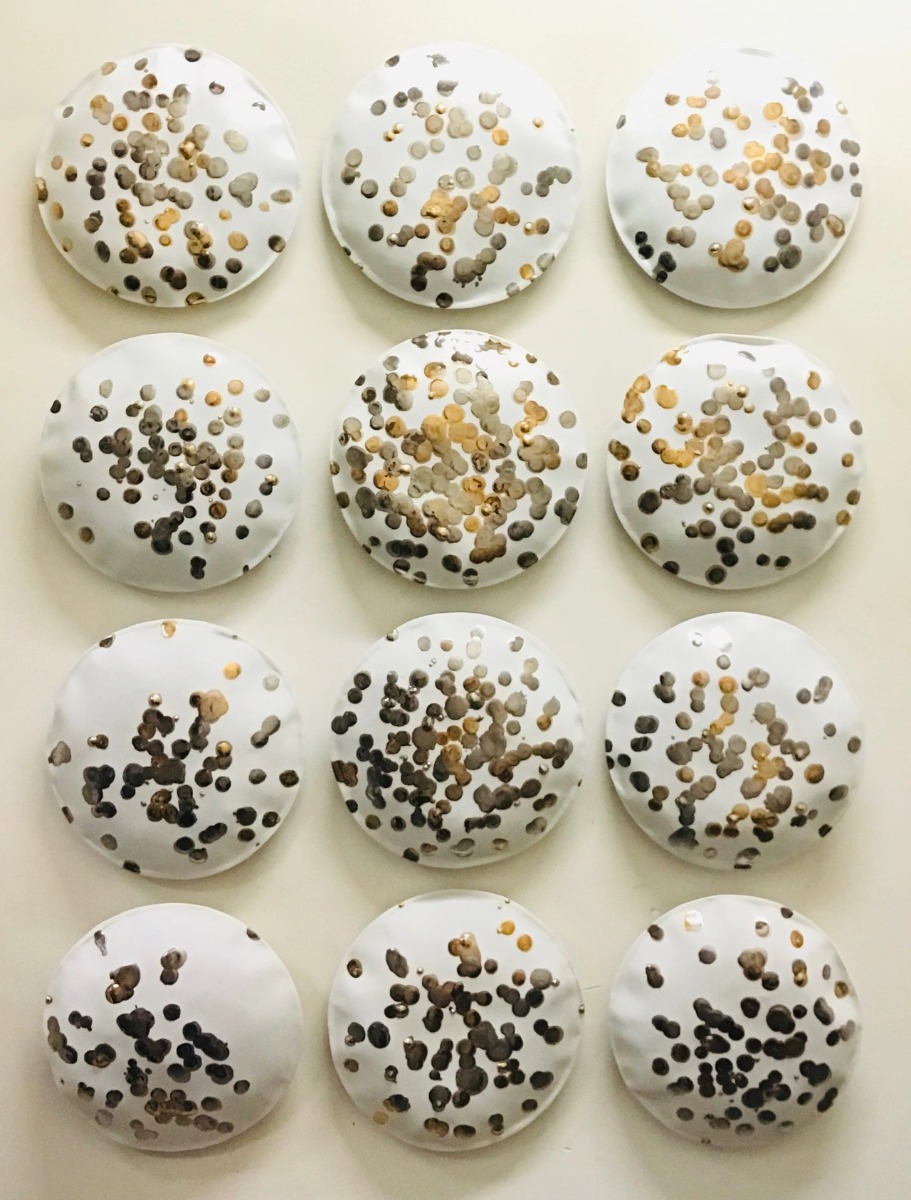
We love the power of this kind of art. It has a tendency to deny expectations. Textures, shapes, and lines that you first assume to be one material soon surprise you by revealing their true nature. If you’re in New York City and have the time, we strongly recommend taking a look for yourself.
SOURCE: https://www.michelemariaud.com/
*****
Custom Interior Design Online – SOA Arts
Liked something that you’ve seen here today? Want to replicate their results or even buy something similar? We’re here to help. At SOA Arts, we have more than 10 years of experience in curating, producing, and sourcing incredible works of art.Whether you’re looking to revamp your building’s interior design or just want to expand your private collection, get in touch and we can make it happen.
-End-
-
Jonny Niesche
Unlike many of his colleagues, Jonny Niesche never dreamed of becoming an artist. Nor did he imagine that he would one day become one of the most celebrated figures in the art world.
“I arrived very late to the game,” he explained. “I was living in New York and playing in hardcore bands, making experimental music until I was 30. Then, I came back to Sydney, unsure of what to do next. I renovated my parents’ house to help them sell it – once sold; I did a painting off the cuff on the ‘for sale’ sign. That was it for me. I was hooked. Two years later, I enrolled at art school as a mature student.”
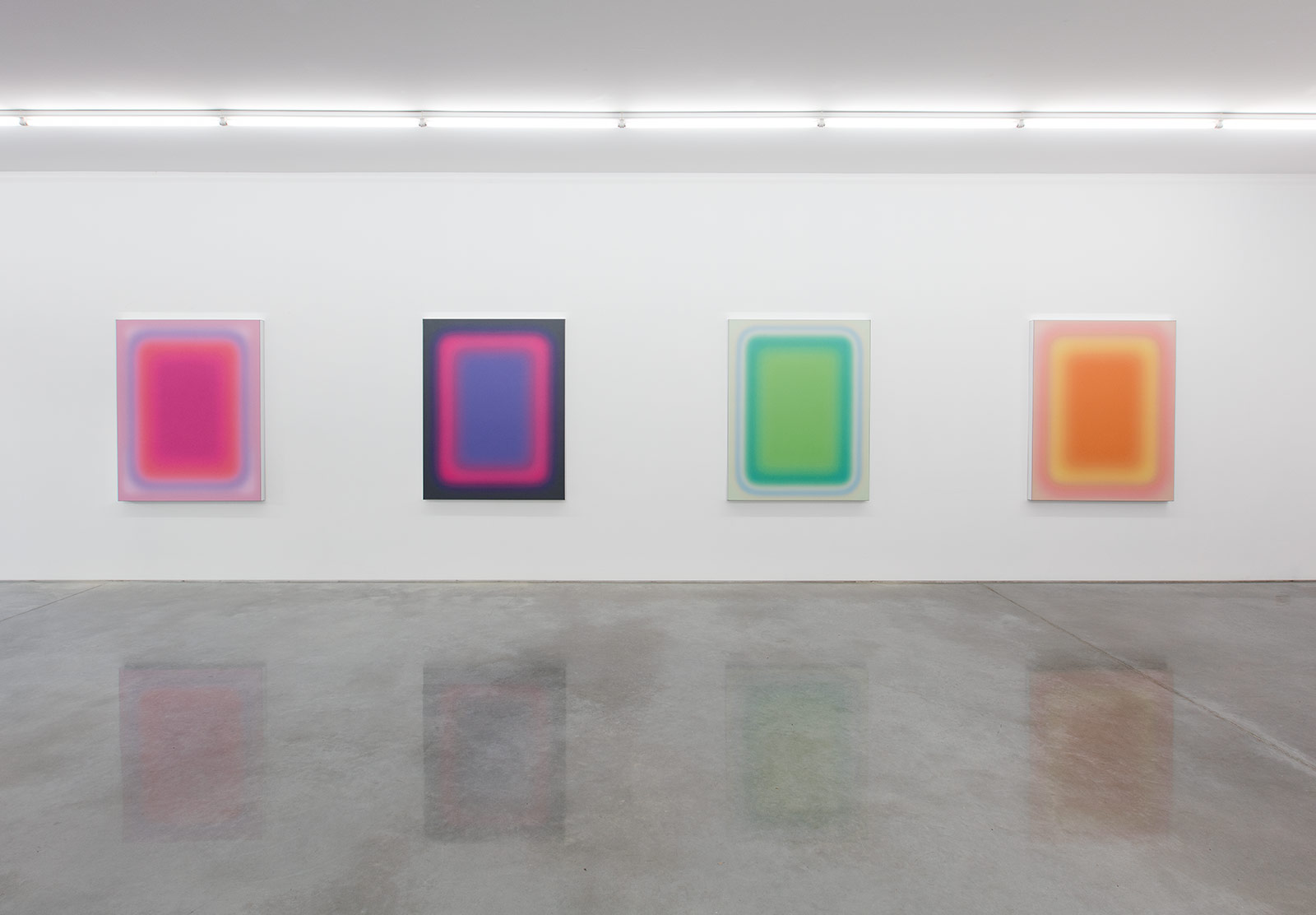
'Love-light' installation view at Sarah Cottier Gallery 2017 Photo: Ashley Barber.
In 2008, Niesche graduated from Sydney University with a degree in Visual Arts. He went on to study under the renowned artist Heimo Zobernig at the Academy of Fine Arts in Vienna before returning to his native Australia to complete his Master’s.
Since then, Niesche has been making waves in the art world, with countless museums clamoring for a chance to exhibit his sculptures, paintings, and abstractions. His work has been displayed at the König Galerie in Berlin, the National Gallery of Victoria in Melbourne, and The Flat - Massimo Carasi in Milan, just to name a few of them.
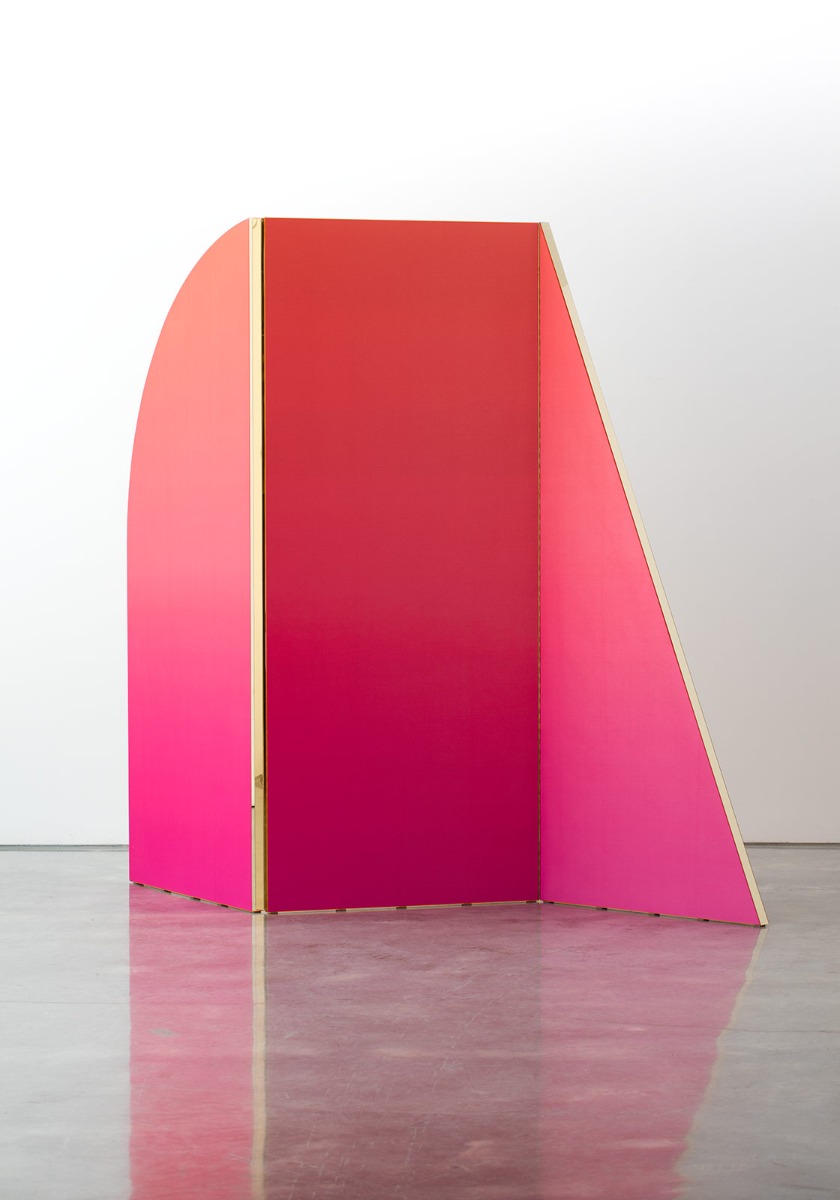
'En dehors (scarlet to choral), 2018. Photo: Ashley Barber.
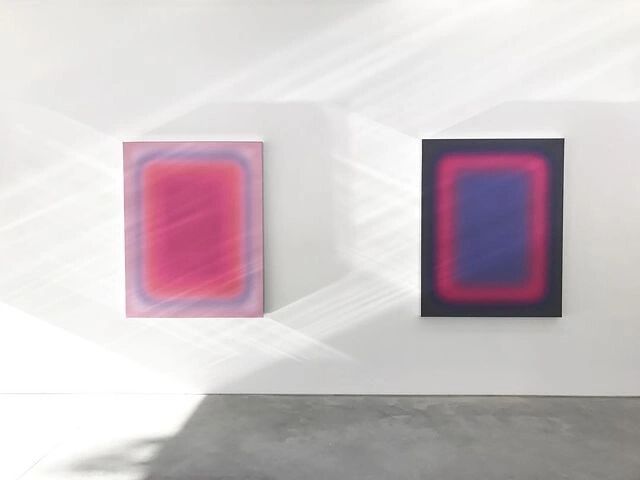
While Niesche is best known for his breathtaking abstractions and contemporary art installations, his first few years in the art world were spent creating realistic paintings – a far cry from the neon-hued chromatic fields that has made him famous across the globe.
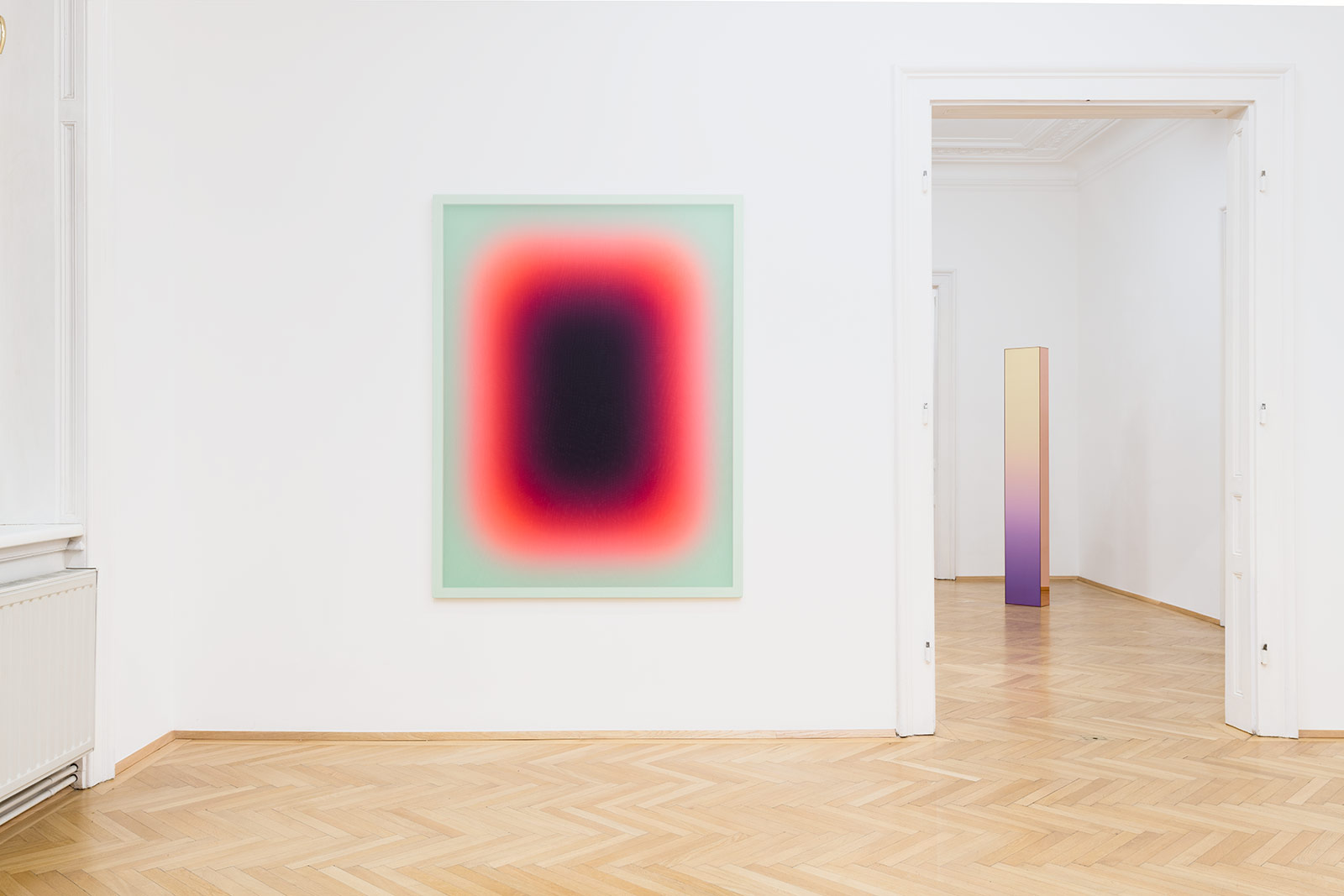
Installation view of 'throb' at Zeller Vam Almsick 2018.Photo: Peter Mochi.
“I was at a point when I was painting very realistically and the work itself was becoming too tight and closed-off. I tried using syringes and odd instruments to paint with, but this was only satisfying to an extent,” said Niesche in a recent interview. “I found that the more I emptied out figuration, the more possibilities there were. By reducing the work to color, form, material, and surface, and by limiting your choices, actually makes you focus on very specific elements and opens up new ideas and ways of thinking about making.”
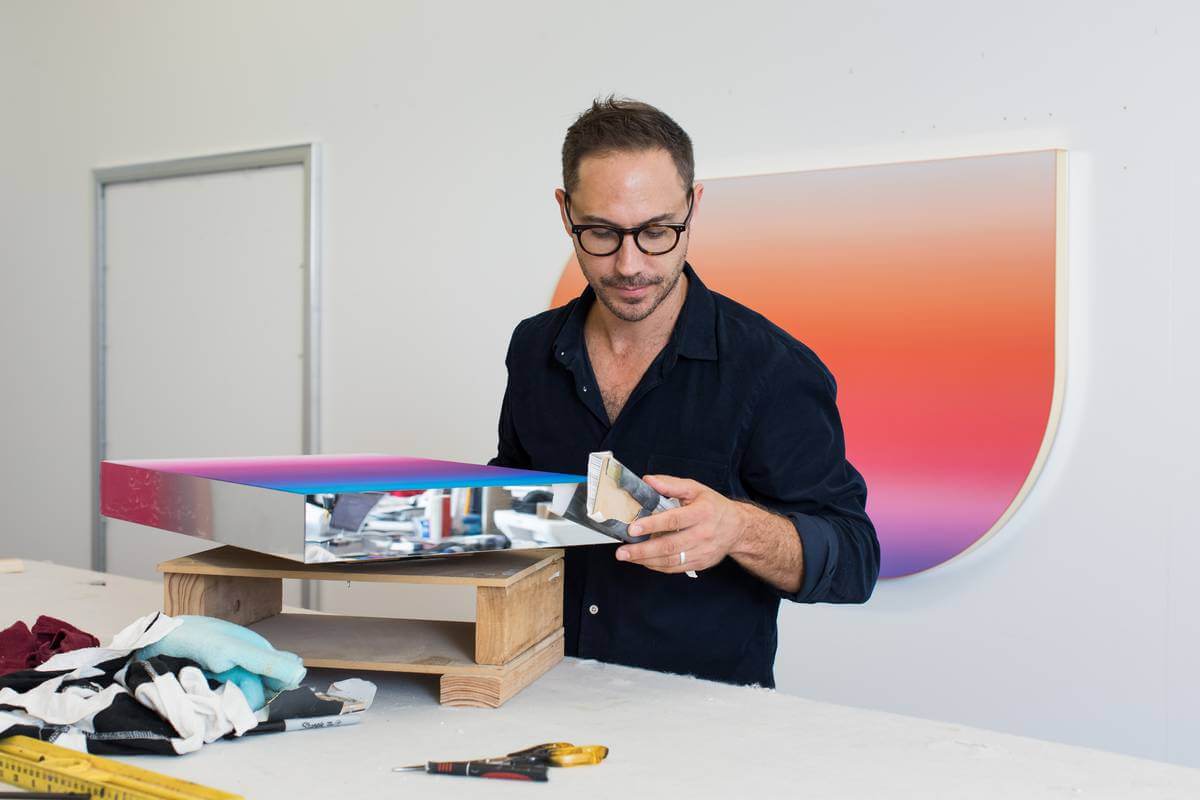
This realization led Niesche to create pieces that challenge the perception of those viewing it. To do so, he makes use of a wide range of materials, including transparent fabrics, acrylic mirrors, steel, and brass.
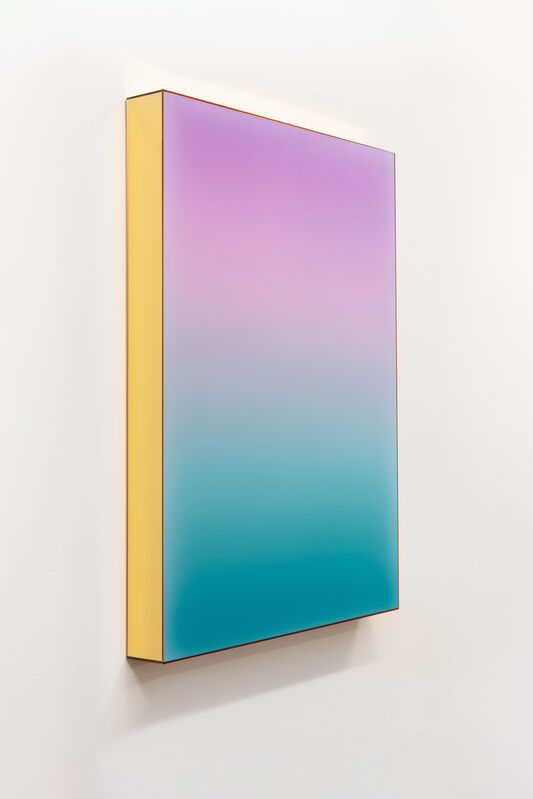
Hotsource Haze (cool study), 2021
Voile fabric, MDF and acrylic mirror29 93/100 × 66 93/100 in76 × 170 cm“It got me thinking: ‘How can I get beyond the flat plane of a painting and make it more performative and ever-changing, to renew the experience every time one looks at it,” he said. “I concluded, if a painting doesn’t do that, it is not mine.”
These criteria have led Niesche to create neon-hued chromatic fields that are simultaneously both painting and sculpture. His pieces are simply phenomenal, nothing like the art world has ever seen before.

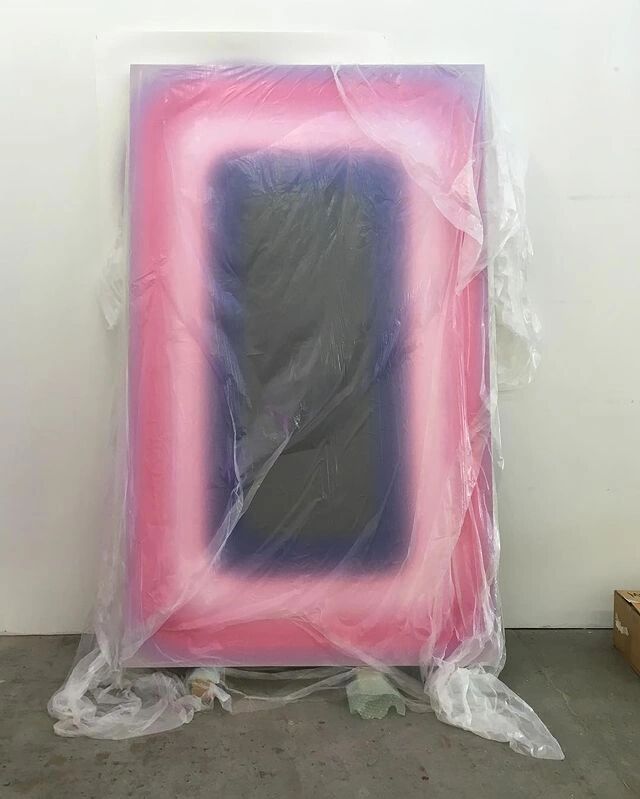
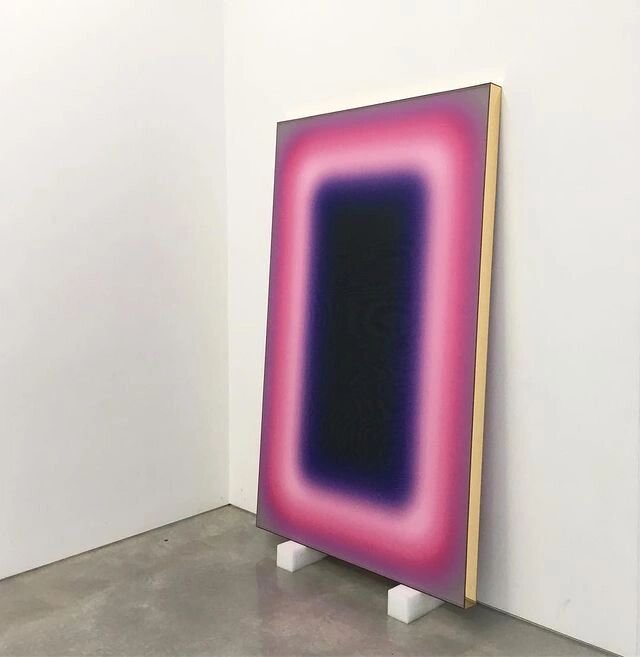
“Working across an expanded field of painting, sculpture, and abstraction, Jonny Niesche’s vividly colored work wraps the viewer in total sensory stimulation,” wrote Starkwhite, an art gallery in Auckland, New Zealand. “The seductive, iridescent surfaces of his paintings hum and shimmer with pigment, color that seems to float slightly above the voile surface. The effect is intensified by the indistinct edges between bands of color that surround the dark middle ground.”
It adds, “As one tone blurs and dissolves into the next, a silky insubstantiality of pure color and sensation emerges.”
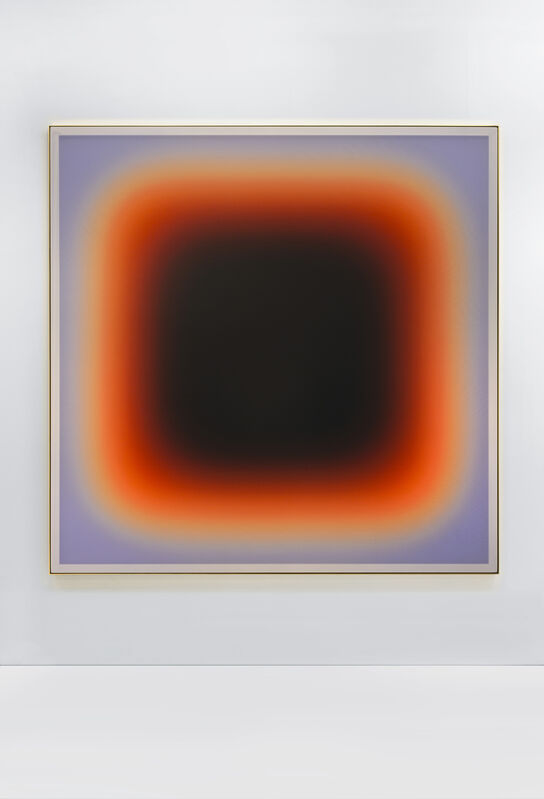
Starman Figurine From The Motion Picture, 2021
Voile, powder coated aluminum, mirror polished brass81 1/2 × 81 1/2 in207 × 207 cmNiesche’s one-of-a-kind pieces are influenced by many things, such as popular culture, twentieth-century art, and David Bowie. Interestingly enough, he also takes inspiration from childhood trips to David Jones, an Australian department store.
“To me, this was an all-encompassing experience of incredible color palettes of eyeshadows, the smell of perfumes, and all the seductive and reflective smoky mirrored surfaces of the late 1970s,” he shared.
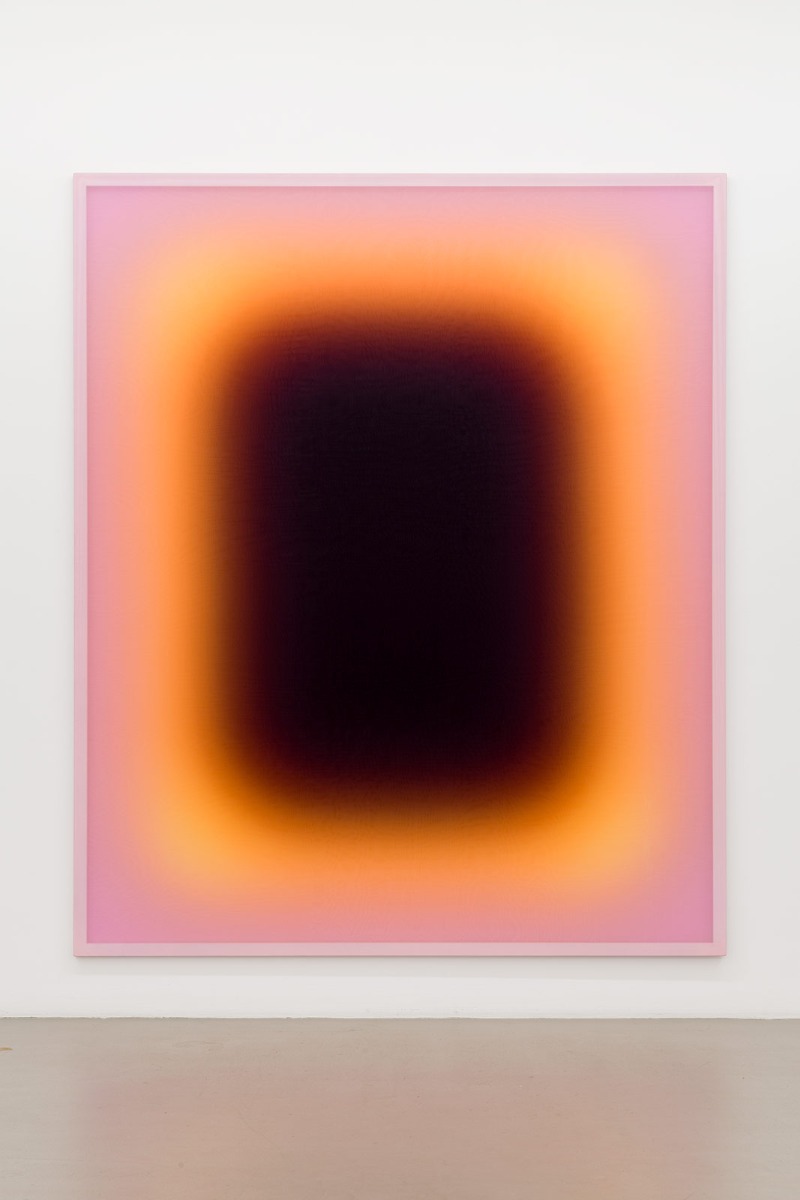
'Where to sould and the world commingle', 2018 in Moving Picture at STation Gallery. Photo: Christo Crocker.
While many of Niesche’s contemporary art installations are currently held in exhibits and private collections, a few have been used as hotel decorations. For instance, Next Hotel Melbourne in Australia is one of his most avid clients.
“As part of curating a dynamic and engaging collection of artworks by Australian artists to feature throughout the new hotel, Niesche created a suite of pieces to hang in each of the guest rooms,” said Next Hotel Melbourne. “His signature minimalist works with abstract color bring an unexpected touch to the Next rooms and suites, complementing the other considered details and residential feel of the interiors.”
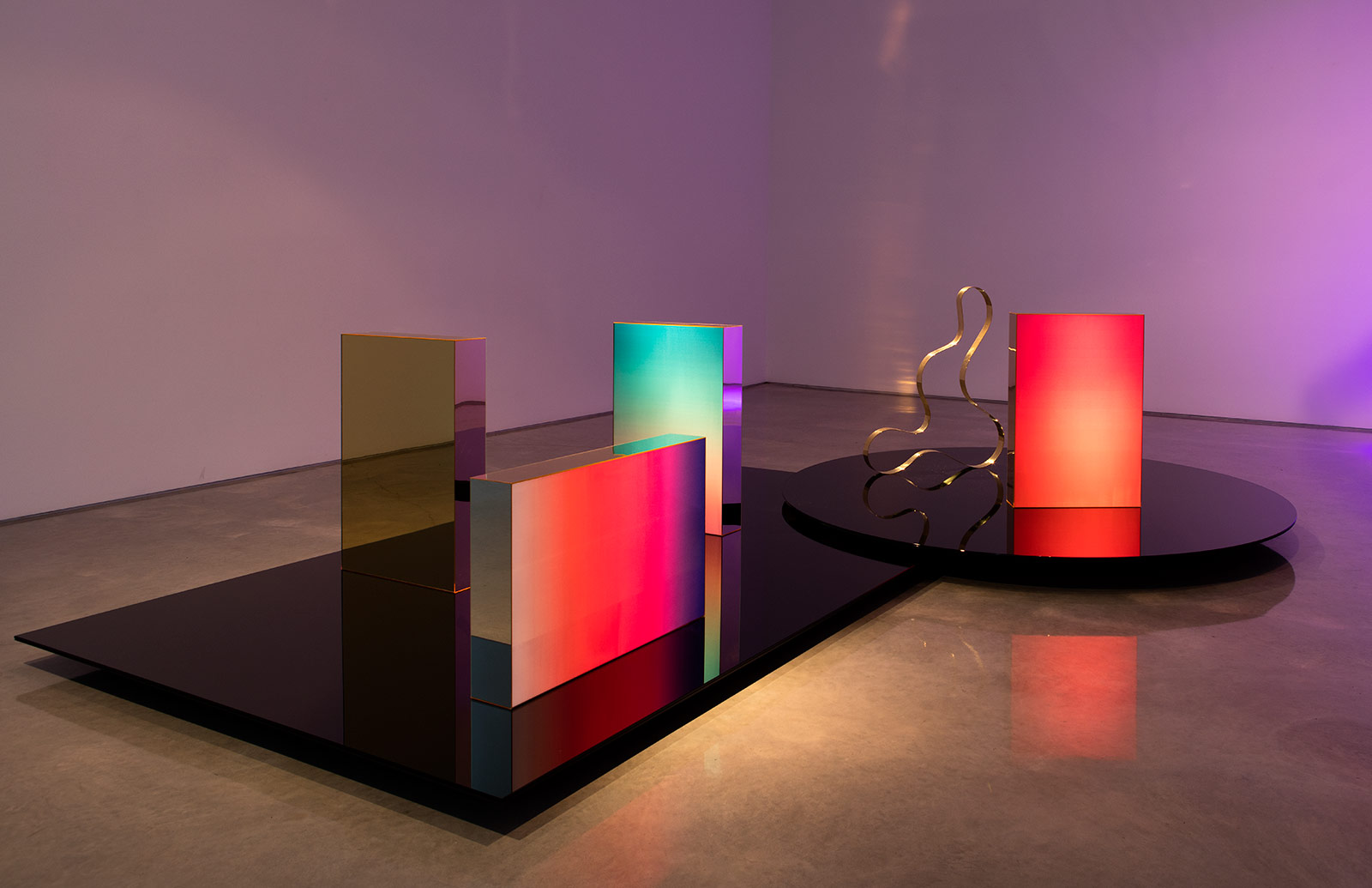
'but still I wait' collaboration with Brendan Van Hek at Sarah Cottier Gallery in Chrom, 2018. Photo: Ashley Barber.
Several of Niesche’s contemporary art installations also hang in The Club, a sophisticated retreat exclusive to guests of Next Hotel Melbourne. His 3D wall art livens up the space, adding to its Manhattan loft-style atmosphere.
With other high-end clients besides Next Hotel Melbourne, it’s clear that Jonny Niesche is taking the art world by storm, one abstraction piece at a time.
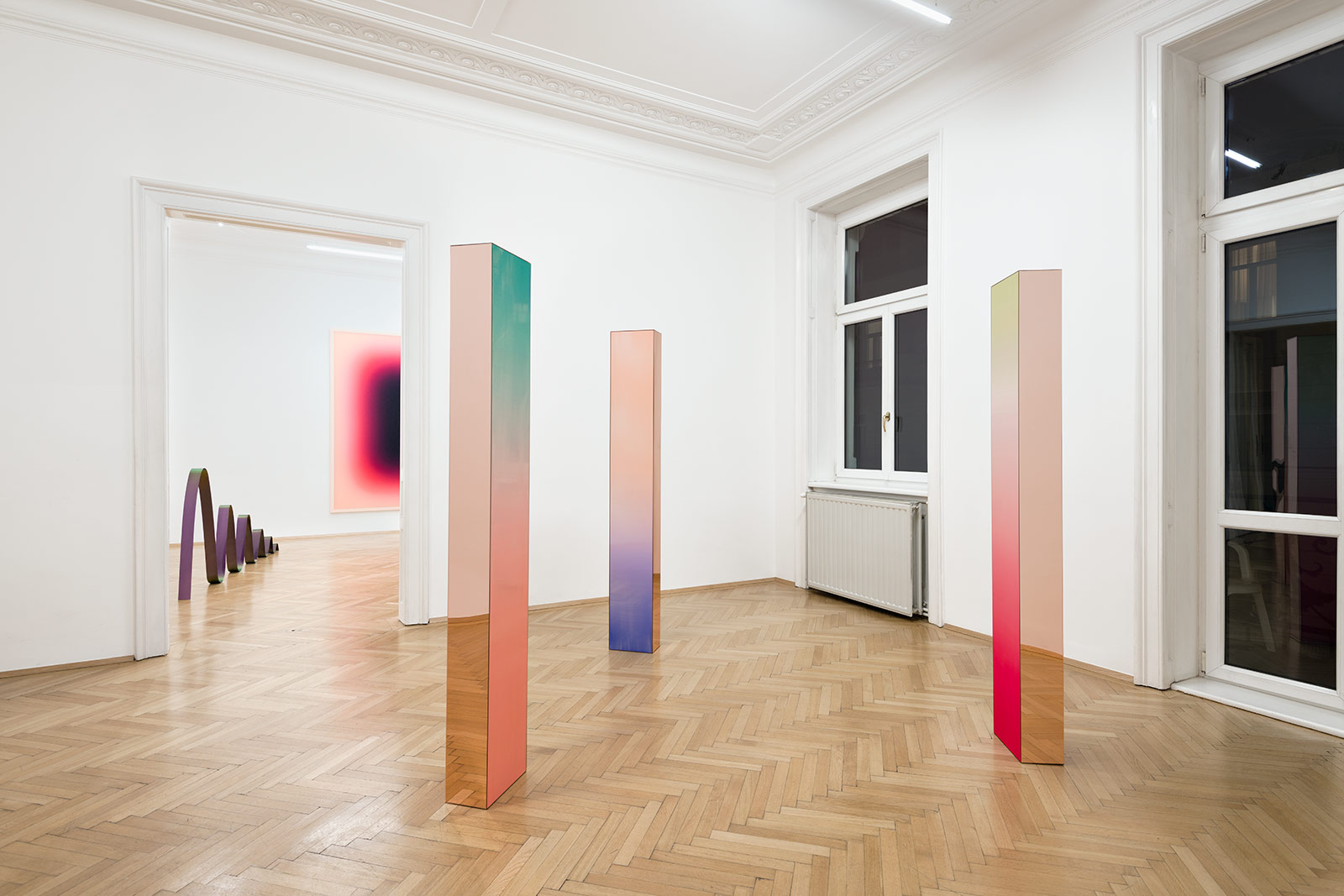
Installation view of 'throb' at Zeller Van Almsick, 2018. Photo: Peter Mochi. Credit to Jonny Niesche.
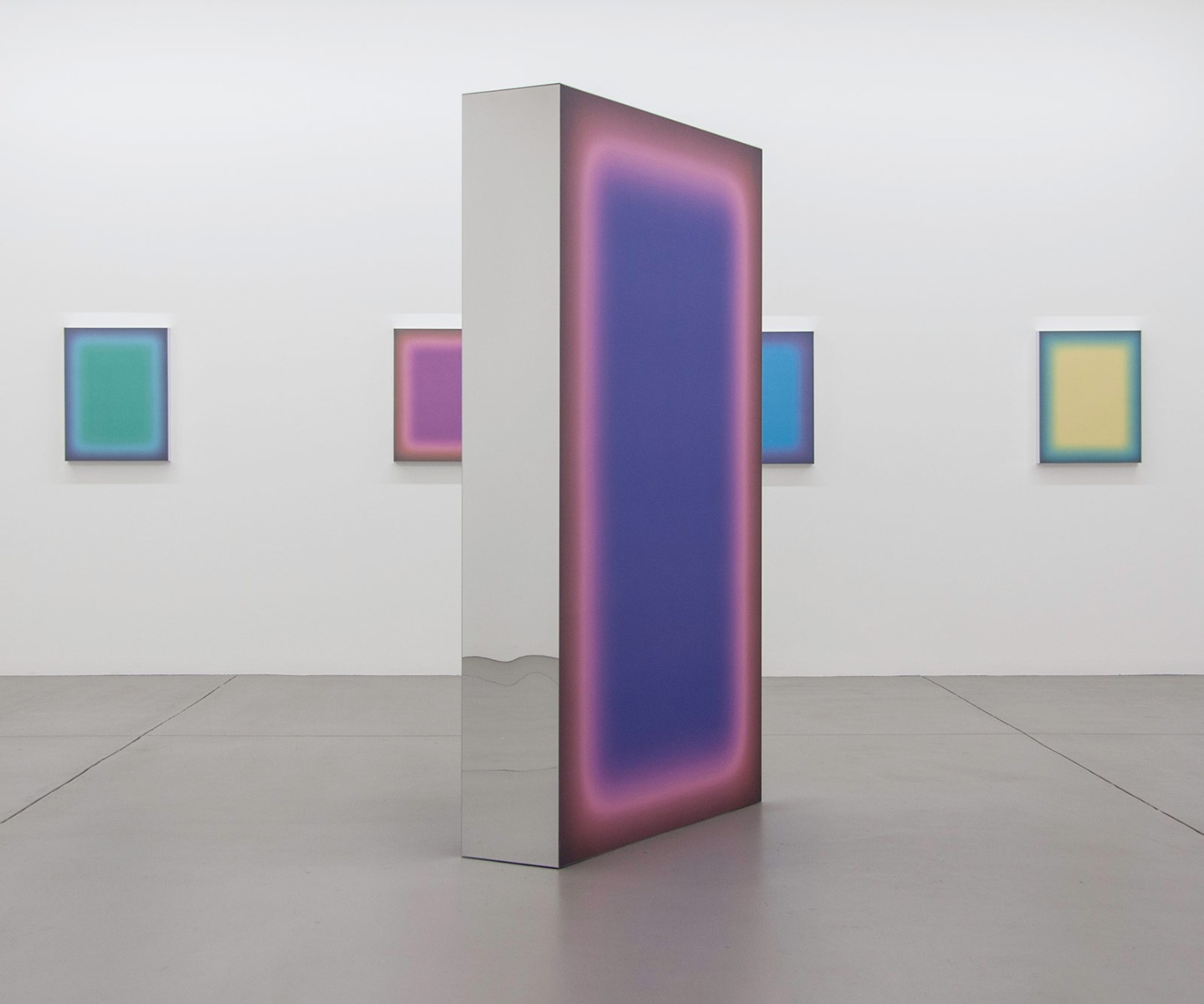
'Picture this' Installation view at Station Gallery 2016. Photo: Jack Willet. Credit to Jonny Niesche.
Want to sell your artwork? We do the work for you.
SOA Arts Can Provide Artwork Printing and Reproducing Service for You.
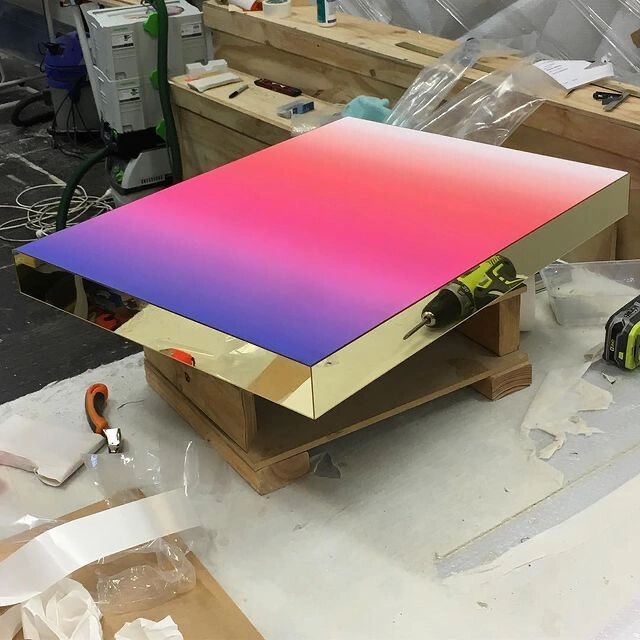

All images Credit to Jonny Niesche.
-End-
-
All Source and Credit: Fenella Elms
At SOA Arts, we’re committed to staying as up-to-date as possible with what’s going on in the art world. This means we learn about noteworthy artists nearly every day. You’d think at this point that nothing would surprise us anymore. On the contrary, even we were blown away by Fenella Elms.
The ceramic work and staggeringly beautiful designs of this Wiltshire-based artist are some of the best we’ve ever seen. If you’re interested in ceramics or interior design, this is most certainly one to watch.
About Fenella Elms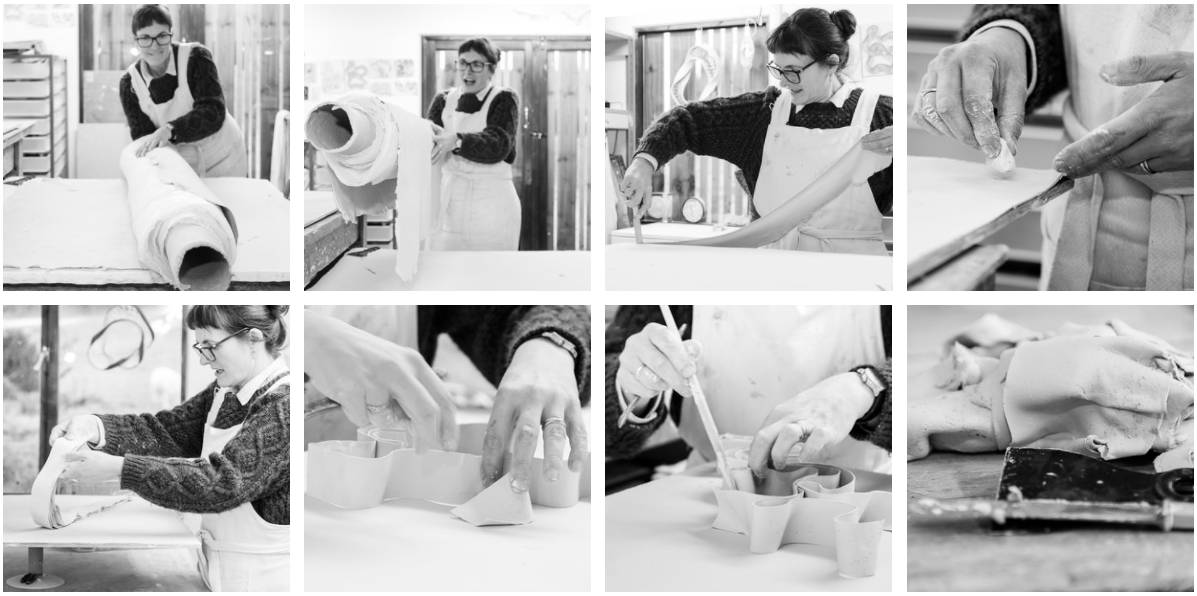
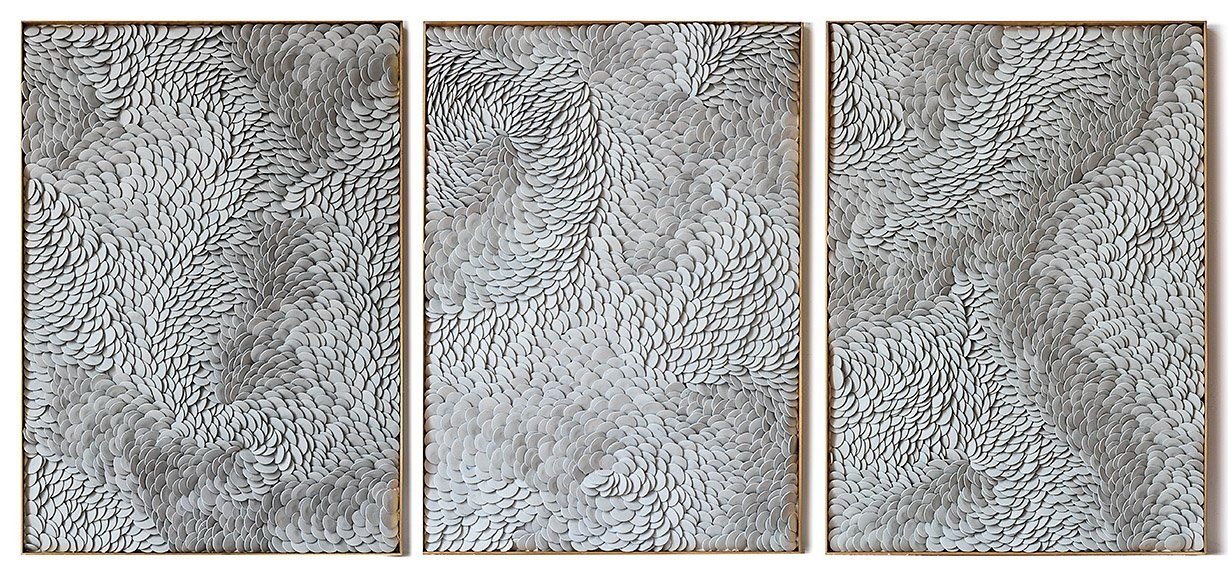
Fenella Elms creates ceramic installations, clay sculptures, and porcelain creations that turn heads wherever they’re installed.She now works out of a fabulous, fit-for-purpose studio in Wiltshire, England, but it hasn’t always been this way. The artist first discovered her love for clay work in 1981 during a school trip and knew at this moment that it was worth pursuing.
Countless workshops and college training courses later, Elms is now a constant source of innovation and inspiration for ceramics, sculpture, and design in the UK and beyond.
The artist’s creative process does not focus exclusively on how the final product will look. Rather, “movement, growth, structure and interaction” are all taken into account. The flutter of a bee’s wing, the sway of flowers in the breeze, these are the starting points of Elms’ work.
Wall-Mounted Masterpieces
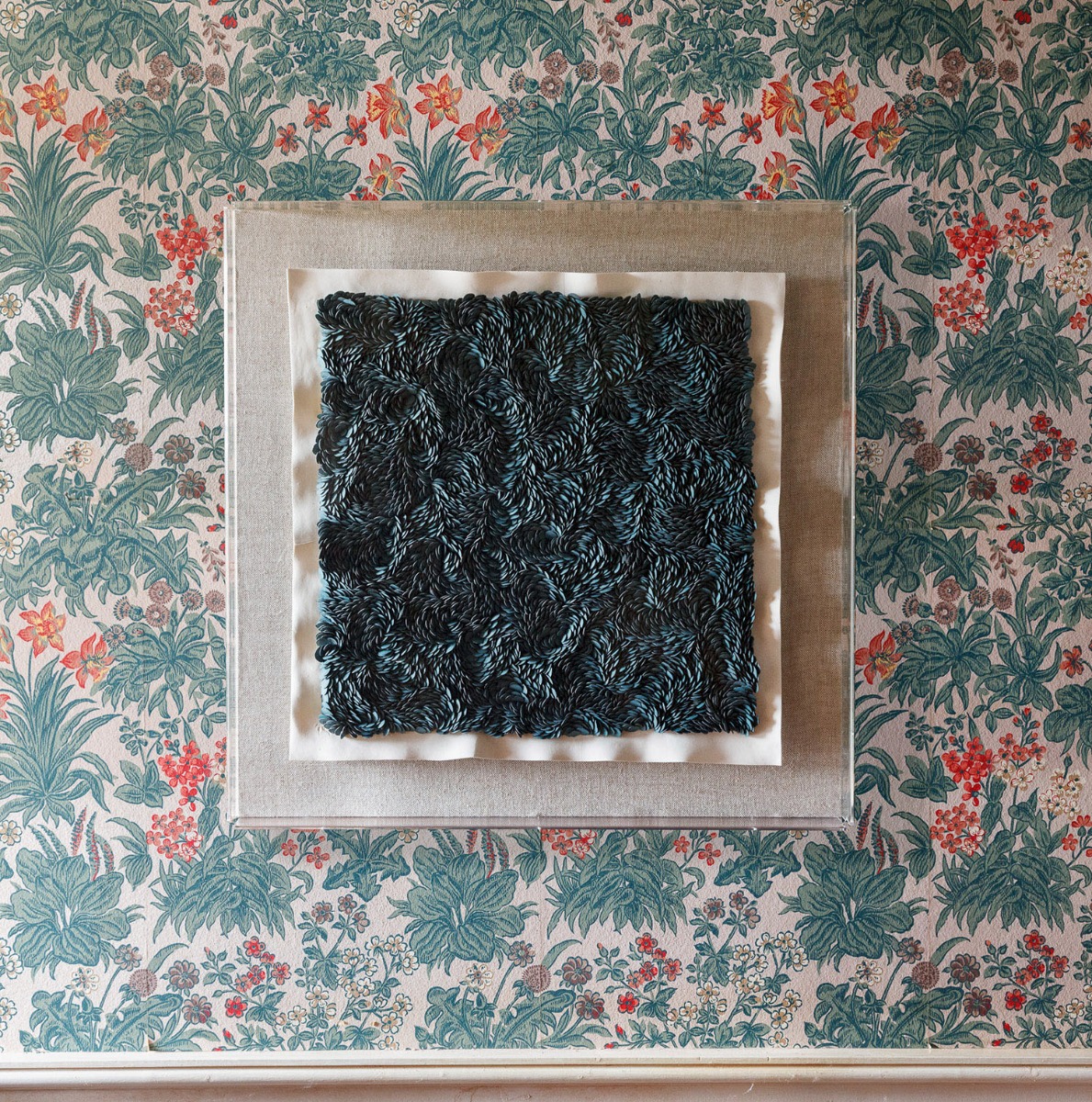
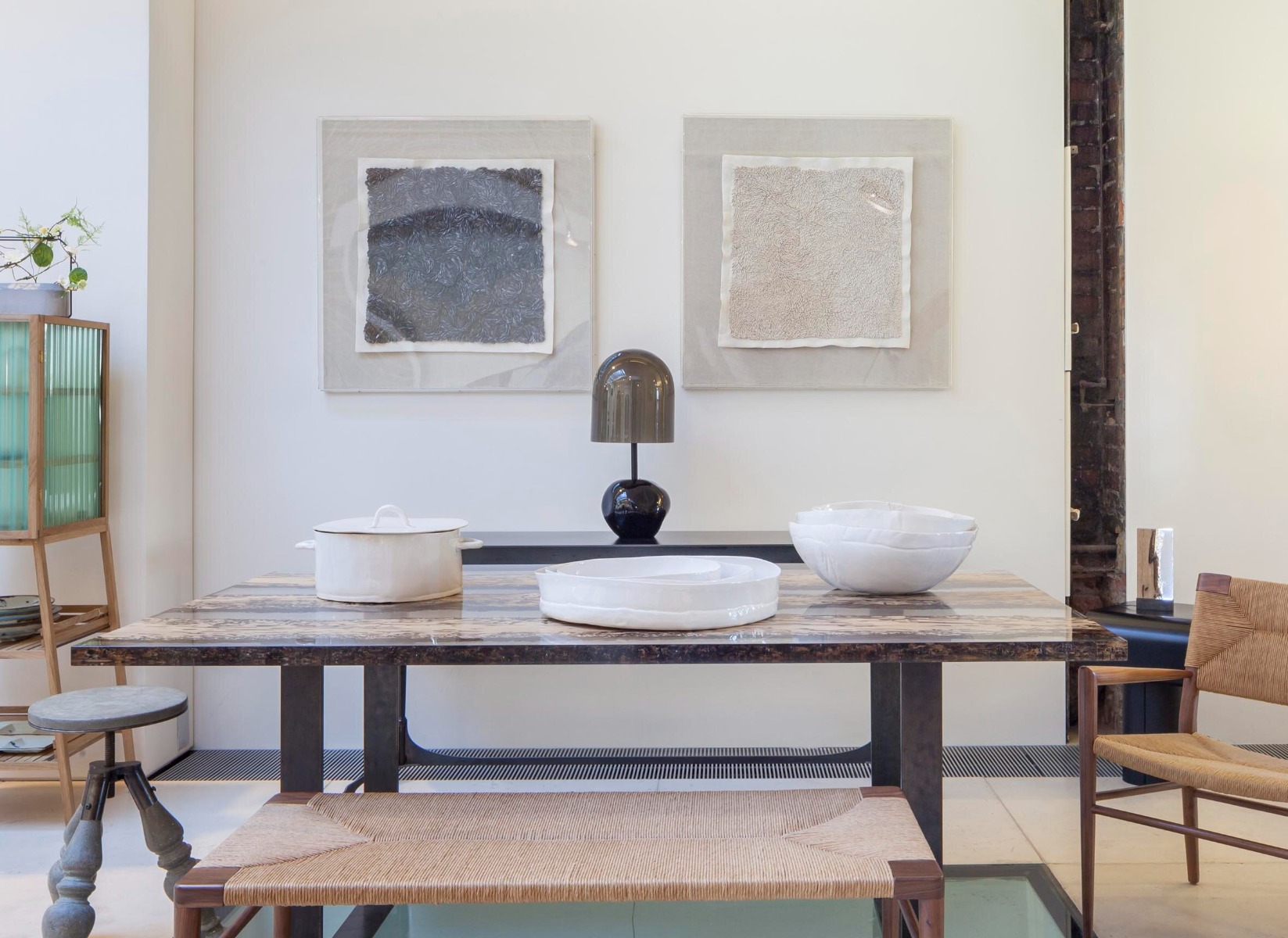
The wall-mounted ceramic artworks by this artist look incredible in basically any interior space. Their virtues are especially noticeable in the presence of natural light. When sunlight dances on the surface of these structures, their beauty is impossible to deny.They use porcelain/ clay materials in dazzling arrangements and are worth every single penny in our opinion.
Free Standing Sensations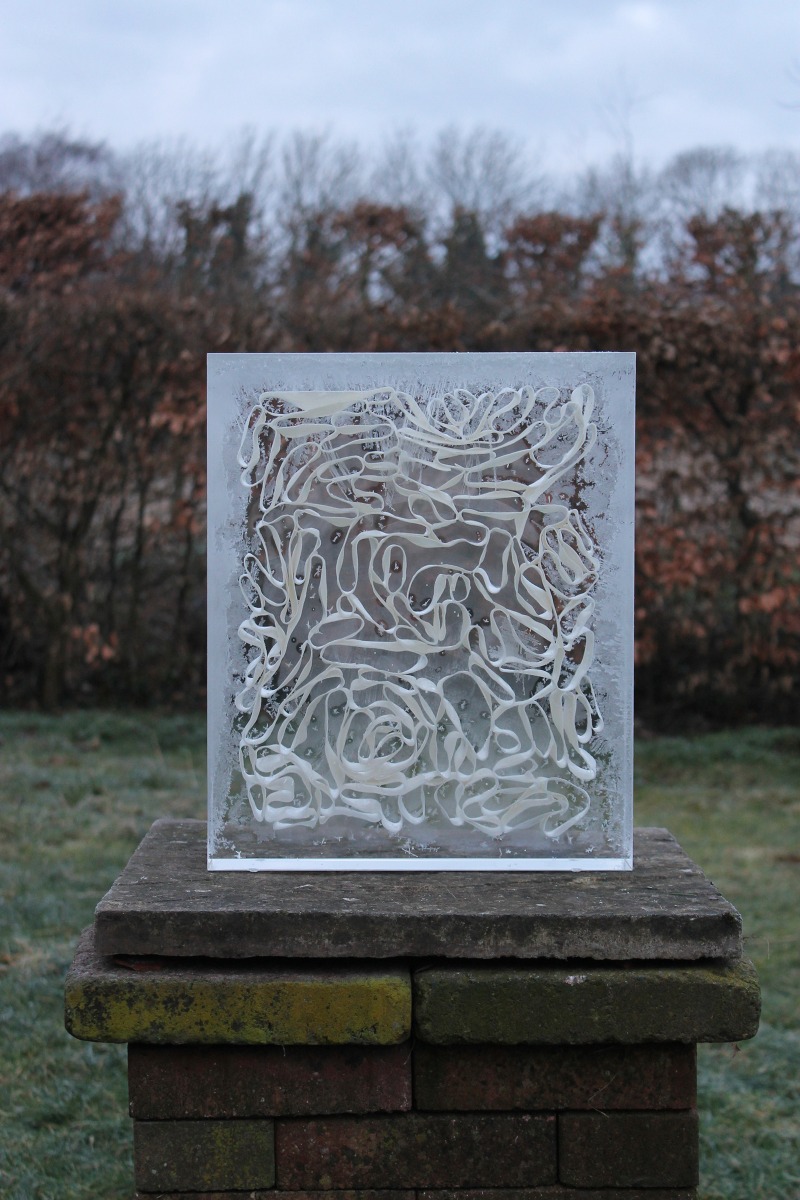
These free-standing artworks have an otherworldly quality to them. Every inch feels intentional and is positively dripping with elegance and style. The forms and lines they employ seem almost impossible at first glance, and yet they’re very authentic.As with the wall-mounted creations described above, the way that light interacts with the surfaces of these artworks is truly remarkable. When positioned strategically within a lobby or similar interior, these pieces could really elevate the design of the entire space.
Ebb – A Contemporary Art Installation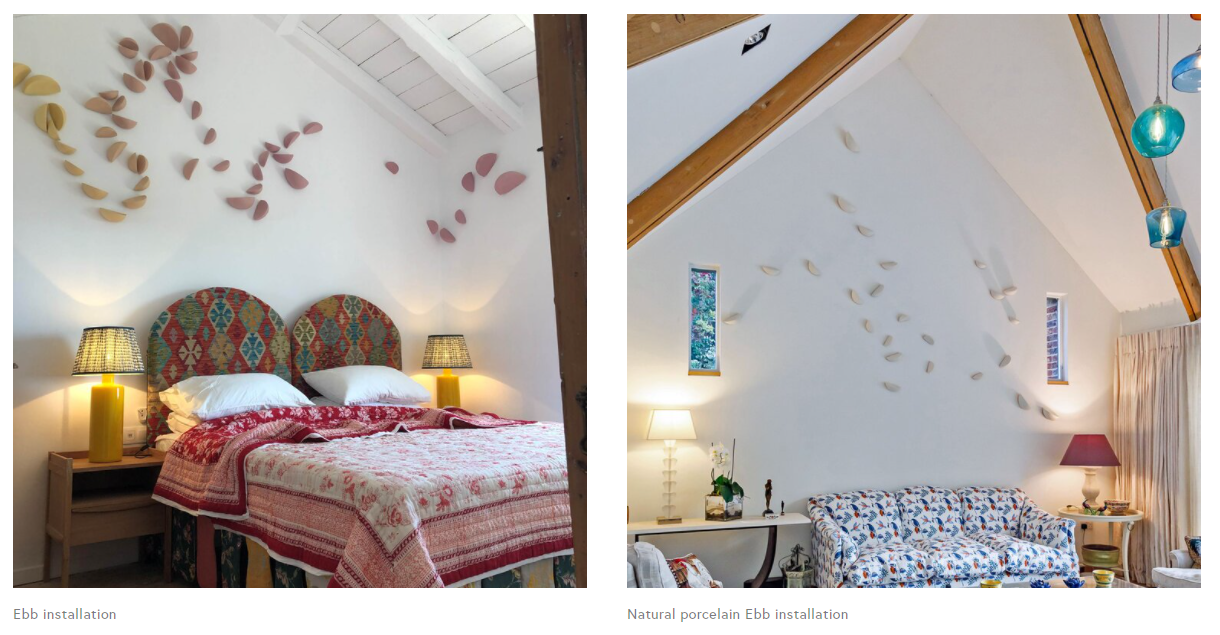
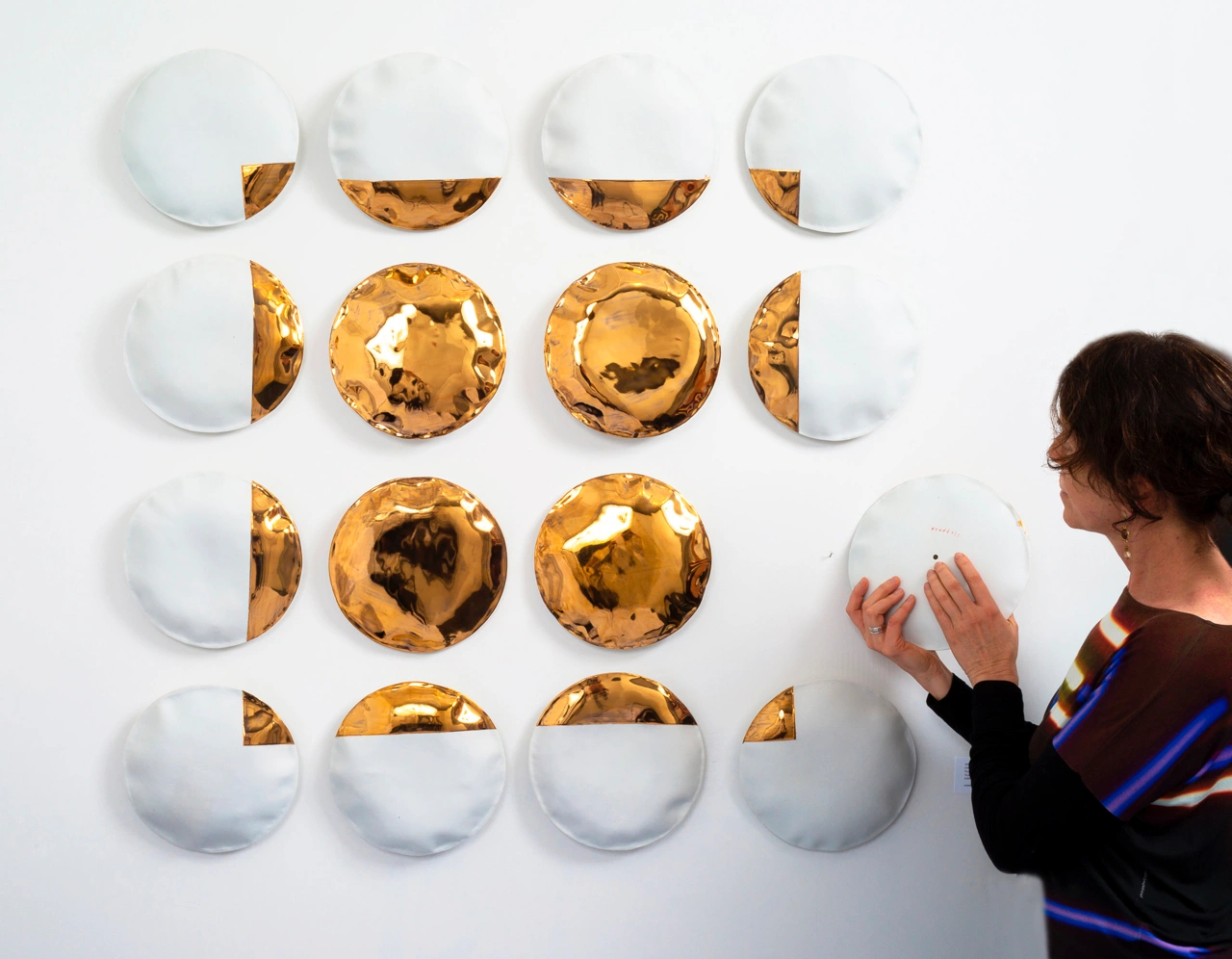
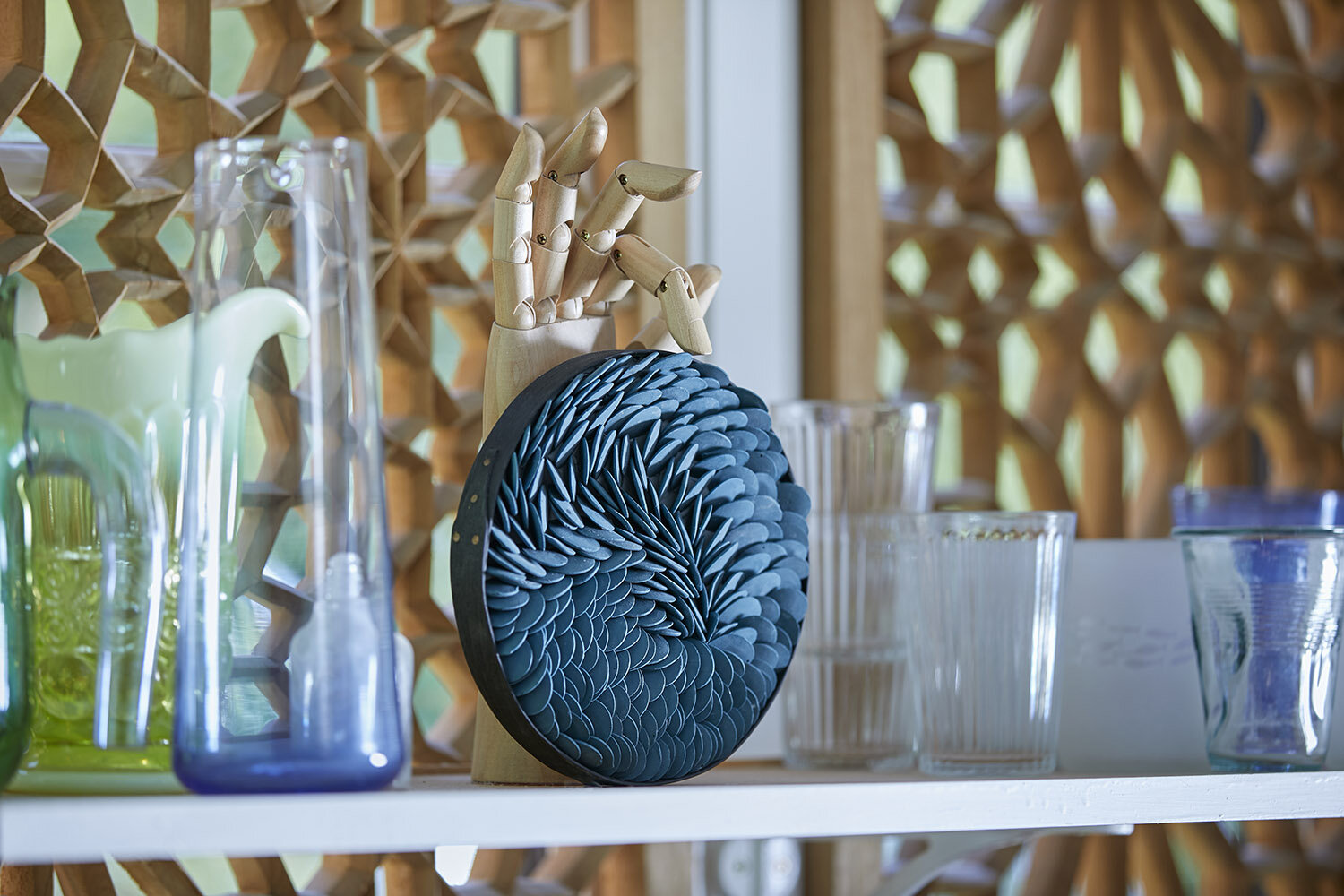
First commissioned by designers in Hong Kong in 2019, Ebb is a two-tone contemporary art installation that engenders a palpable sense of awe and elegance. The contractors,z Venus Assets, wanted to use Fenella Elms’ designs on a feature wall in one of their Chinese restaurants.After a detailed process of planning and painstaking design, Elms created a piece that would spread throughout the restaurant’s seating area for guests to enjoy. The curved, soft lines of each porcelain ‘pod’ interact wonderfully with the available light in the space, casting intriguing shadows and flickering lines.
A selection of smaller, carefully curated works can usually be bought via the link above. Unfortunately, the artist’s playfully named ‘shop window’ is currently closed. Want to be the first to know about new releases and the store’s eventual reopening?
Sign up to their mailing list for regular updates!
SOA Arts – Your Source for Hotel Decoration and More
When it comes to designing the interiors of your hotel, restaurant, or business, we understand that only the best will do. We have over a decade’s experience in curating, commissioning, and sourcing artwork that makes a lasting impression.As a Chinese art factory and interior design specialist, we’ve got everything your property needs to transform its appearance and make the right first impression. Wondering how to get started? Know exactly what you’re looking for?
Get in touch today, and we’ll be happy to help. For all your hotel decoration needs, think SOA Arts.
-End-
-
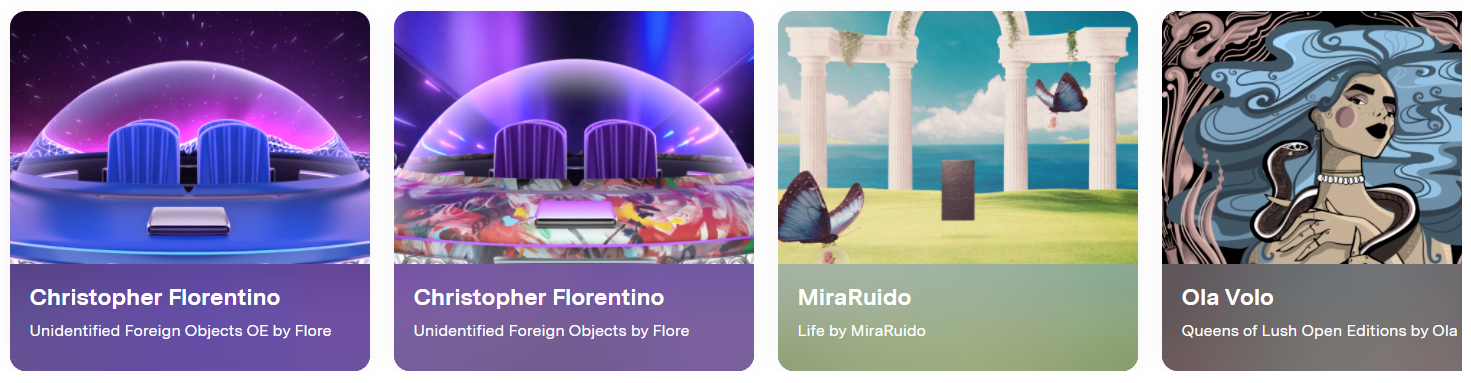
There’s been a recent boom in the art world of people creating and selling work that doesn’t exist in the physical world. Referred to as “non-fungible tokens” or “NFTs,” for short, these pieces are made entirely online using new technologies.
While some people might dismiss NFT artwork as nothing more than a fad, a few artists have proven that there’s a ton of money to be made in them.
Here are 5 millennial artists who have made millions on their NFT artwork.
Murat Pak - “The Merge”
Price Tag: $91.8 million
On December 2, 2021, Murat Pak became the most expensive living digital artist after the leading NFT marketplace Nifty Gateway held an unusual auction that involved his creation, titled “The Merge.” The sale saw more than 28,000 collectors spending a whopping $91,806,519 to snap up 312,686 total units of mass, or what is most commonly referred to as a non-fungible token (NFT).
“This is an incredible moment for NFTs, with one of the top digital artists setting this record at Art Basel,” said Duncan Cock Foster, co-founder of Nifty Gateway. “This is further validation for NFTs as a medium of art and innovation that could only be integrated through blockchain technology.”
An artist and graphic designer from Turkey, Pak has spent the last two decades making waves in the crypto media world. He’s best known for creating “Archillect,” a digital curator that uses artificial intelligence to discover and share visual media.
Beeple - “Everydays: The First 5,000 Days”Price Tag: $69.3 million
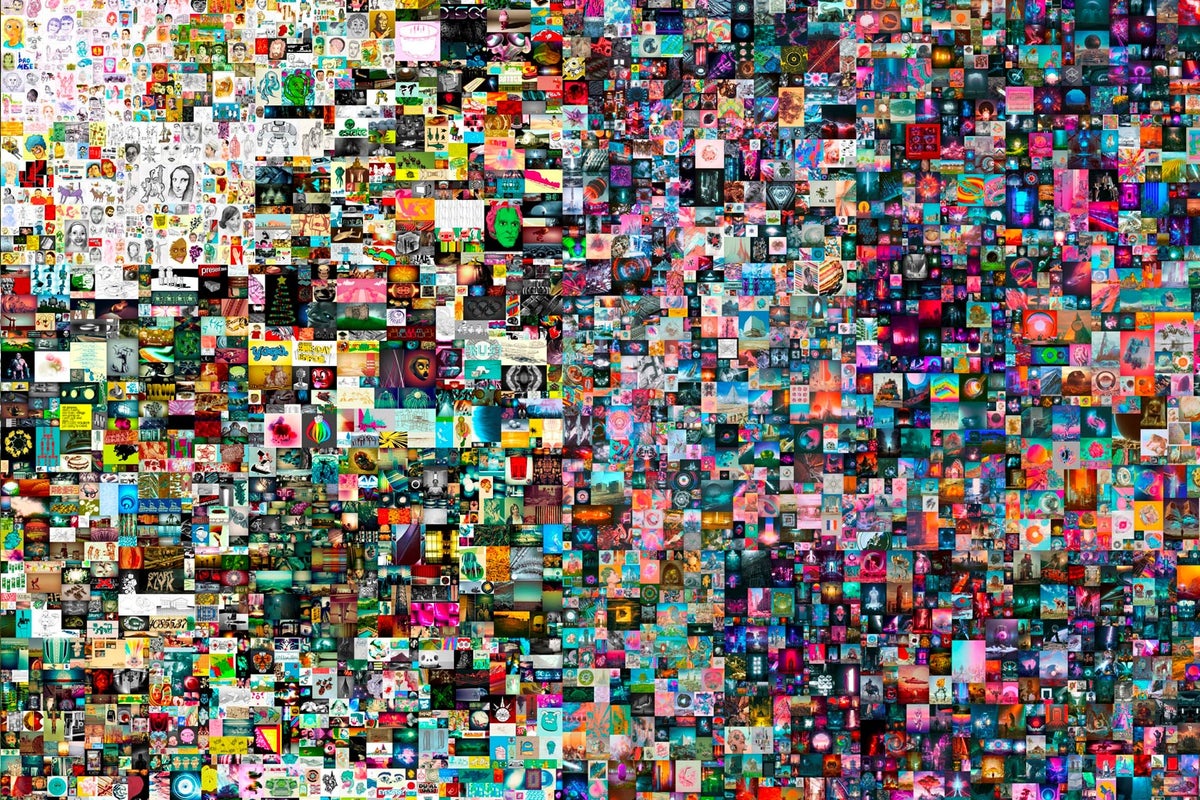
In March 2021, Mike Winkelmann – the digital artist known as “Beeple” – smashed records when an NFT of his piece “Everydays: The First 5,000 Days” was sold by Christie’s auction house for $69 million. It was made using images of his art that he had posted online every day for the past five thousand days, which was part of a project that he had started in 2007.
“Artists have been using hardware and software to create artwork and distribute it on the Internet for the last twenty-plus years, but there was never a real way to truly own and collect it,” said Beeple in a statement. “I believe we are witnessing the beginning of the next chapter in art history, digital art.”
The record-breaking sale came after other highly valuable auctions. The year before, a pair of Beeple’s NFTs fetched more than $66 million each, while a collector bought a series of his works for a total of $3.5 million.
Larva Labs - “CryptoPunk #4156”
Price Tag: $10.2 million
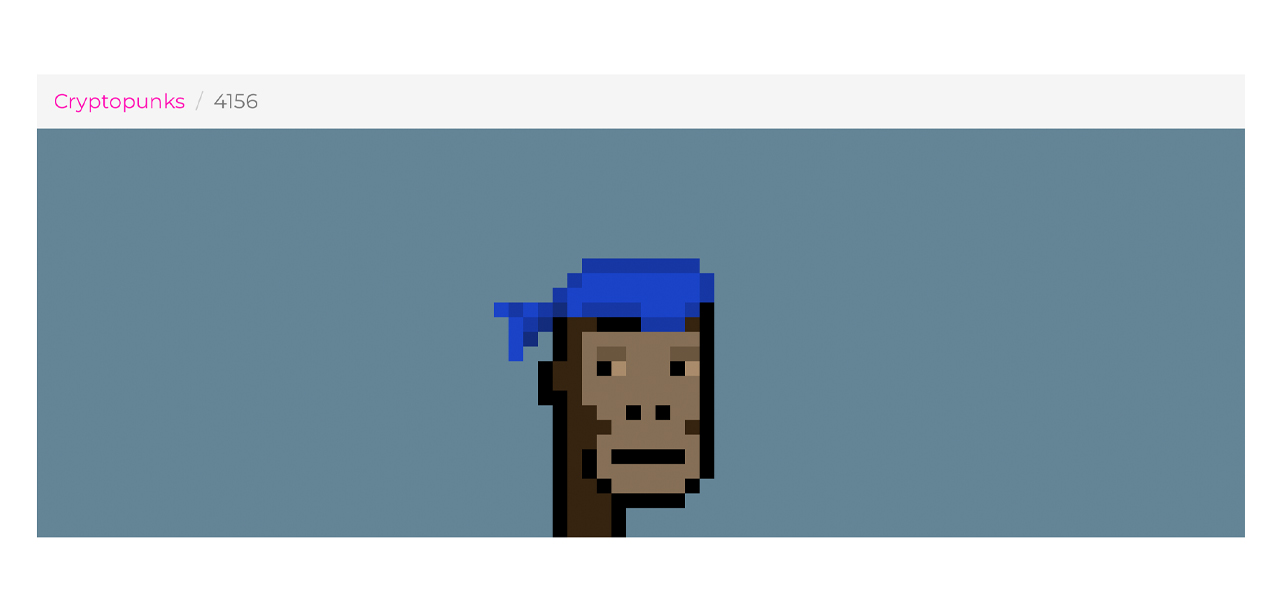
The art world was rocked in December 2021 when an anonymous collector dropped 2,500 ETH – the equivalent of $10.2 million – on “CryptoPunk #4156,” a rare Ape Punk that’s one of 24 in a collection of 10,000 items.
Created by the collective “Larva Labs,” CryptoPunks are uniquely generated characters featuring different attributes, which determines their value. For instance, Punks wearing ordinary items, such as beanies and hoodies, are usually sold for anywhere between $350,000 and $500,000. Meanwhile, one that depicted an alien species (CryptoPunk #7523) was purchased for $11.7 million.
“Looking back now, the CryptoPunks ended up being the first of its kind on the Ethereum blockchain,” said Matt Hall, co-founder of Larva Labs. “Non-fungible tokens are one of the more exciting use cases for the blockchain and there are [venture capitalists] investing in lots of companies working on related projects. That’s pretty amazing to see, I can’t wait to see where all of this ends up.”
“Overall, we’ve been lucky enough to be early on several big technologies,” Hall added. “I think we’re getting pretty good at zeroing in on what’s really interesting about new technology. We were both early users of the Internet before it went mainstream, and were already writing smartphone apps full-time back in 2006.”
Mad Dog Jones - “REPLICATOR”
Price Tag: $4.1 million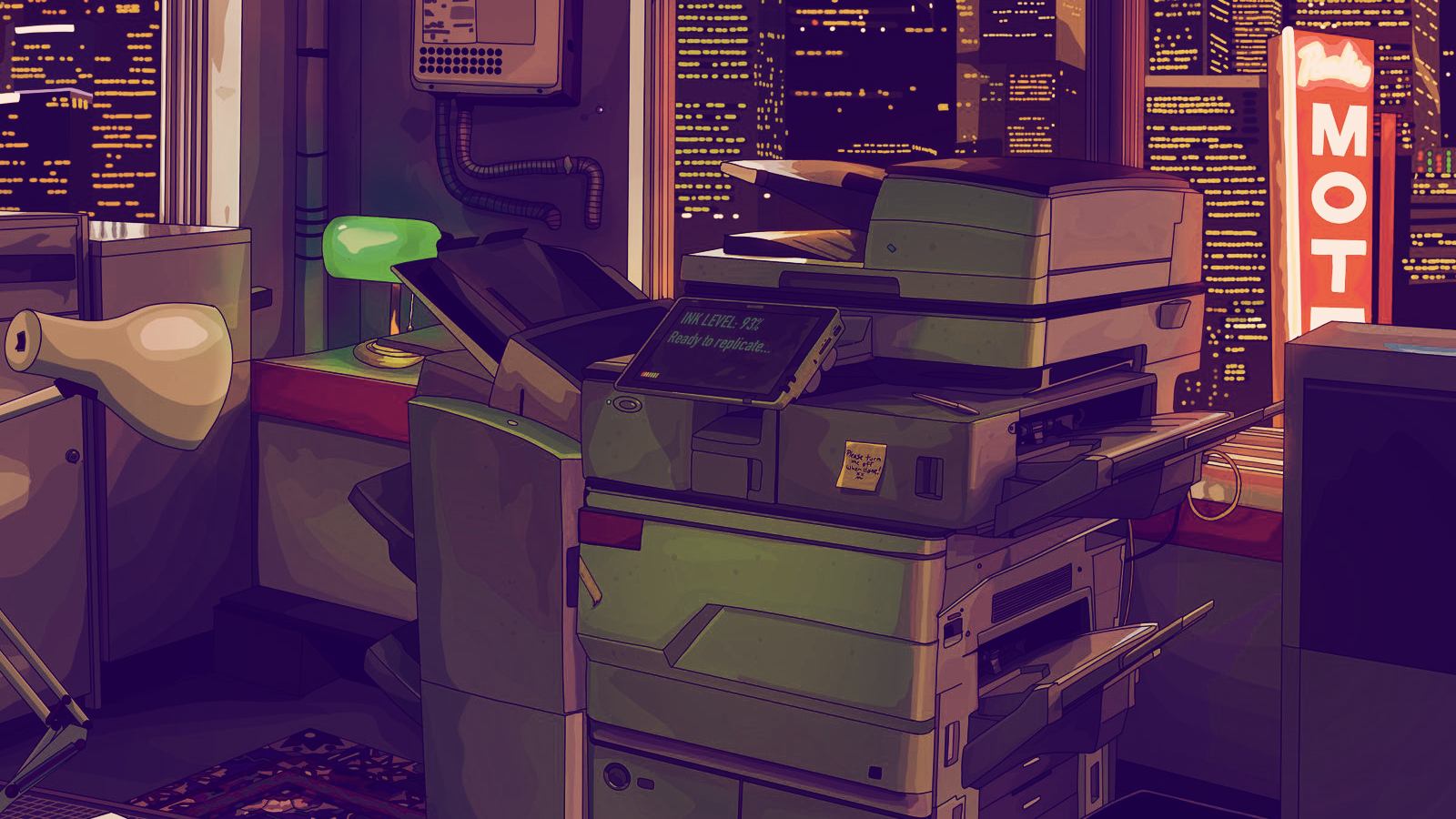
In April 2021, Micah Dowbak, or “Mad Dog Jones” became the most expensive living Canadian artist when his “REPLICATOR” sold for a staggering $4.1 million through the Phillips’ auction house. Unlike most other digital pieces, this is a copy machine backed by a unique smart contract programmed to automatically spit out a new generation of NFTs every 28 days. All these can be either kept or sold, depending on what its owner wants to do.
“I think that there’s a lot of misunderstanding and confusion floating around the traditional art collecting community about what NFTs are exactly and how people should go about acquiring these works and supporting these artists,” explained Mad Dog Jones. “By having a traditional auction house sell the artworks, it really opens up the door to a much larger community that is not fully immersed in the crypto space.”
He added, “The idea of NFTs is so new and the themes around REPLICATOR are reflecting on past innovation. It felt right to house this new artwork in an institution so firmly grounded in the past.”
Trever Jones - “The Bitcoin Angel”
Price Tag: $3.2 million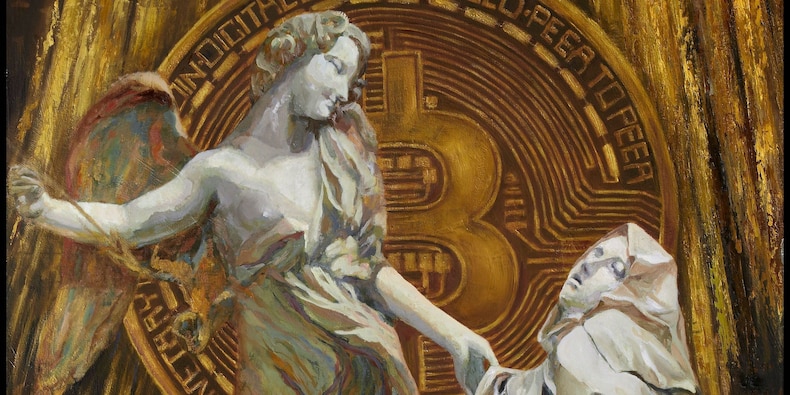
Renowned Scottish-Canadian visual artist Trever Jones shattered records when he launched an open edition drop on the NFT marketplace Nifty Gateway. Titled “The Bitcoin Angel,” it sold 4,167 NFTs, which translates to over $3.3 million in sales. He also encouraged them to hold on to their piece until Bitcoin reaches a total value of $77,777, further promising that if they do, they’d be entered into a draw to have their portrait drawn by him personally.
“In the early days, there really were only a handful of [crypto] artists,” said Jones. “We all spoke to each other daily and got excited about who’s doing what. In the last six or so months, it’s really blown up. It mirrors the art world in general, with money, egos, and personalities, and everybody wanting a piece of the pie.”
Since dipping his toes into crypto art in 2018, Jones has broken multiple records. For instance, “The Bitcoin Angel” became the most expensive open-edition NFT artwork ever sold. His pieces have also fetched extremely high bids on marketplaces dedicated to non-fungible tokens, including on Nifty Gateway, SuperRare, and MarkersPlace.
* * * * *
With these high prices, it’s clear that non-fungible tokens (NFTs) are increasingly becoming accepted by artists and art collectors from across the globe.
All images via niftygateway.com
-End-
-
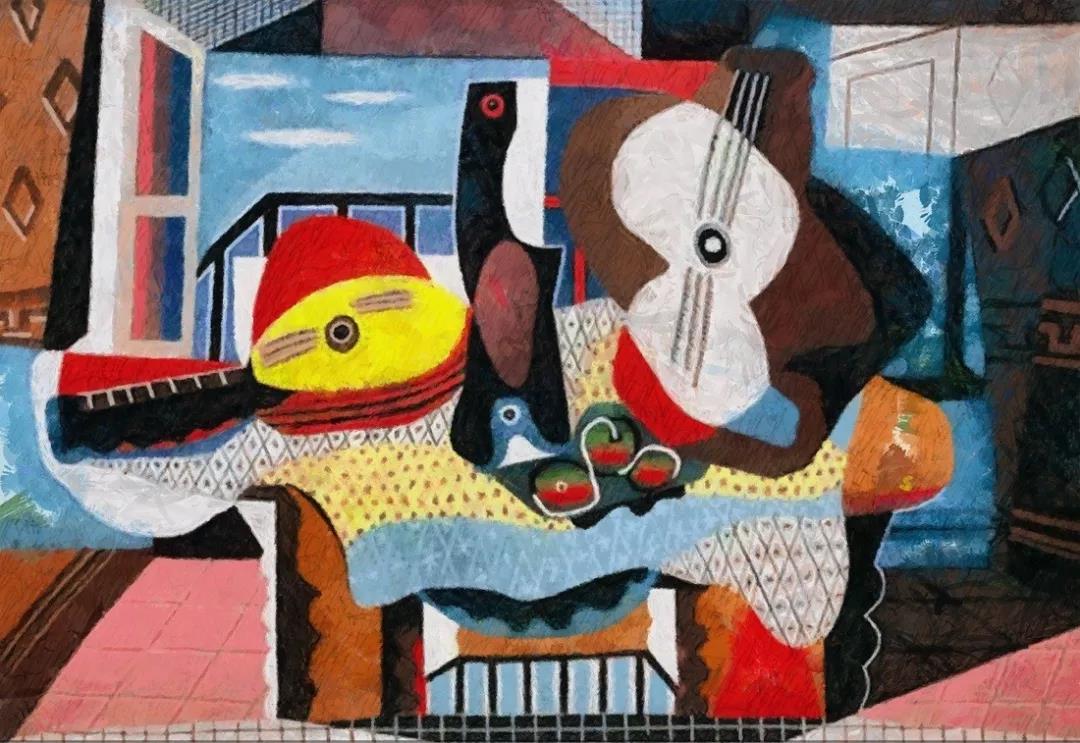
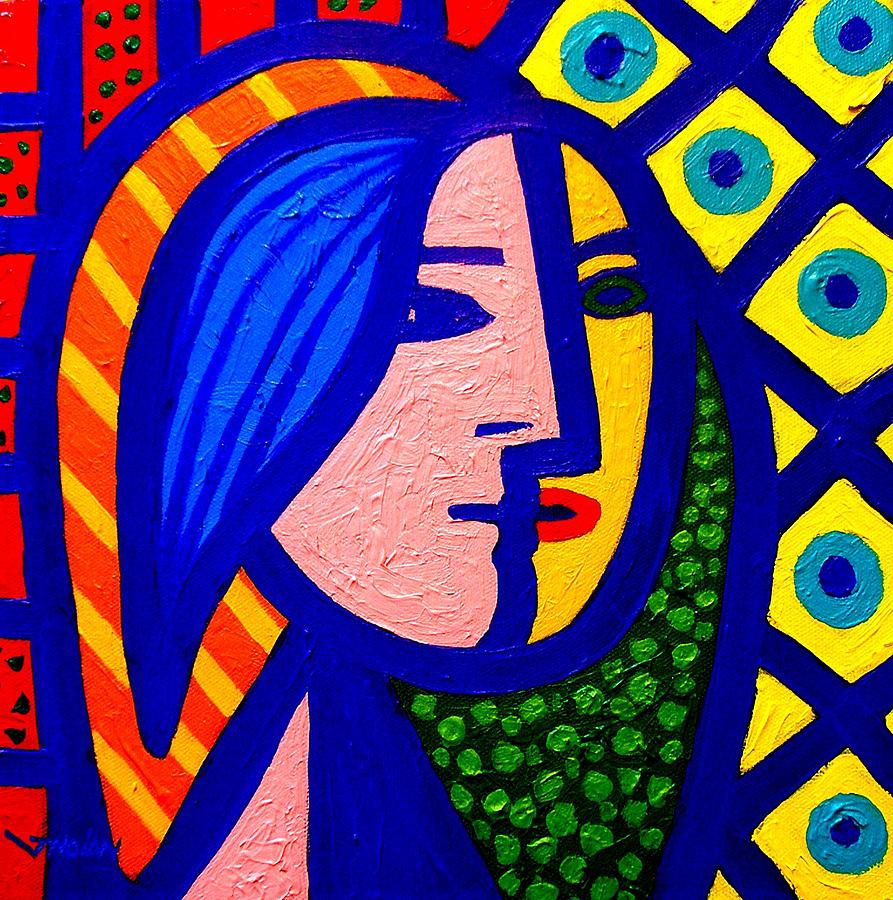 Homage To Pablo Picasso Painting by John Nolan
The era of modern art was significant in new features, experimenting, and new styles. It allowed artists to fully express themselves and what they felt. Like every human being, artists also have different opinions and methods of showing their world to us. Every artist uses unique lines, colors, and shapes, which represent what they want to say the best. Sometimes even the most simple painting has a hidden story from the artist's life. Keep reading, and you'll find six surprising stories of modern artists.
Paul Gauguin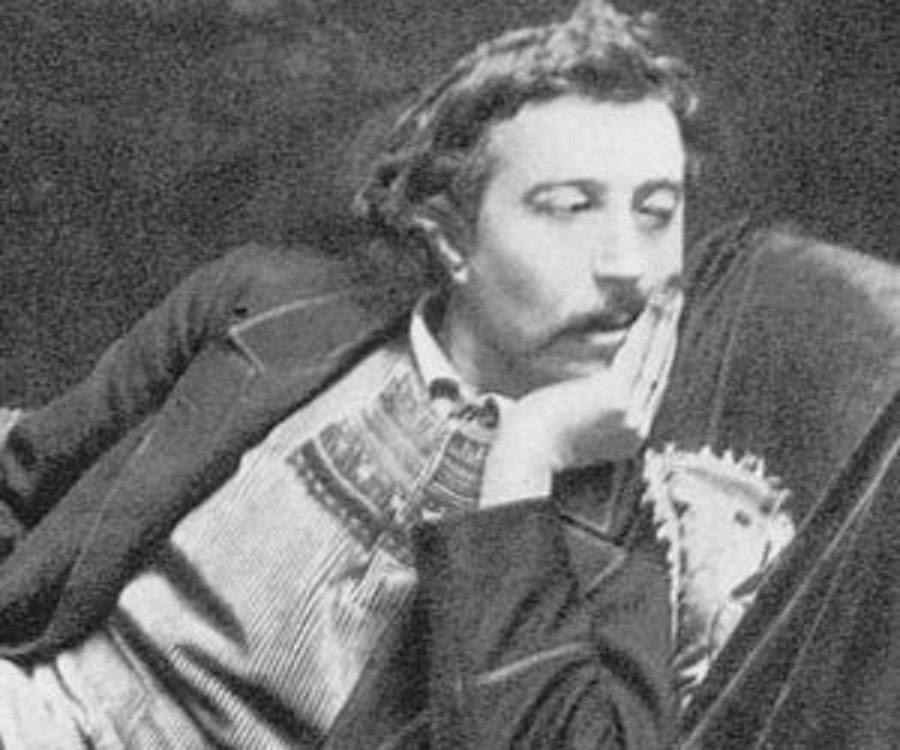
Paul Gauguin was one of the most influential figures in French art. He was active in the early 1900s, and his work represented the Post-Impressionism art movement. When he was only two years old, his father decided to move the Gauguin's to Peru. (1850) Since then, Paul Gauguin has traveled to many places that impacted his life and art. Who knows? Maybe this start of his childhood in Peru made him want to see as many places as possible. Paul Gauguin loved escaping from french society and sought inspiration in exotic destinations.
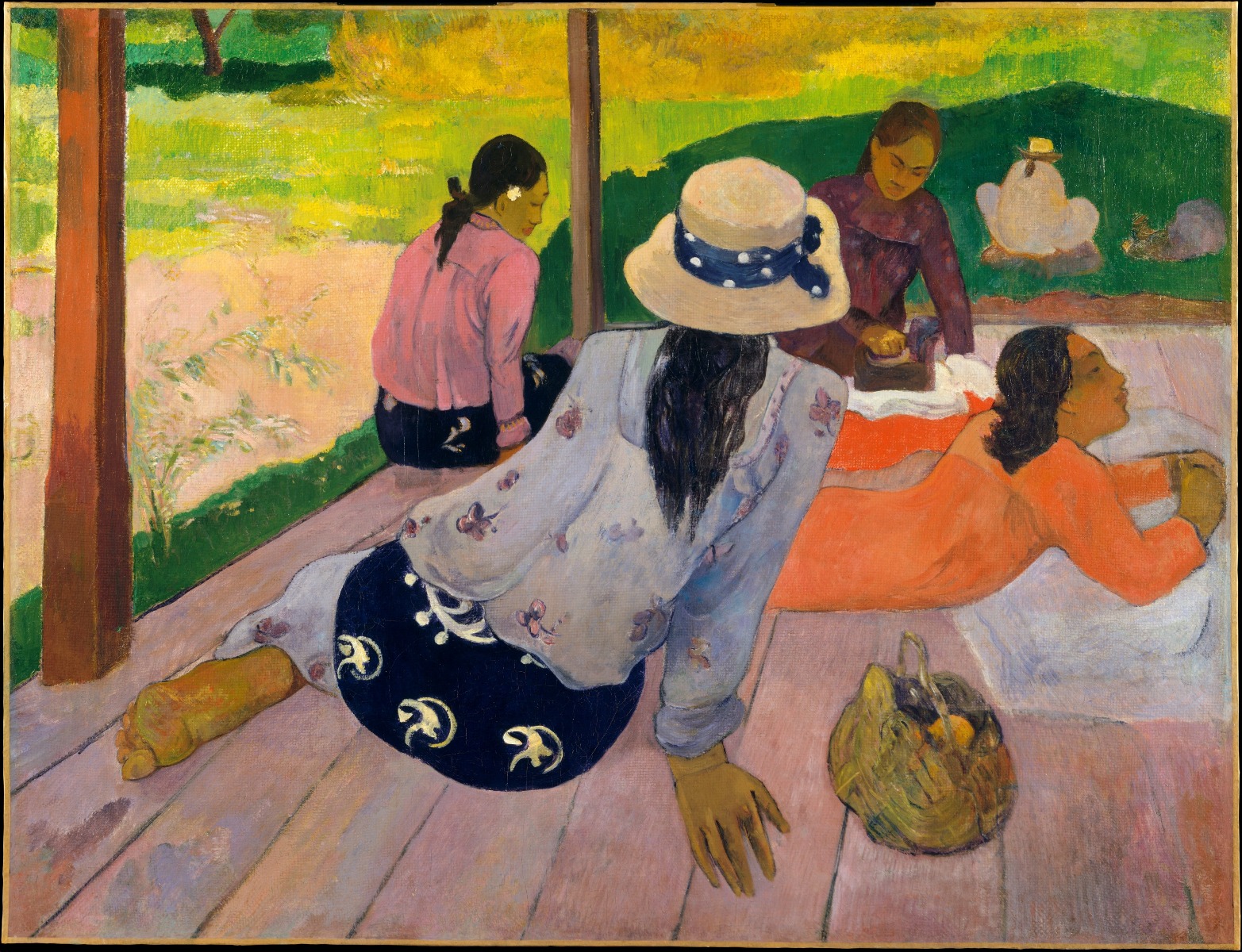
Paul Gauguin, The Siesta,
One of his favorites was Tahiti. Although his wife and her family weren't big fans of his career choice, he promised them to become rich men when he left in 1891 as a 43-year-old. And it's safe to say that Gauguin fell in love with this place. After all, his most famous work represents the Tahitian culture. We can picture the colorful world of azure oceans and exotic faces through his art. No surprise Gauguin was enchanted, such as his story is enchanting to many others now.
Pablo Picasso
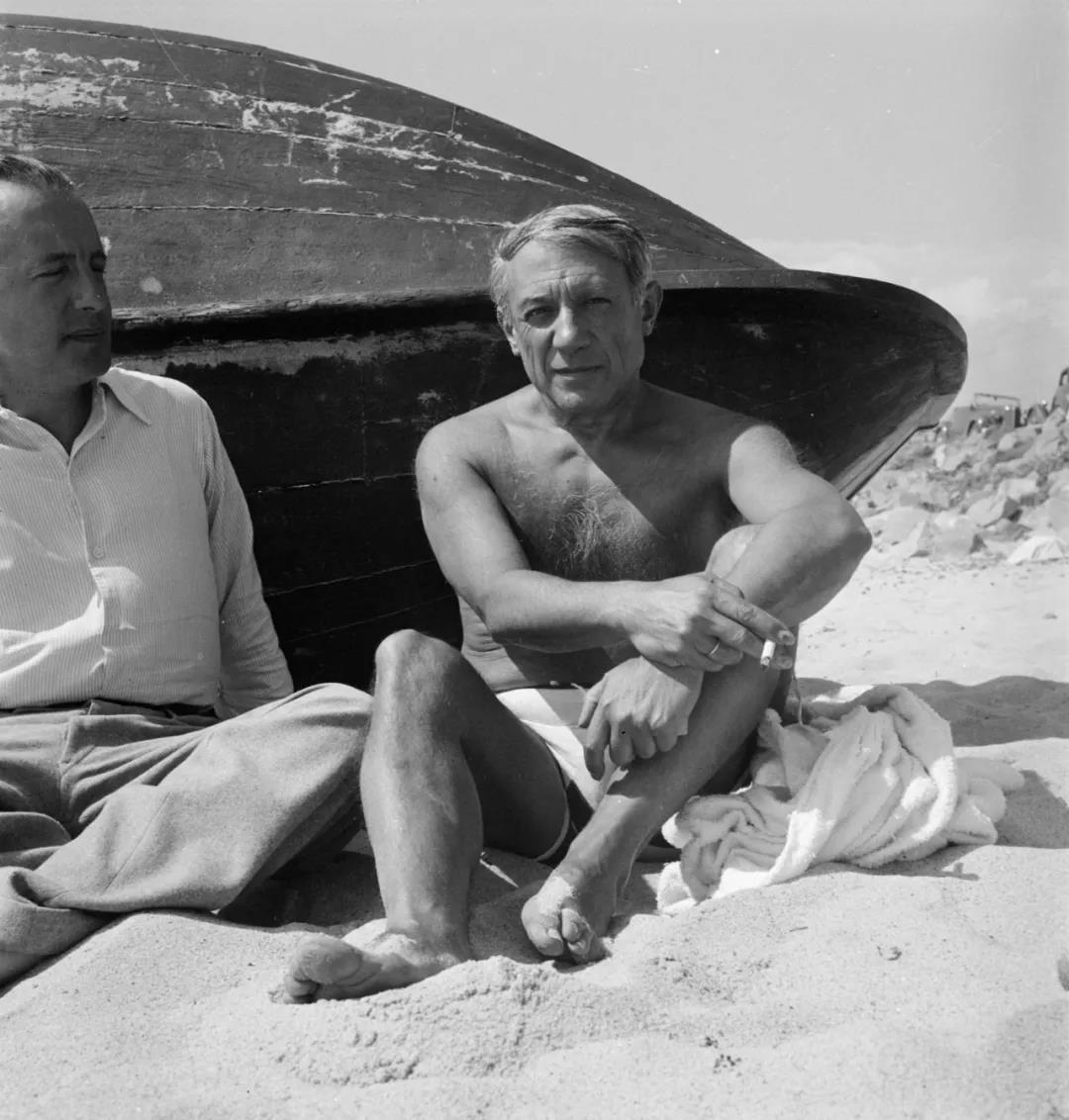
What kind of post about modern artists would this be if we didn't include probably the most famous painter of all time, Pablo Picasso. He was the first-born of a Spanish couple in Malaga, even though he later spent most of his life living in France. Since his father was also an artist, he was taught to express his feeling through art from a young age. And that's precisely what we can see in his paintings. When we look at his artwork from the blue period, for example, The Old Guitarist, we can see that there isn't much color, which evokes sadness or depression. He used exclusively blue color to express his sorrow from a loss of a friend to suicide. Other motives from this period are blindness or poverty.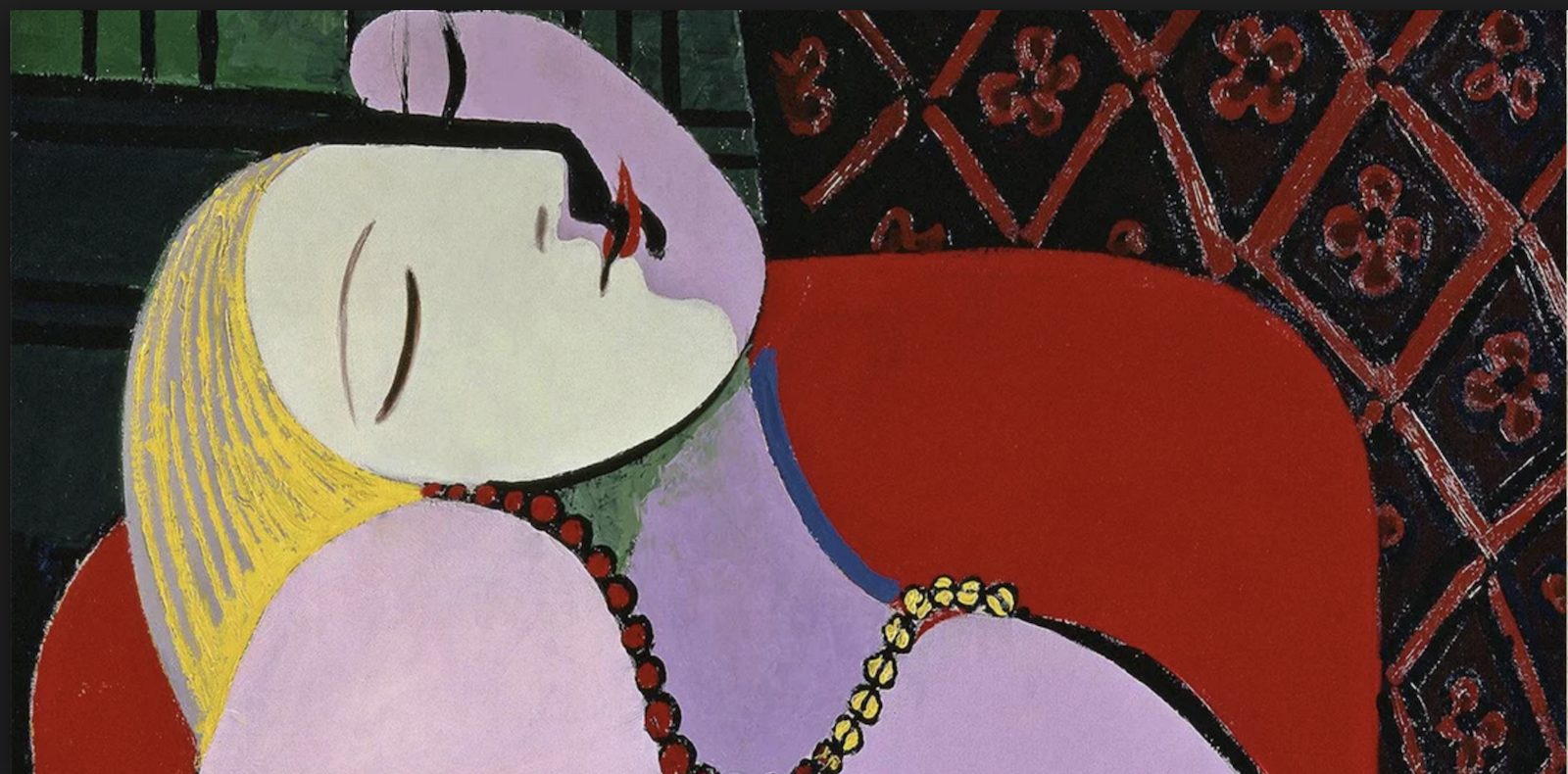
Pablo Picasso, The Dream, 1932, private collection. Pinterest.
But as his life went on, he also experienced some beautiful moments, like falling in love. And he did that many times. But every time he devoted his heart to a woman, he made her the center of his world, meaning she was the center of his art. Just like we can see Fernande Olivier in the Head of a Woman or Eva Gouel in Woman with a guitar. Over the years, Picasso found his muse in women, but after his last wife Jacqueline Rogue died, he had lost his creative spark.
In his 92-year long life, Pablo Picasso had better and worse periods in his life, but he always managed to pour his emotions into his art. And we can be happy he did so.Frida Kahlo
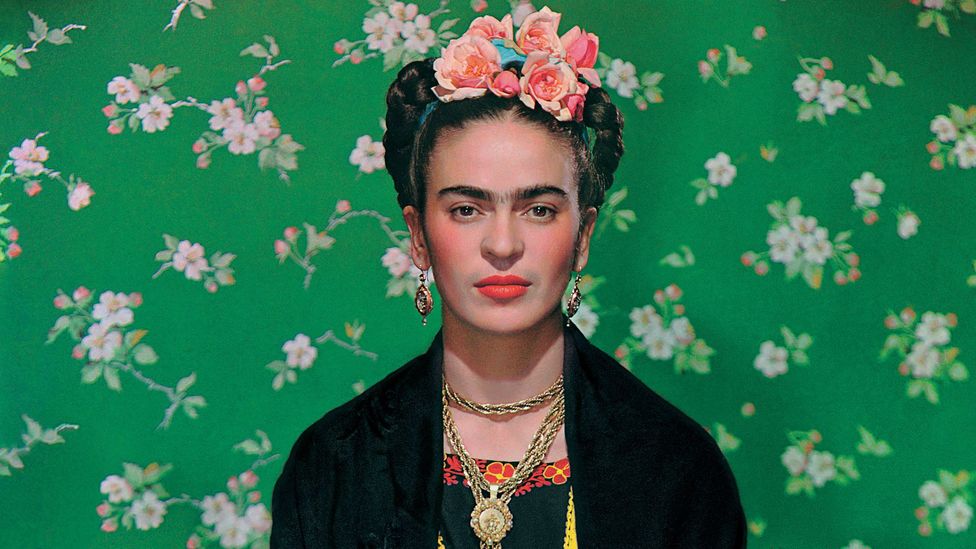
Frida Kahlo's life was never easy. She struggled mentally and physically, which we can see and feel through her art. But even though she couldn't see it then, it had made her stronger, making her now a feminist icon. Her journey with art began when in 1925. When she was 18 years old, she was in a bus accident in which she was impaled by a steel handrail. That resulted in numerous surgeries and a whole body cast for 3 months. During this time, her family encouraged her to paint and brought her the That's when she first expressed her struggles in a painting called A broken column.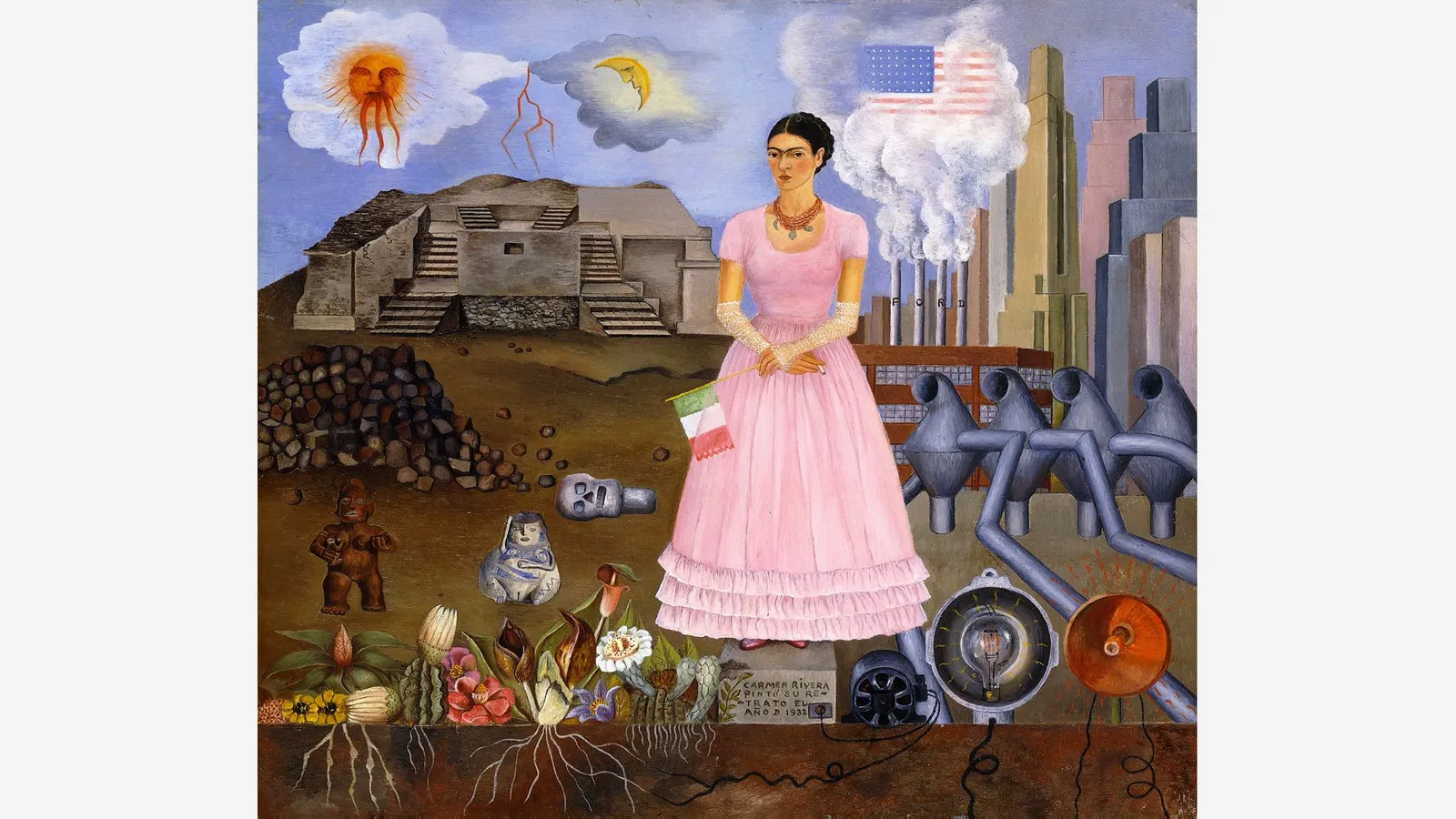
Objects are on display alongside paintings, including Self-Portrait on the Border Between Mexico and the United States of America
(Credit: Modern Art International Foundation)
Her life then brought her in the way of a Mexican muralist, Diego Rivera, whom she was married to. As her marriage seemed idyllic at first, it turned into a nightmare for Frida because of her struggle to conceive a child. She portrayed her pain in a painting called Henry Ford Hospital. This particular work shows how she felt during her second miscarriage. Frida's and Rivera's relationship was also troubled by her husband's affairs, including one with her sister. The couple eventually split up several times, leaving Frida with all the emotions. No surprise, she turned to her lifetime love – art and painted The two Fridas. This work represents her loved and unloved versions.
Vincent Van Gogh
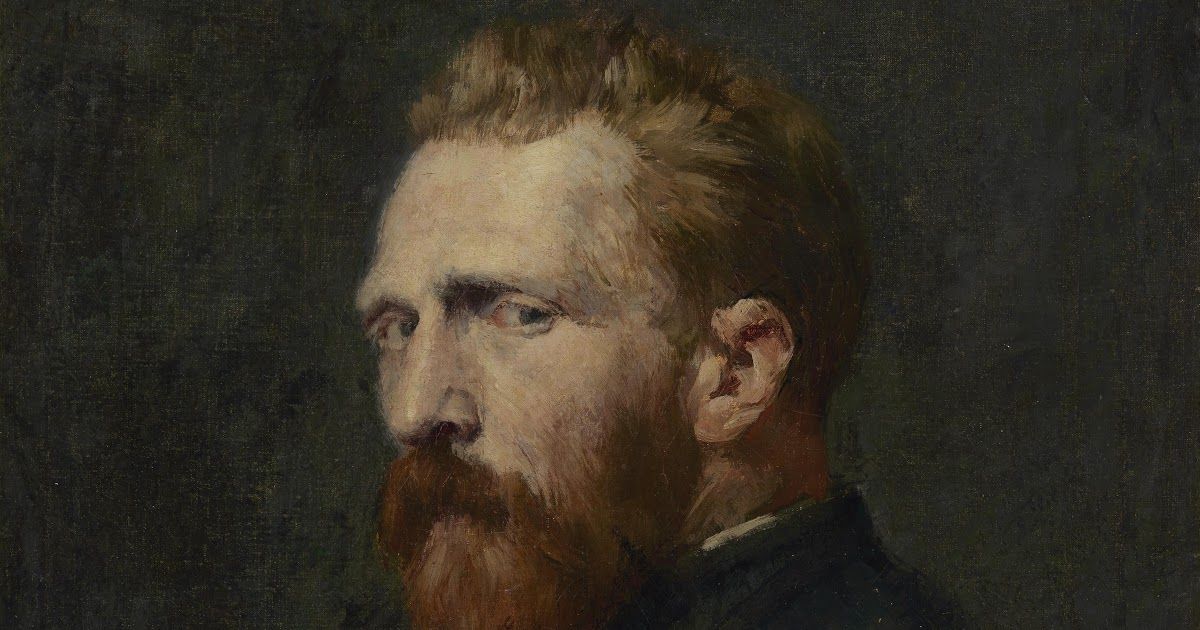
Vincent Van Gogh, also known as the tortured artist, was born in Holland in 1853, and even though his career was short, he had a vast impact on art. At first, he tried many different professions until he found his true passion for painting, and since then, he hasn't looked back. He painted almost 900 pieces that showed his problems with mental health. He was utterly captivated by the brushstroke and emotional colors that his finest works were produced within a three-year period. This makes him one of the most remarkable artists of all time.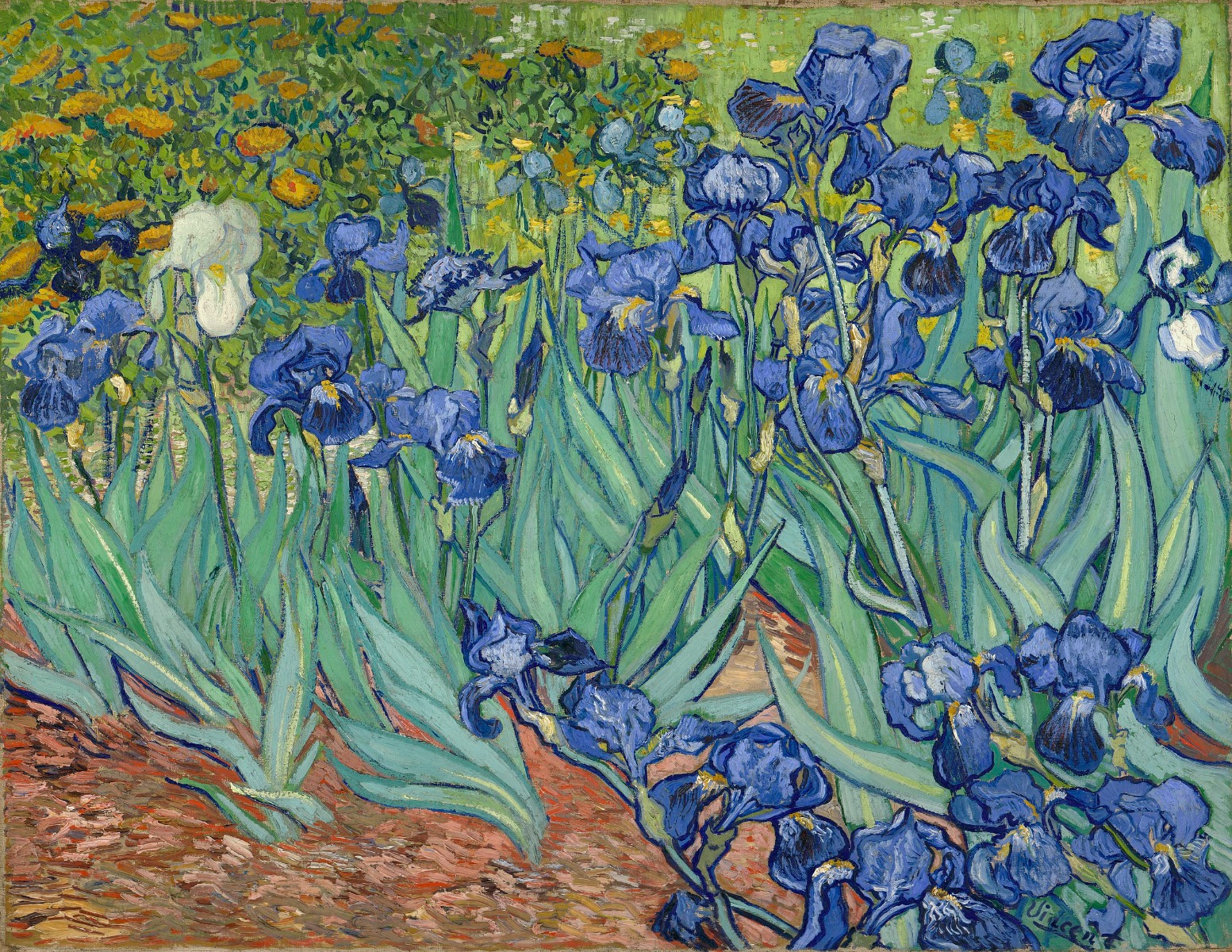
Vincent van Gogh - Irises (1889)
Even though he fought a lot of battles with his own head – which resulted in the cutting of his won ear- his most famous work, The starry night, represented the last hope he had. He painted the town that sleeps during the day when he looked out the window in the asylum. This painting is full of emotions that Van Gogh couldn't express through words and help to understand what he had been going through at that time.
Gustav Klimt
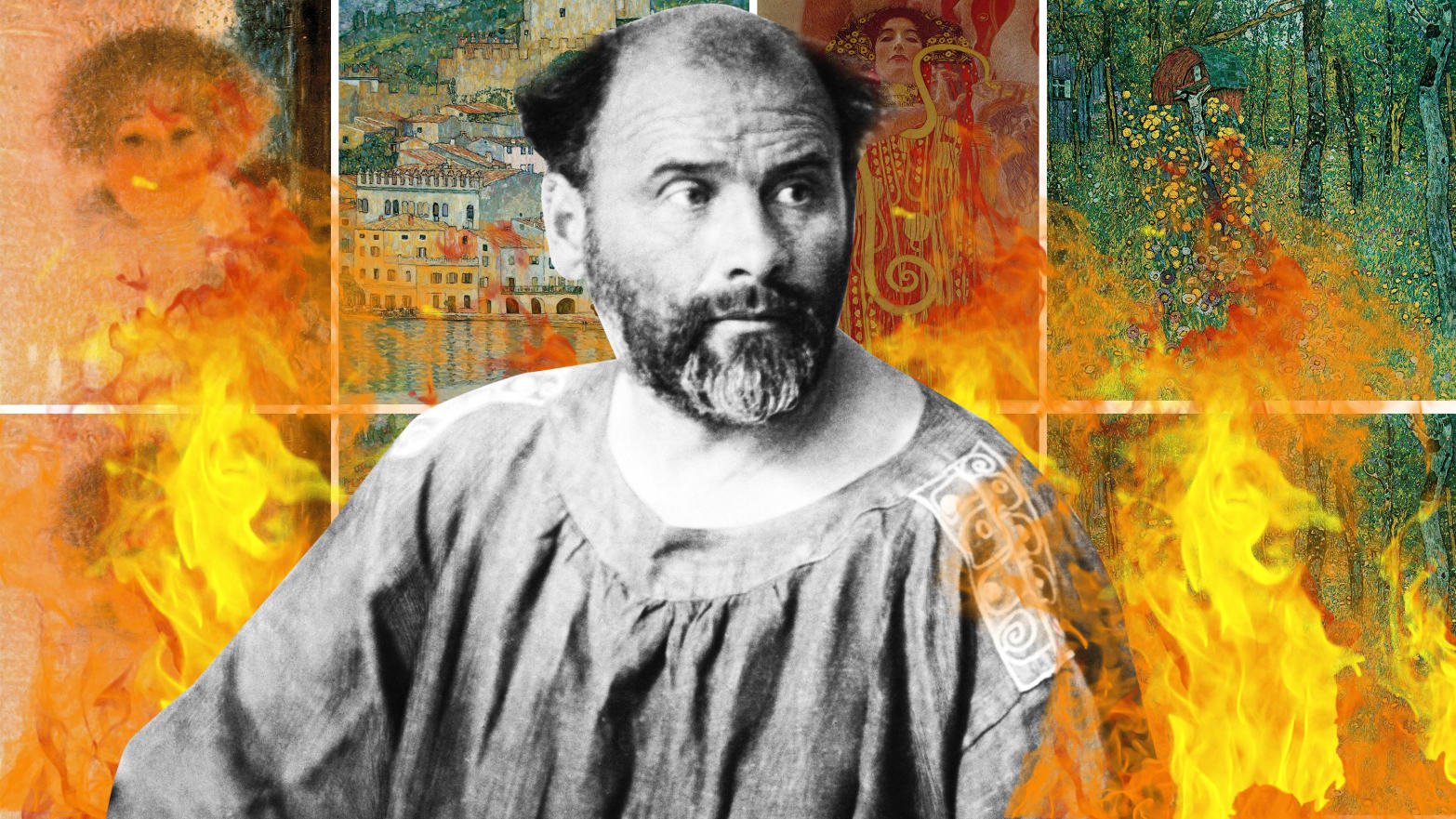
A Viennese artist Gustav Klimt was born as second of seven children in 1862. But after a few years, there was only him, his mother, two sisters, and his brother's widow. The deaths of his family members affected him, but they did not affect his work. He stayed true to his women and cats. The sketches of these animals revealed his soul as a cat-lady, so he kept them a secret. But he didn't hide his love for women. There are many speculations on how many affairs he had because almost all of his works have a woman in the center.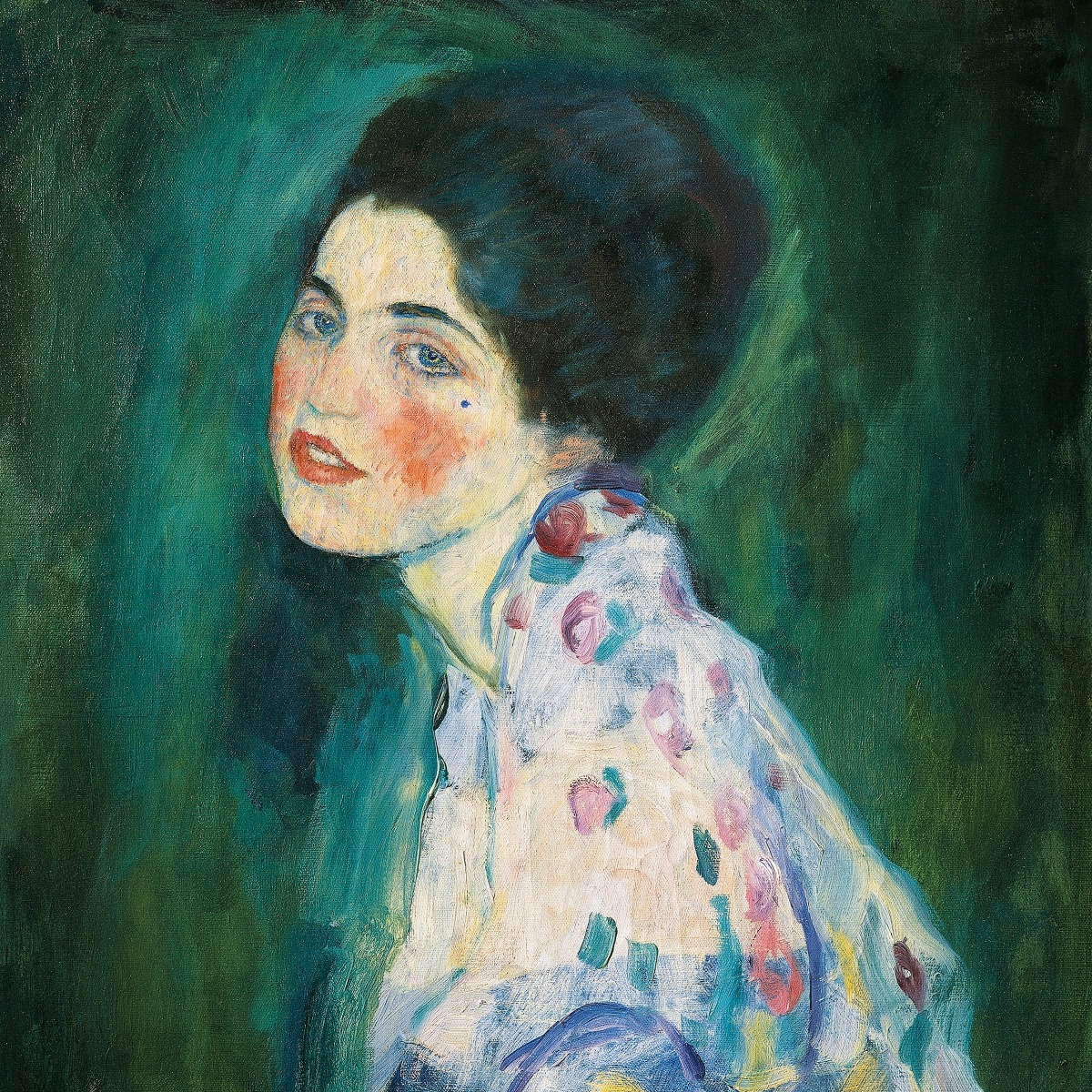
Portrait of a Lady, by Gustav Klimt (1862-1918), 60x55 cm.
Photo by DEA / A. DAGLI ORTI. Image courtesy of Getty Images.
However, one woman inspired his work and provided the basis for his most famous portrait, Emilie Floge. She was the sister of his brother's widow, and it is known they had an intimate friendship, but they never got married. Klimt's unique style and combination of subtle colors didn't leave a significant impact on other creators as we would expect since he didn't travel much. But just like every artist, Klimt also needed a place to go on vacation and unwind to be able to bring more art into the world. And that particular spot was Lake Attersee, where he painted more than 45 landscapes. The sad thing is that he didn't paint one self-portrait, ever. But judging from his paintings, Klimt wasn't afraid to bring revolution into the world of art and society. Just take a look at The Friends, where he portrayed a lesbian couple.
All images via Google.
-End-
-
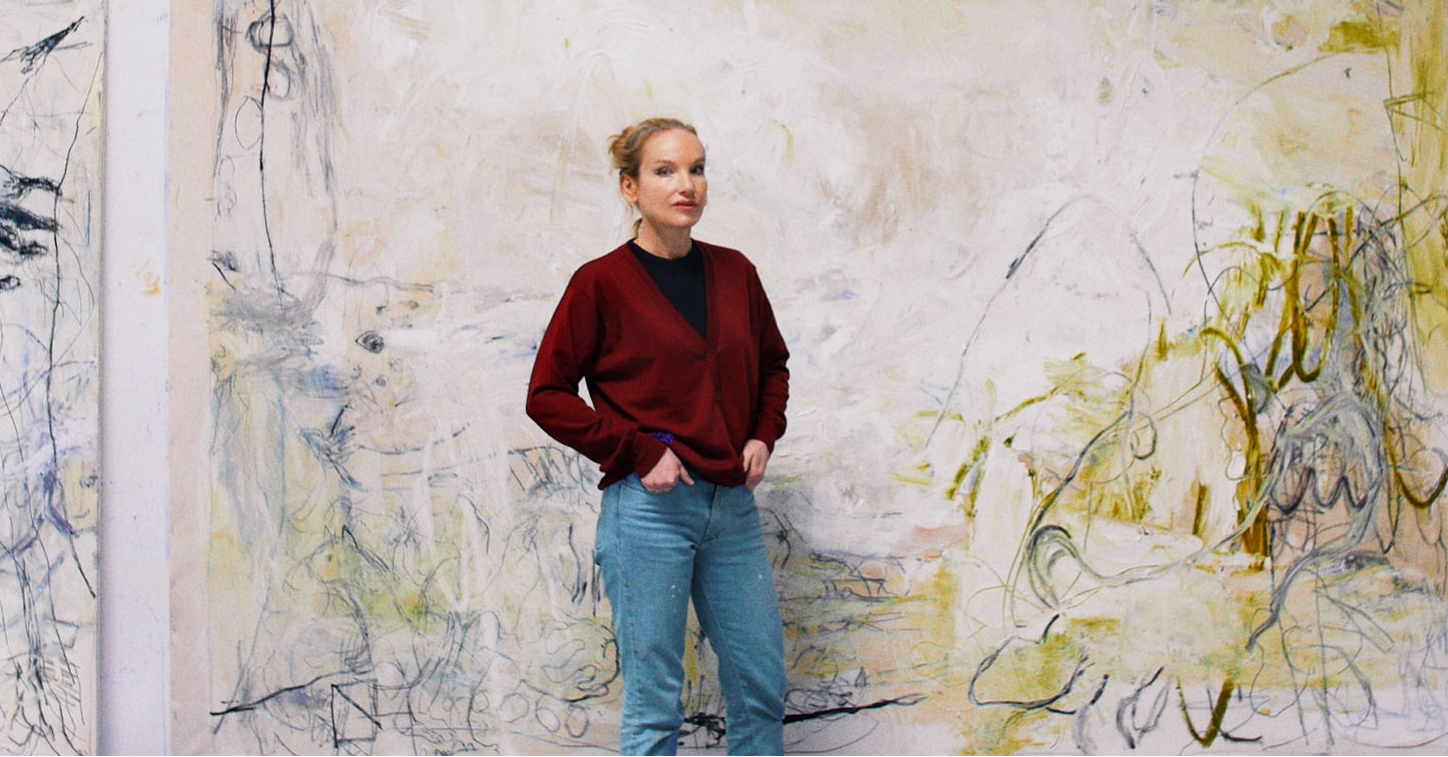

Rita Ackermann, image via Hauser & Wirth
From November 30 to December 4, art collectors and enthusiasts from across the globe flew to South Florida for the annual Art Basel Miami Beach, a fair wherein leading galleries exhibit masterpieces created by both modern and contemporary art masters alike, as well as by emerging artists. Despite strict pandemic restrictions, this year’s affair drew hundreds of attendees, many of whom were more than willing to open their wallets and take home a few pieces.
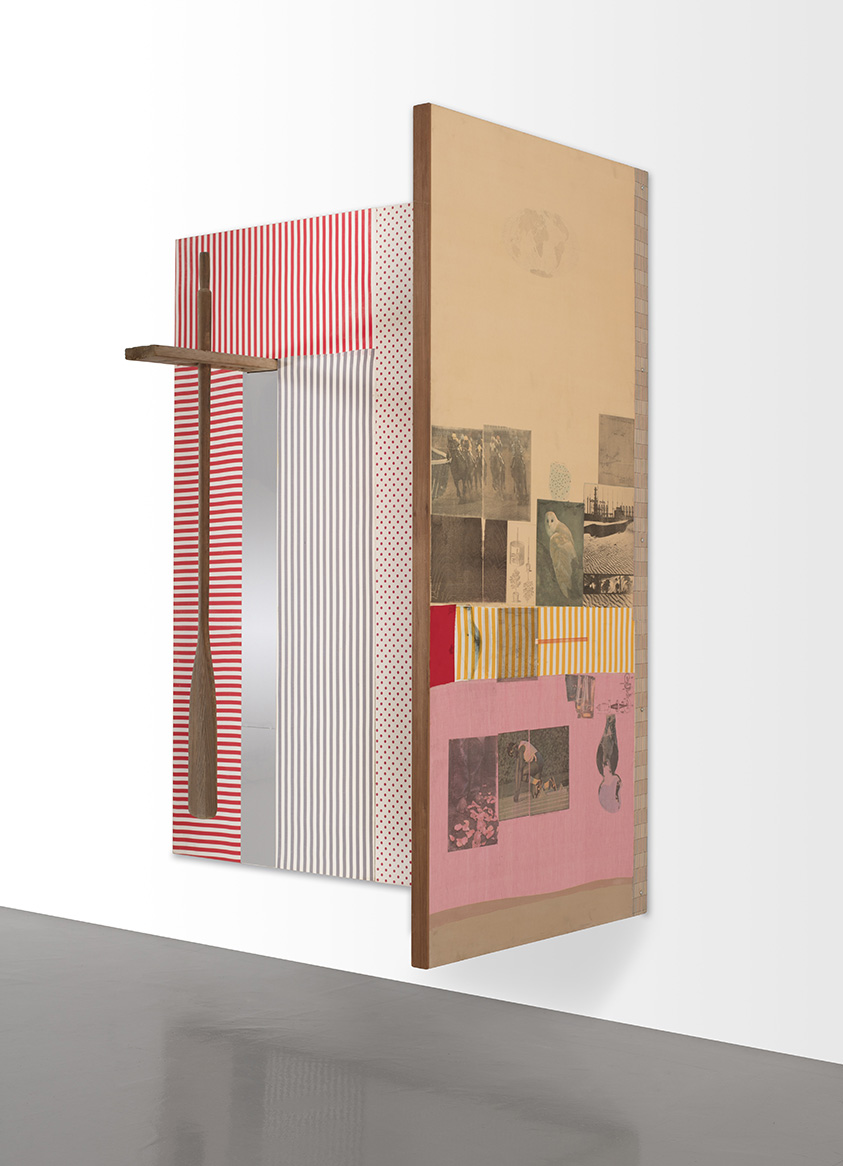
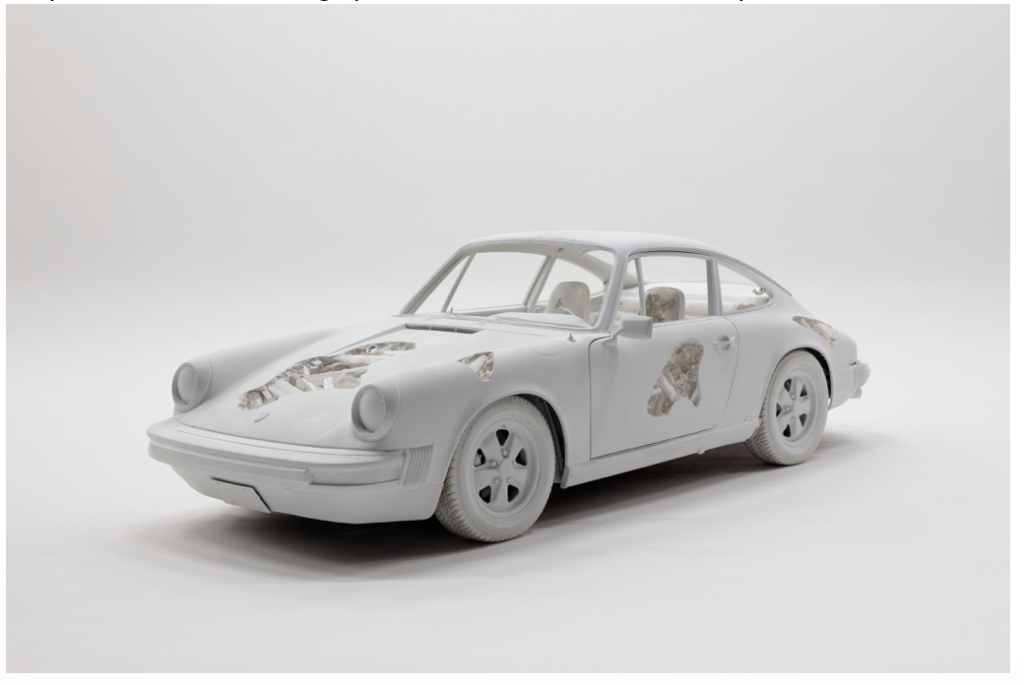
For instance, “Sky Marshal (Spread)” by the American painter Robert Rauschenberg was sold for $1.5 million, while “Eroded Porsche 911” by Daniel Arsham was purchased by a local collector for a little over $500,000. This particular piece is a white-toned replica of a vintage car covered with a layer of epoxy resin and polymer to make it appear fossilized.
Among those that were sold at Art Basel Miami Beach was “Mama, Good Samaritan,” a canvas painting created by the renowned Hungarian-American artist Rita Ackermann. The piece was exhibited by the international fine art gallery Hauser & Wirth and purchased by an undisclosed buyer for a whopping $475,000.
“Mama, Good Samaritan” is part of Ackermann’s ongoing “Mama” series, which is currently exhbíbited at the Monaco branch of Hauser & Wirth. Launched in 2019, its other pieces include “Mama, Masked and Anonymous,” “Mama, Under the Brutal Hand of a Child,” and “Mama, the Knight of the Cave.”
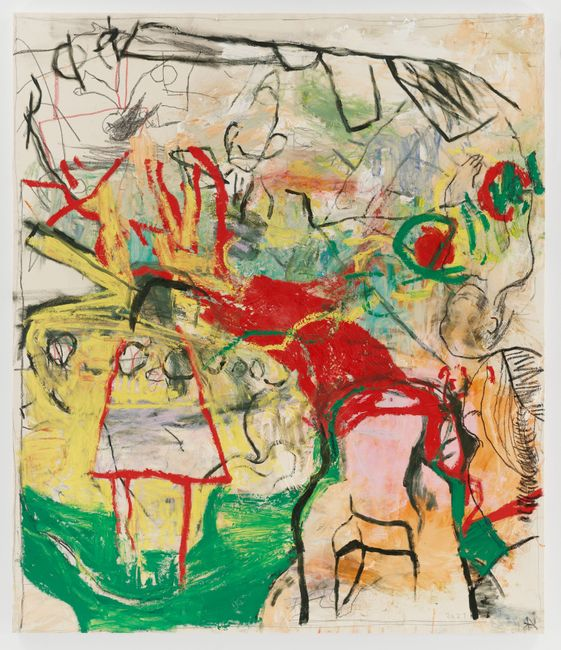
Rita Ackermann
Mama, Good Samaritan, 2021
Acrylic, oil and china marker on canvas
195.6 x 167.6 cm
Rita Ackermann. Courtesy the artist and Hauser & Wirth. Photo: Thomas Barratt.“The exhibition consists of paintings on canvas, which reveal her persisting interrogation of line, color, and form,” reads the Hauser & Wirth website. “In Ackermann’s new suite of ‘Mama’ paintings, repeated imagery is often combined with vivid swathes of color, giving her work an enigmatic visual component that oscillates between abstraction and figuration.”
“Works in the exhibition, including ‘Mama, Monte Carlo’ (2021) and ‘Mama, How Can You See Someone’s Soul?’ (2021) depict figures and motifs that rise to the surface of the canvas, only to dissolve and reappear elsewhere again,” the website further adds. “Lying beneath layers of oil paint are drawings in china marker or ink that are left obscured. Thick layers of impasto and oil are also vigorously applied and scraped in such works, culminating in a layering effect that is often created by chance instances and combinations of accidental gestures.”
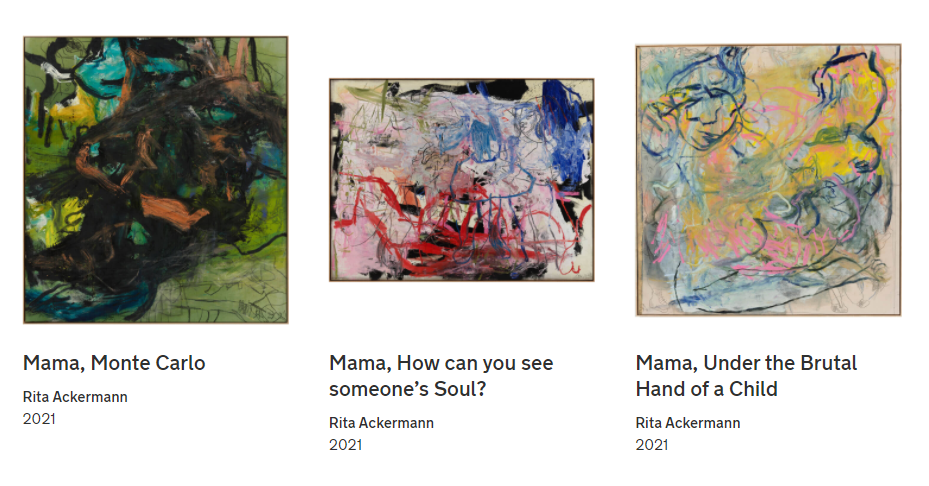
Screenshot via Hauser & Wirth
Born in 1968, Rita Ackermann studied at the Academy of Fine Arts in Budapest, Hungary before moving to the United States, where she continued her education at the New York Studio School of Painting, Drawing, and Sculpture. Many consider her to be one of the leading artists of her generation, thanks to her ability to create “opposing impulses of creation and destruction” that “occupy a space between the figurative and the abstract.”
Besides Hauser & Wirth, Ackermann’s work has also been featured in other art galleries – in 2018, her painting “Michael Jackson, On the Wall” was included in an exhibit in London’s National Portrait Gallery. The following year, her piece titled “American Dreams: Classic Cars and Postwar Paintings” was showcased by the McNay Art Museum in San Antonio, Texas.
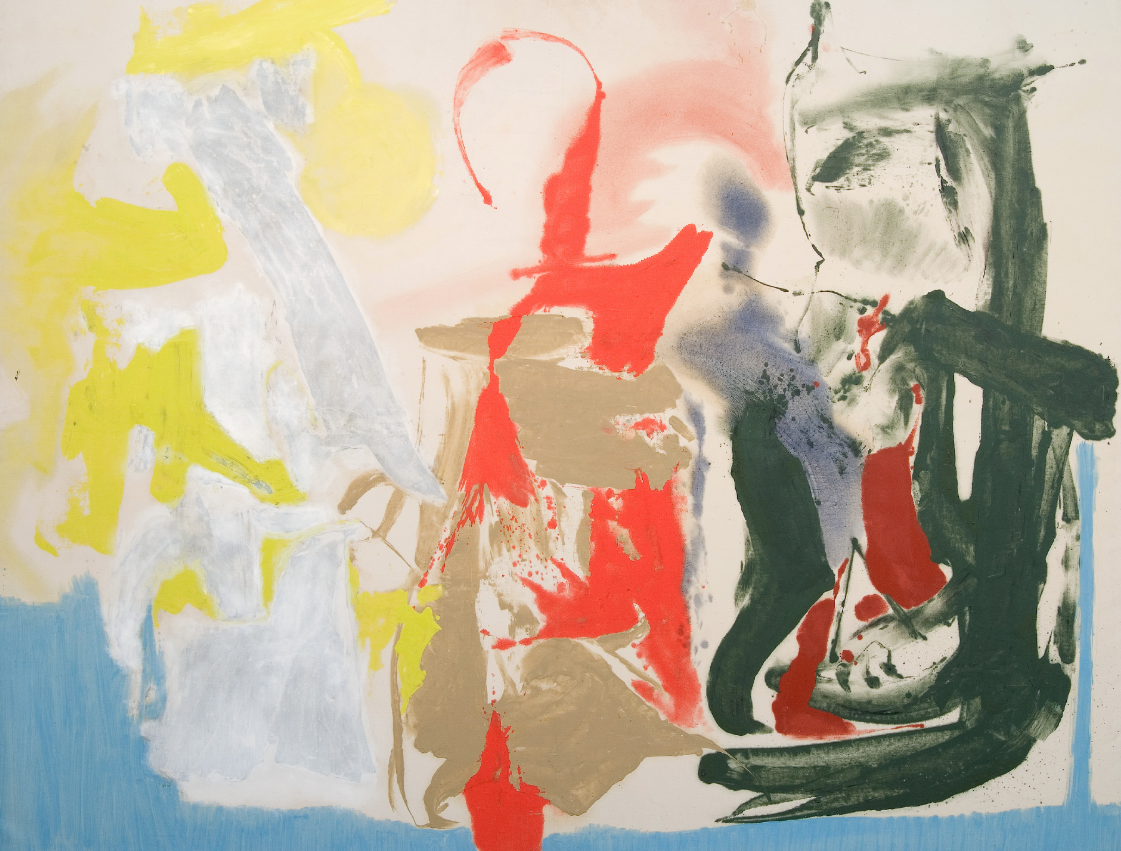
American Dreams: Classic Cars and Postwar Paintings, image via mcnayart.org
Her work has also been part of group shows held at Kunsthalle Basel in Switzerland and The Museum of Modern Art in New York City.
Ackermann may have been one of the few lucky artists whose pieces fetched hefty price tags at Art Basel Miami Beach; however, this wasn’t the first time that her work was highly sought-after. At the 2019 Foire Internationale d’Art Contemporain in Paris, her canvas painting “Mama Nagyika” sold for $165,000.
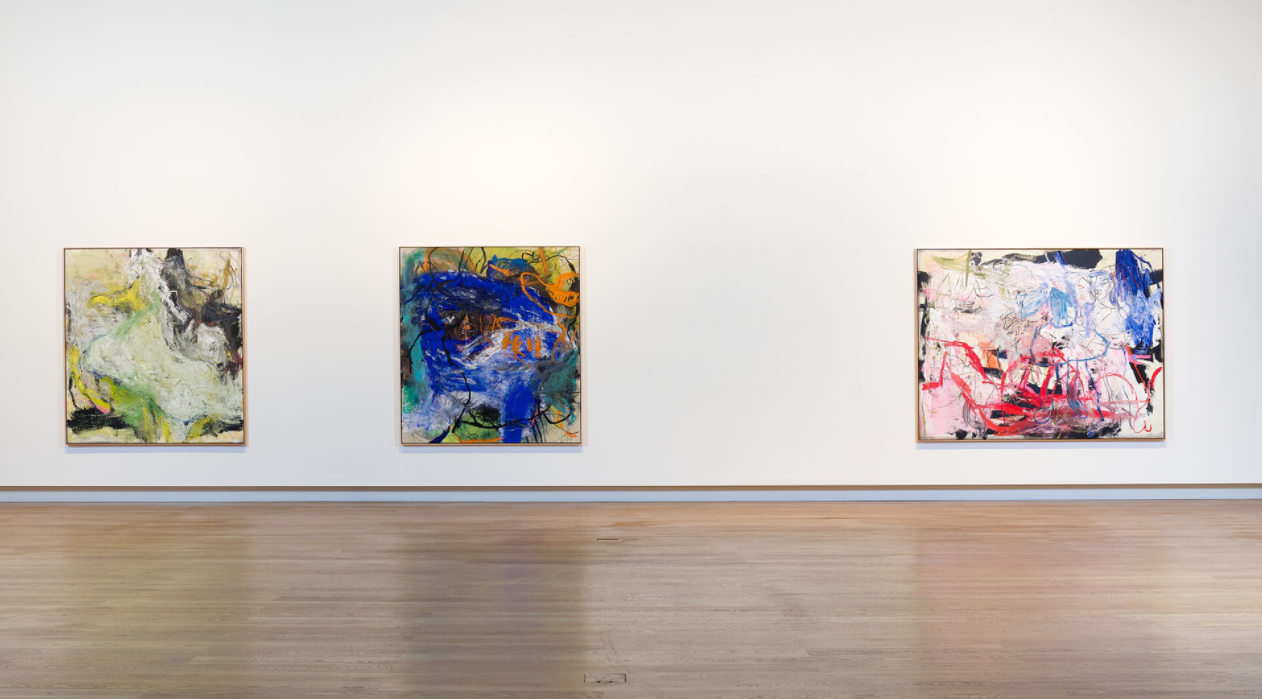
Image via Hauser & Wirth
Other artworks sold by Hauser & Wirth during the fair included a large mixed-media piece titled “I Want To Be Sure You Love Me!!” Created by the French-American artist Louise Bourgeois in 2008, it was purchased by a European collector for a staggering $1.8 million.
In addition to her one-of-a-kind pieces and the high price tags that they come with, Ackermann is also known for her unique perspective on the art world.
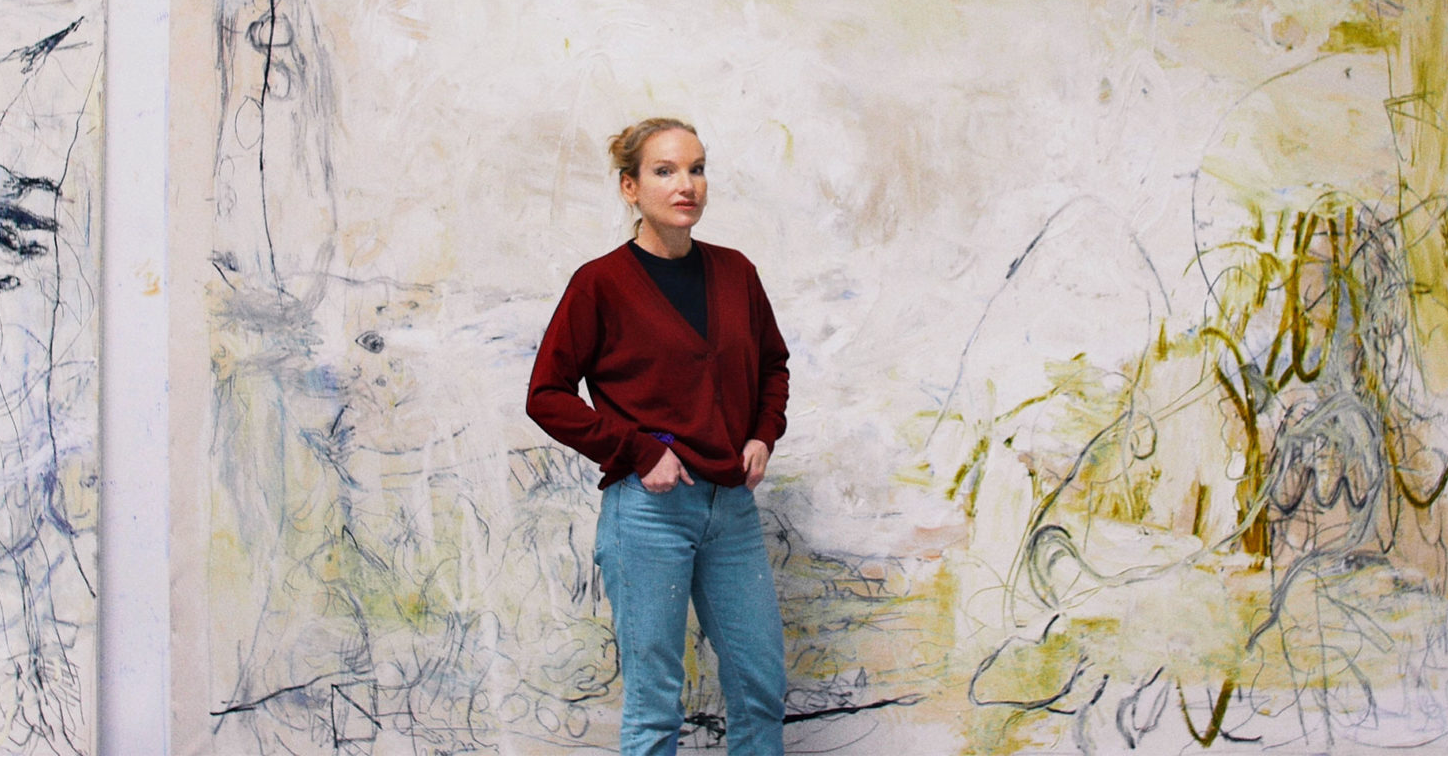
Rita Ackermann, Photo by Tanya & Zhenya Posternak
“I don’t have a persona,” she once told an interviewer. “I believe it is the artist’s core that holds together an oeuvre. The core of the artist is like a vessel, and I’m not possessive of what my paintings deliver. For me, painting is not about egomania. That’s why I get disturbingly critical of myself when I hear my voice explaining or tracking down the process of my work in front of people.”
She added, “When I paint, I’m not thinking – only occasionally do I have a grasp of that state of ‘not thinking’ and I try to write it down. Writing is more exact for something so elusive to describe. For me, it is difficult to speak about the paintings at all. I don’t like to describe what I paint because I cannot; if I could, I wouldn’t paint it.”
With her creativity and remarkable viewpoints, it’s clear that Rita Ackermann is well on her way to becoming one of the art world’s finest painters.
-End-
-
Modern artists of the 20th century have made immeasurable contributions to the rich, thriving world of exploratory art that we enjoy today. Their bold questions, experiments, and thought-provoking pieces continue to inspire future generations across the globe.
This post is written as an ode to two of the best modern artists that graced the 20th century – Georges Vantongerloo and Max Bill. While these two figures had distinct, occasionally contrasting styles, their friendship remains touching and worth talking about, even in 2022!
At SOA Arts, it’s in our best interests to stay as informed as possible about the art world and its most prominent characters. We’re proud to offer our art and interior design expertise to satisfied customers across the globe!
Modern Artists of the 20th Century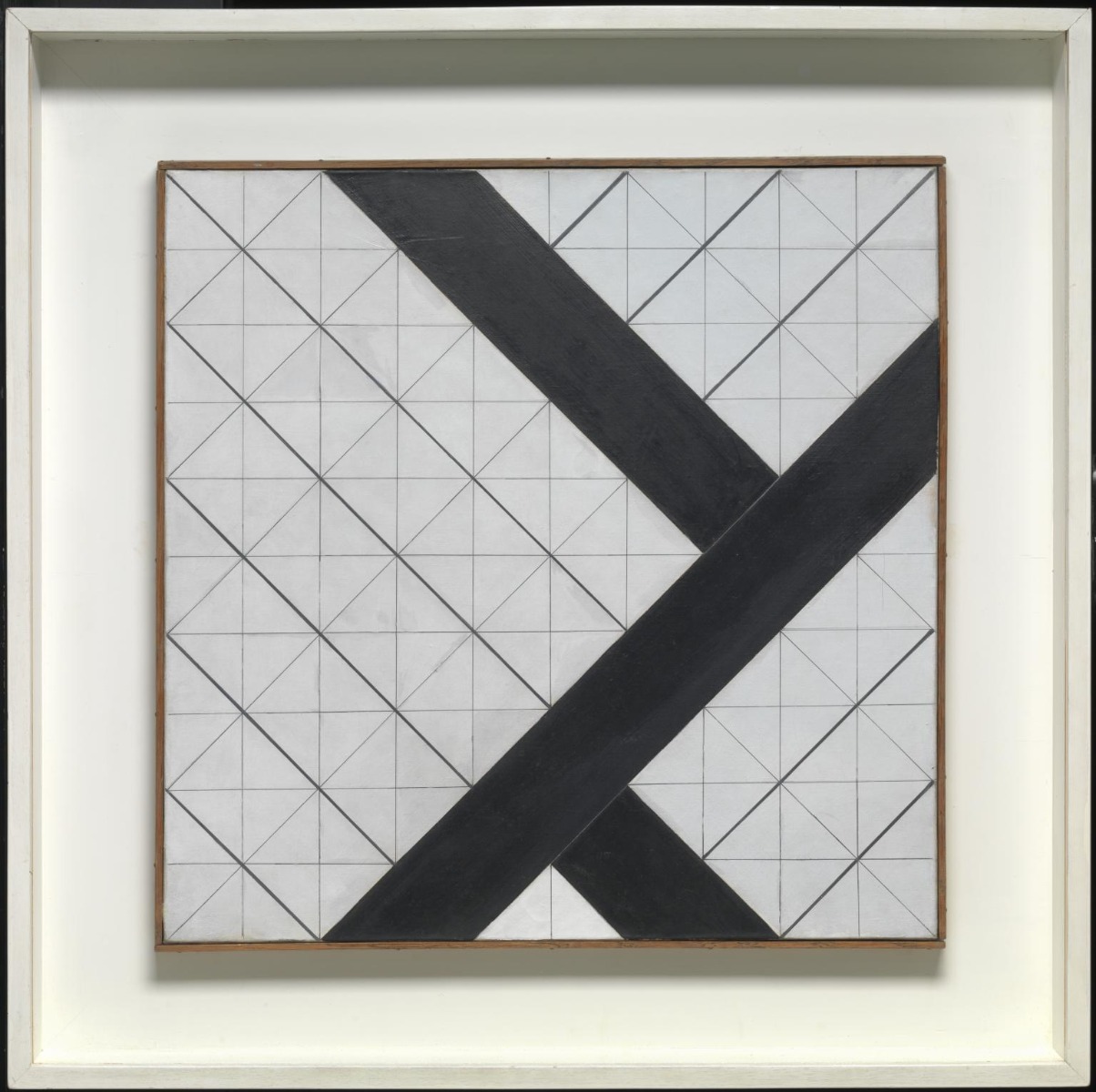
Theo van Doesburg
Counter-Composition VI 1925
Tate
Before we discuss Bill and Vantongerloo in detail, it’s worth touching on the context in which their work flourished. The modern art movement generally refers to the decades in the early 20th century where artists sought to produce art that better represented the hopes and dreams of an industrialized, modern society.The work was bold, experimental, and often contrarian in its aesthetic and conceptual choices. The Tate Modern (UK) explores the era in a fantastic write-up that can be read here.
The Work of Max Bill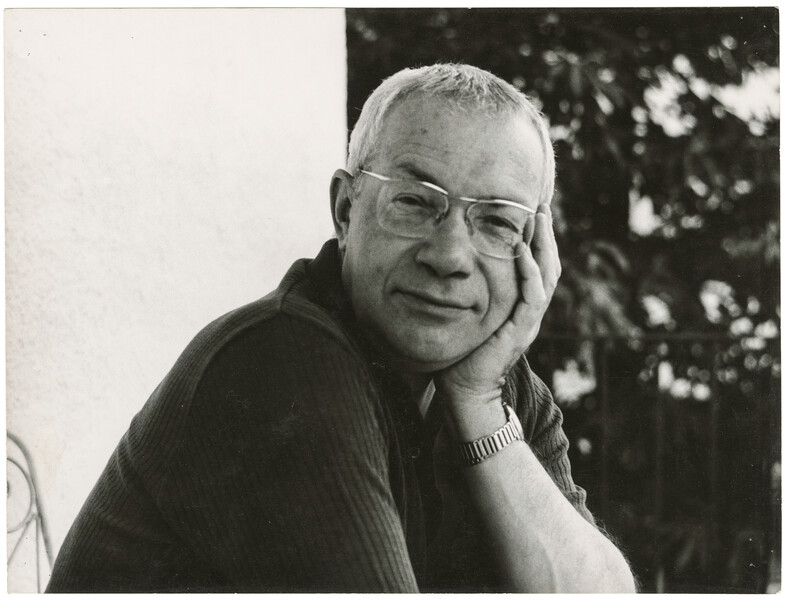
Max Bill in Montagnola, 1974 © Angela Thomas Schmid / 2019, ProLitteris, Zurich. Photo: Angela Thomas
The Swiss artist, ‘polymath’, and designer, Max Bill, is often referred to as the founder of the concrete art movement after hosting the first exhibition of its kind in 1944. The movement sought to bring previously unimagined forms into existence and to represent concepts and objects in a way that was both tangible and ‘sensuous’ in nature.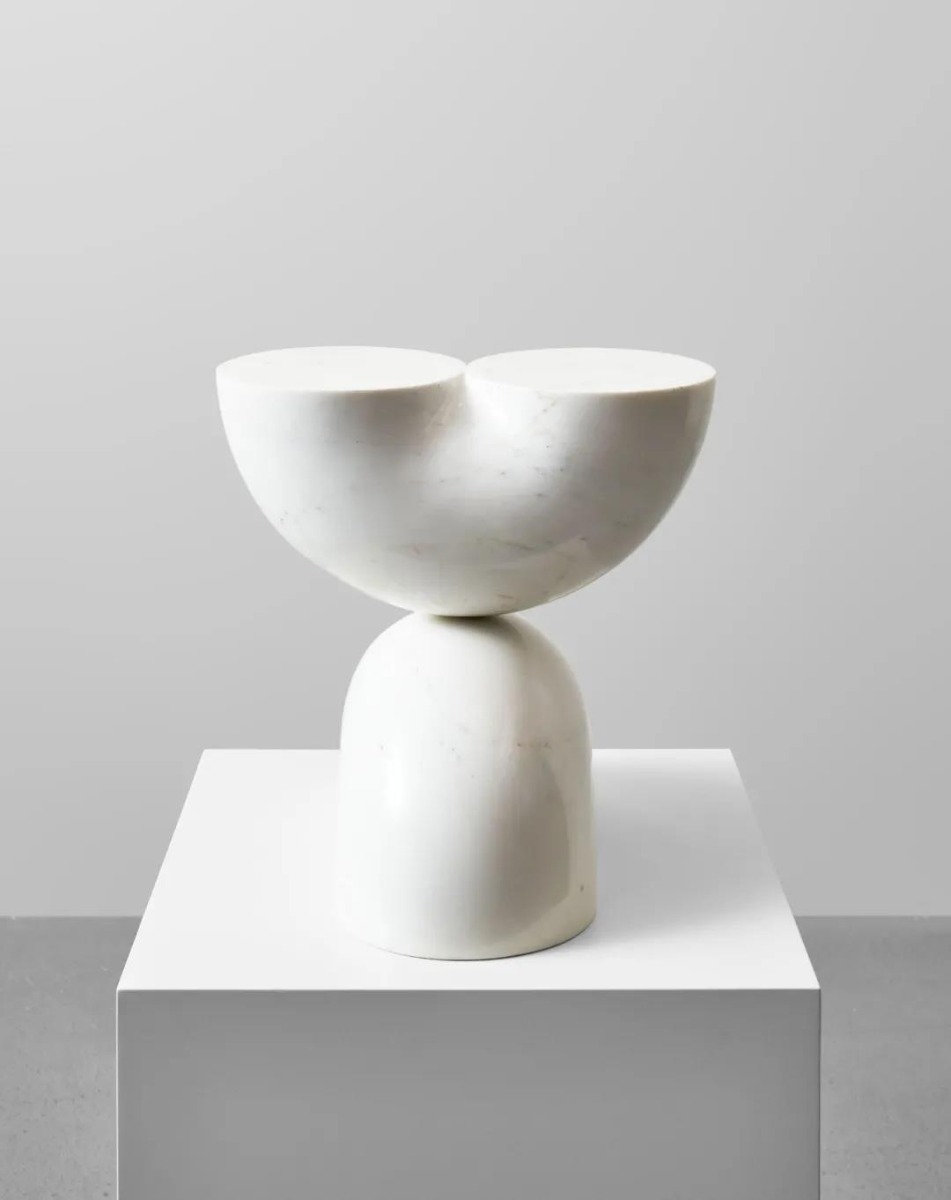
Max Bill, Ring-based Structures, 1942, White Marble, 39.2 x 39.9 x 39.9 cm / 15 3/8 x 15 3/4 x 15 3/4 inch,
© 2021ProLitteris,Zurich, Image: Max Beale and George Vandengrew Foundation, Hauser & Wirth.
Space-time Continuity
Exhibition Date:
December 16, 2021 -- January 22, 2022
Exhibition Venue:
Bahnhofstrasse 1 8001 Zürich Strongly influenced by his training at the Bauhaus and his background in mathematics, Bill produced countless paintings and sculptures that incorporated geometric and mathematical concepts with an unrivaled flair for experimentation.
His work can still be enjoyed today in galleries around the world.
The Work of Georges Vantongerloo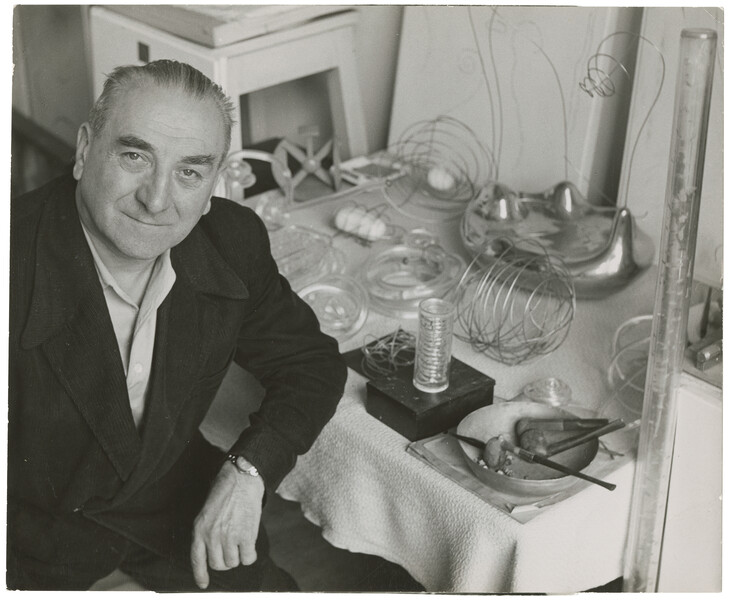
Georges Vantongerloo in his studio, Paris, 1951 © Angela Thomas Schmid / 2019, ProLitteris, Zurich. Photo: Reinhart Wolf
Georges Vantongerloo was a sensational painter and sculptor from Antwerp, Belgium. He was seriously injured by a gas attack in the first world war, which meant he was discharged in 1914. His experience during the war, as well as his training and encounters across Europe, contributed to a rich artistic practice that deserves to be memorialized for future generations.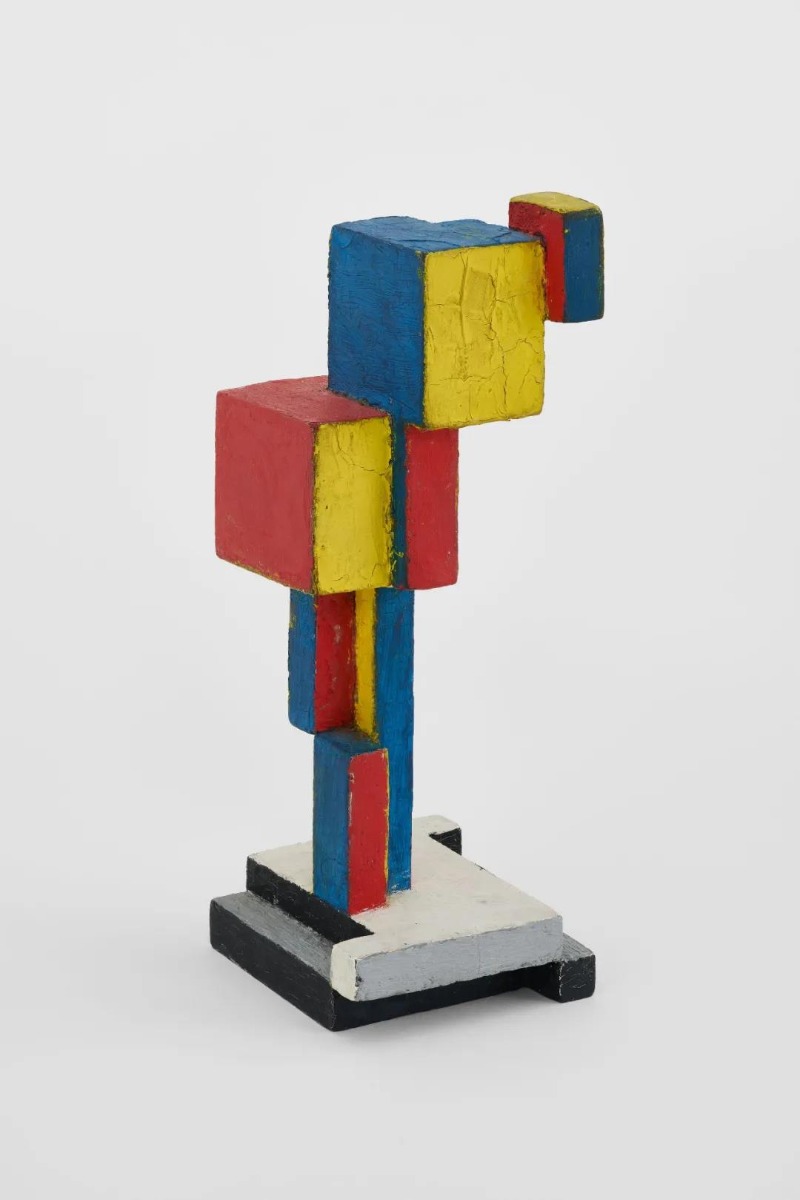
Georges Vantongerloo, Composition émanante de l’ovoïde (Composition from the Ovoid), 1917, Painted mahogany, 16.5 x 6.5 x 6.5 cm / 6 1/2 x 2 1/2 x 2 1/2 inch
© 2021, ProLitteris, Zurich. Photo: Jon Etter
Vantongerloo’s work focused on abstraction achieved largely through striking paintings and era-defining sculptures. The shapes and linework used by this artist are particularly noteworthy. He also designed bridges, airports, and similar projects that celebrated his love of geometric shapes and experimental concepts.
Their Iconic Friendship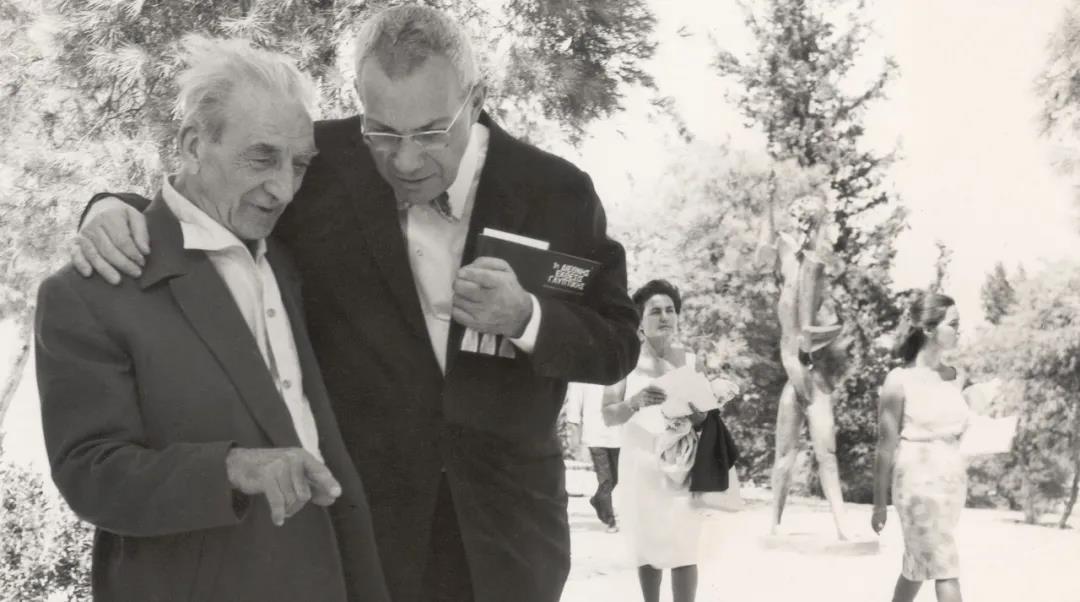
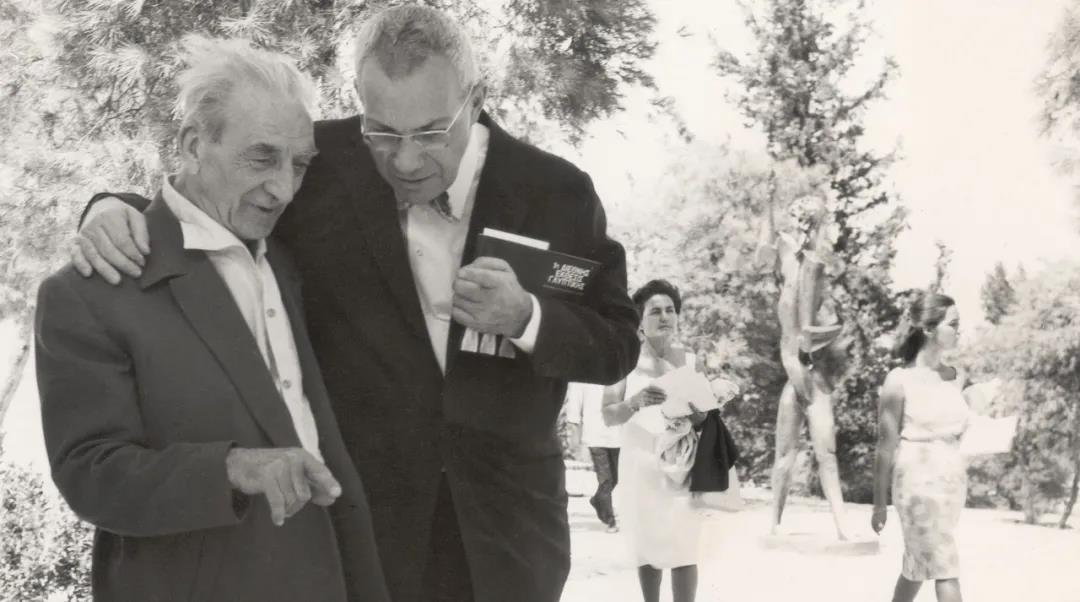
Georges Vantongerloo and Max Bill at the first Athens Sculpture Biennial, September 18, 1965.
Georges Vantongerloo Documents, Bill's House, Chumicon.
Image: Max Bill and Georges Vantongerloo Foundation and Hauser & Wirth.
Photo: Carmen Martinez
Max Bill and Georges Vantongerloo first met in France in 1918, where they forged a lifelong connection fueled by their mutual love for artistic abstraction and its endless potentialities. Their art made contributions that are still felt to this day.
Max Bill helped to organize countless exhibitions that featured Vantongerloo’s work and continued to vouch for him after his death. This dedication to his friend’s art helped to maintain his reputation and share his experiments with a broader audience.
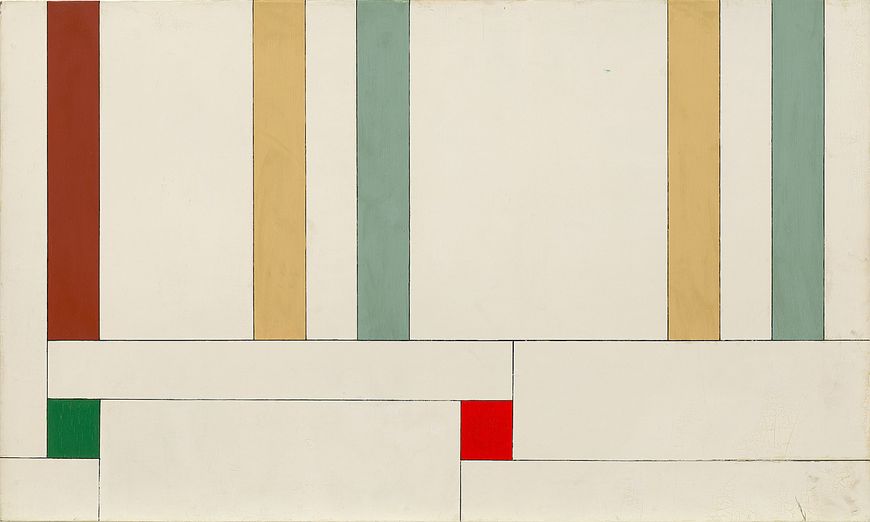
Georges Vantongerloo
Composition 13478 / 15
A rich correspondence between the two artists reveals the details and nature of their friendship. More information can be found in this great write-up from Hauser & Wirth.
Latest Art Exhibition
Max Bill & George Vantongerloo: Crossover
Exhibition Date:
From January 27 to March 26, 2022
Exhibition Venue:
Hauser Wirth New York 69th Street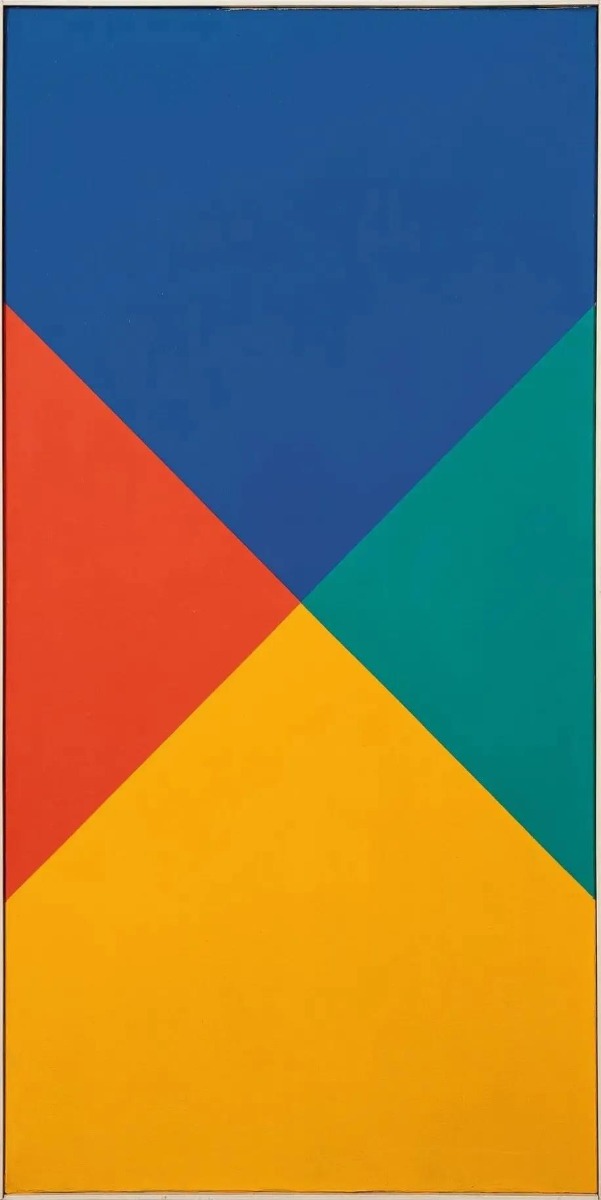
Max Bill, Red and Green Emerging from Blue and Yellow, 1970, oil canvas, 120 x 60.5 cm / 47 1/4 x 23 7/8 in.
© 2021, ProLitteris, Zurich. Angela Thomas collection, Chumicon.
Photo: Max Bill and George Vantongerloo Foundation and Hauser & Wirth
Swiss artist Max Bill and Belgian artist Georges Vantongerloo formed a lifelong friendship and corresponded for many years. This allowed them to link their solo independent artistic creations with insights, pushing the boundaries of their work into new aesthetic realms. From January 27, 2022, Hauser Wirth 69th Street in New York will feature “Crossover”, a tribute to these two artists’ artistic achievements and inspirations.
George Vantongerloo, along with Piet Mondrian, was a central figure in the Dutch De Stijl movement; Max Bill was a student of Bauhaus and was closely linked to the Abstraction-Creation art group founded in Paris in 1933. A selection of 60 paintings and sculptures, and the exhibition highlights the duo’s influential artistic achievements.
SOA Arts
We’re proud to be one of the best contemporary art factories globally. We work from Guangdong, China, and help business owners and collectors worldwide realize their interior design dreams.Need wholesale art prints? Specially commissioned or curated collections? Something else entirely? Get in touch today, and we’ll be happy to help.
-End-
-
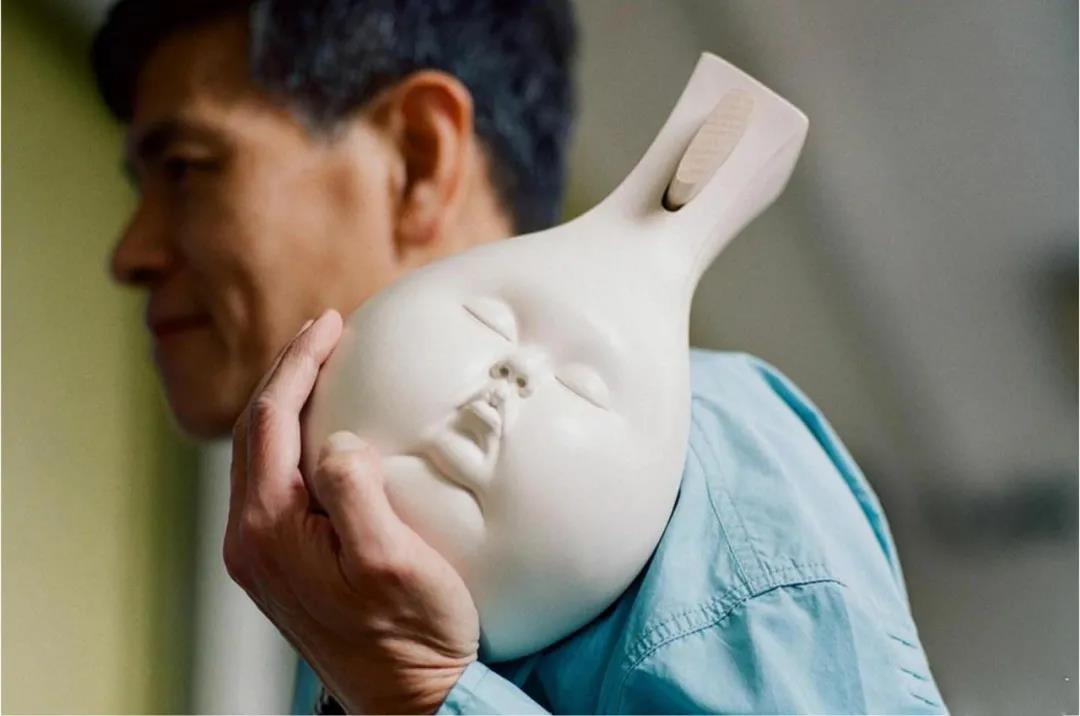
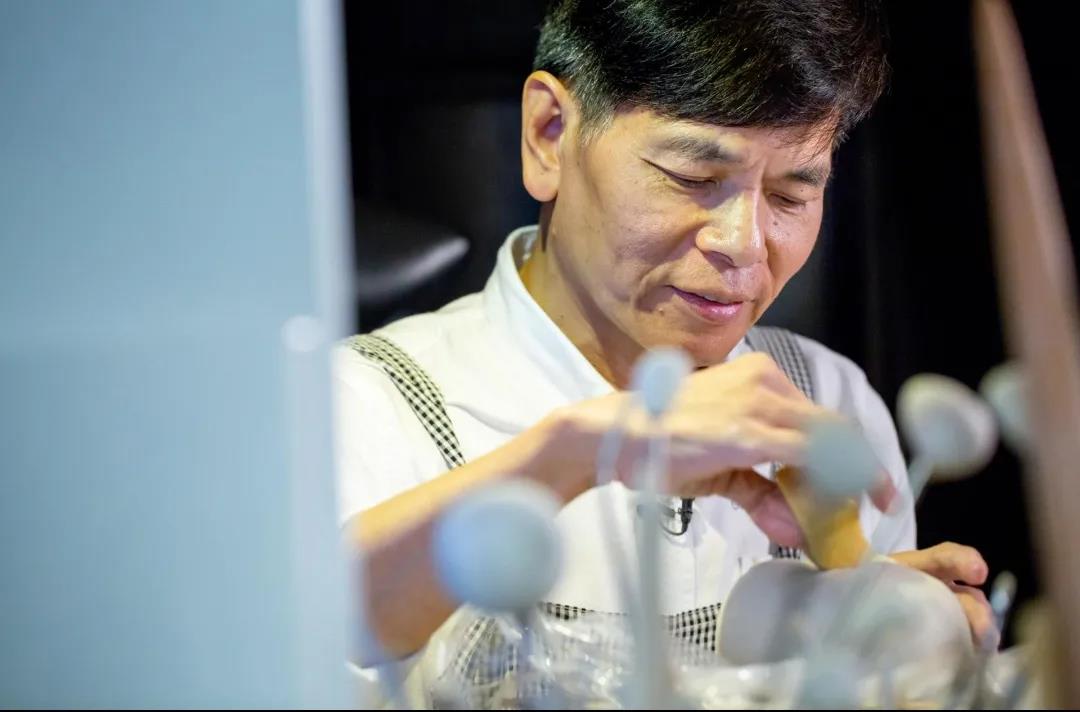
Born in Hong Kong in 1960, Johnson Tsang specializes in modern and contemporary art. He’s always been fond of ceramics and sculptures, playing with the idea of texture and human emotions. He wasn’t an artist early in his life though. Tsang had to take care of himself growing up without much parenting. His mother left when he was just a few years old. His father was in and out of drug usage. Tsang jumped around odd jobs until he decided to train as a police officer.
During his early time as an officer, Tsan visited the Hong Kong Arts Center where he found breathtaking inspiration to pursue art. “I entered a world that truly belonged to me”, he said. He began to shape works of art with his hands as he applied issues with society and human emotion.
A Dish of Future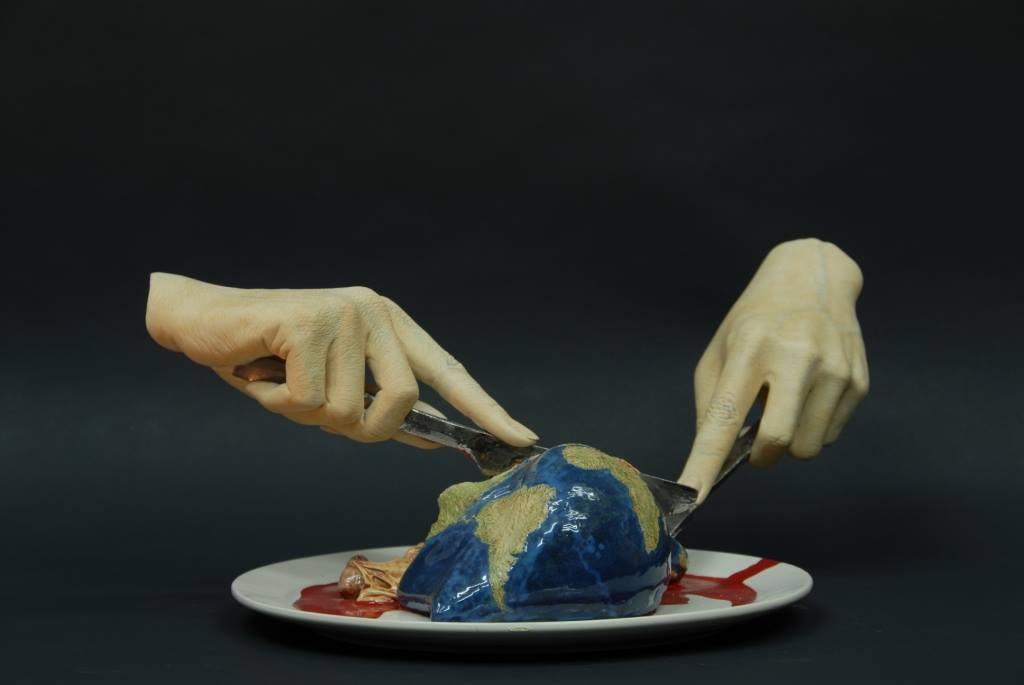
This work done in 2006 expresses the untold truth of society here on Earth. Two hands with a fork and knife in each hand digging into a dish you’ve never seen before. On the plate is a meal that looks like the Earth with a fetus inside.The tragic message is that humans are rapidly depleting our planet for our own good from each generation. Humans leave the next generation with a whole new set of issues to deal with instead of setting them up for success. It’s tragic, yet a genius perspective to the future made in a dish.
Still in One Piece III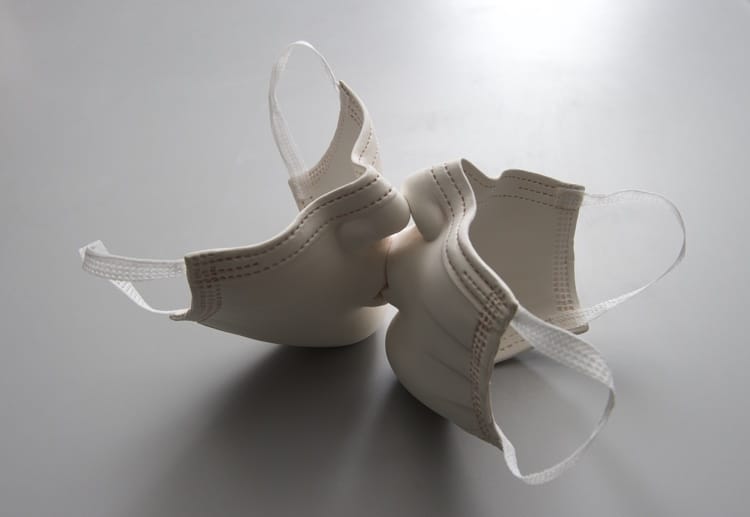
This piece is a perfect expression of how Tsang reflects on the obstacles of society. A symbol for the COVID-19 pandemic has been the masks that billions of people use today to prevent spreading. Tsang created a delicate sculpture where two masks are shaped into faces. The intertwined face masks are locked in a kiss with noses and lips that look like humans.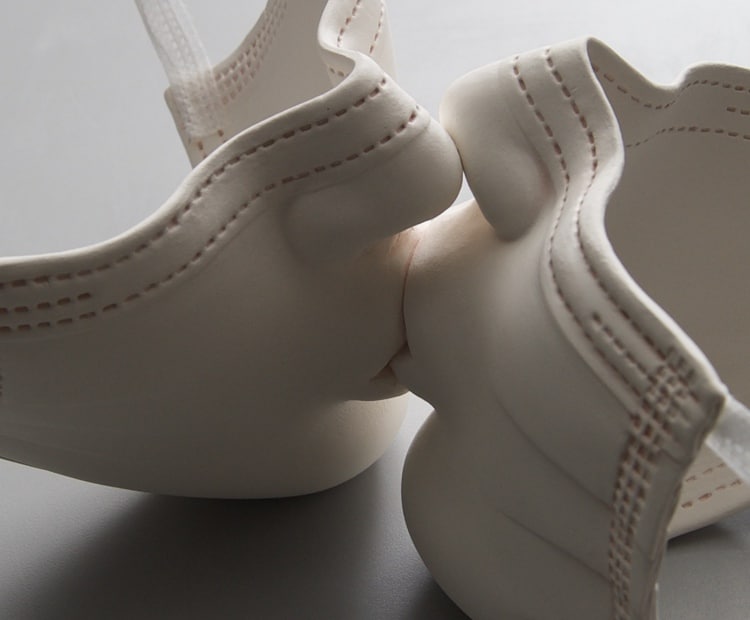
It represents how people feel today. Distancing and isolation were emphasized during the pandemic, but humans still crave love and affection. As a kiss represents love, the masks separate us even if it is in our best interest to prevent the virus from spreading.
Lucid Dream II Series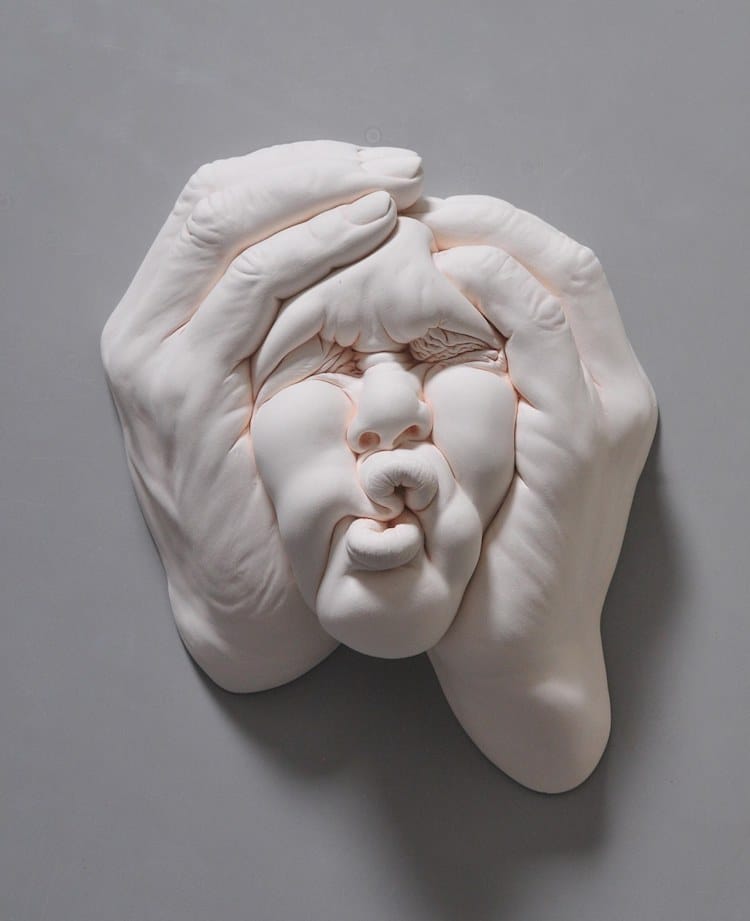
Lucid Dream II_Work in Progress
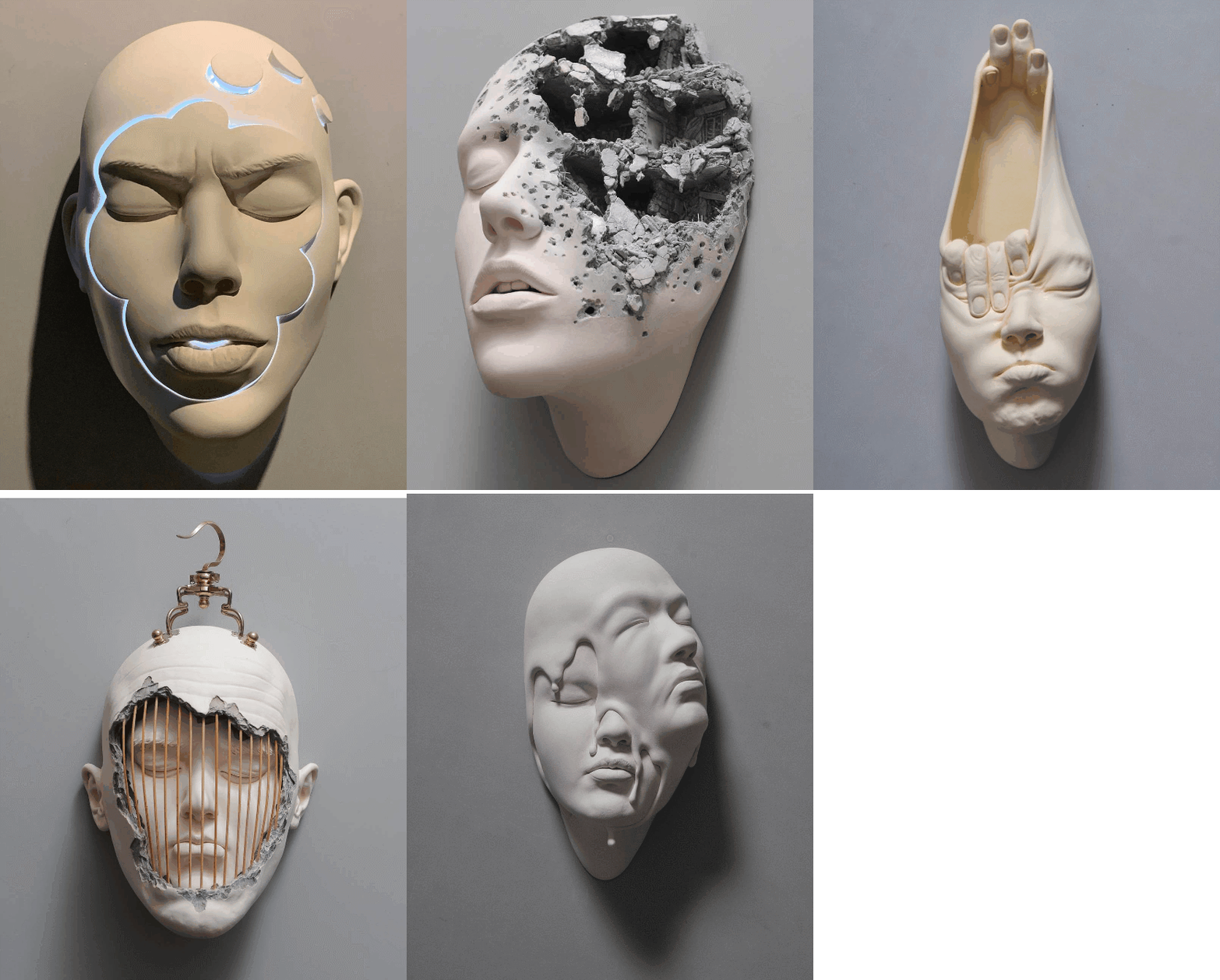
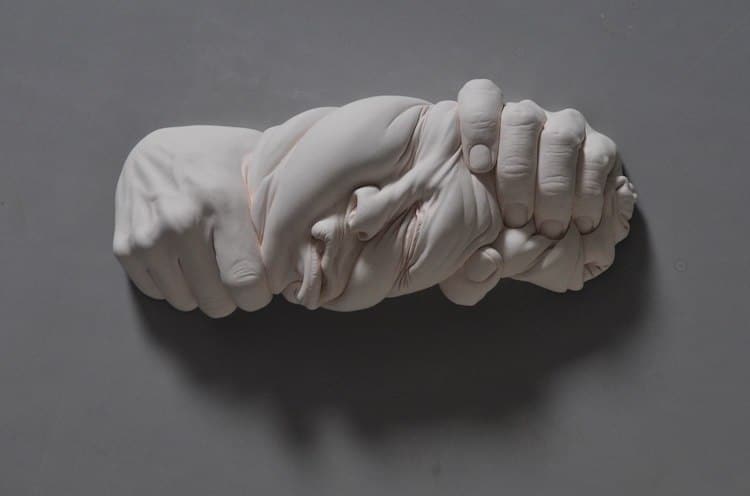
Tsang is best known for his face-shaped sculptures that display an array of emotions. In the Lucid Dream II Series, Tsang uses clay to create multiple human faces that appear twisted, contorted, and literally bend the mind. He focuses on human subconsciousness and experiments like people have never seen before.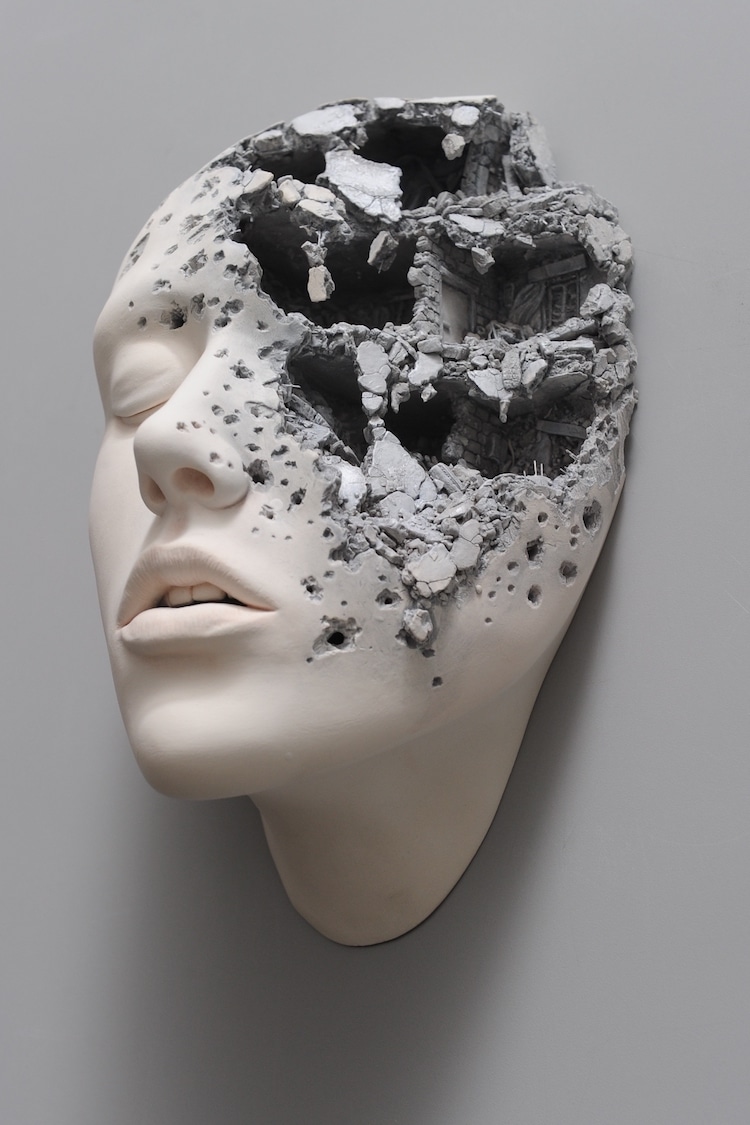
Lucid Dream II_Here and There
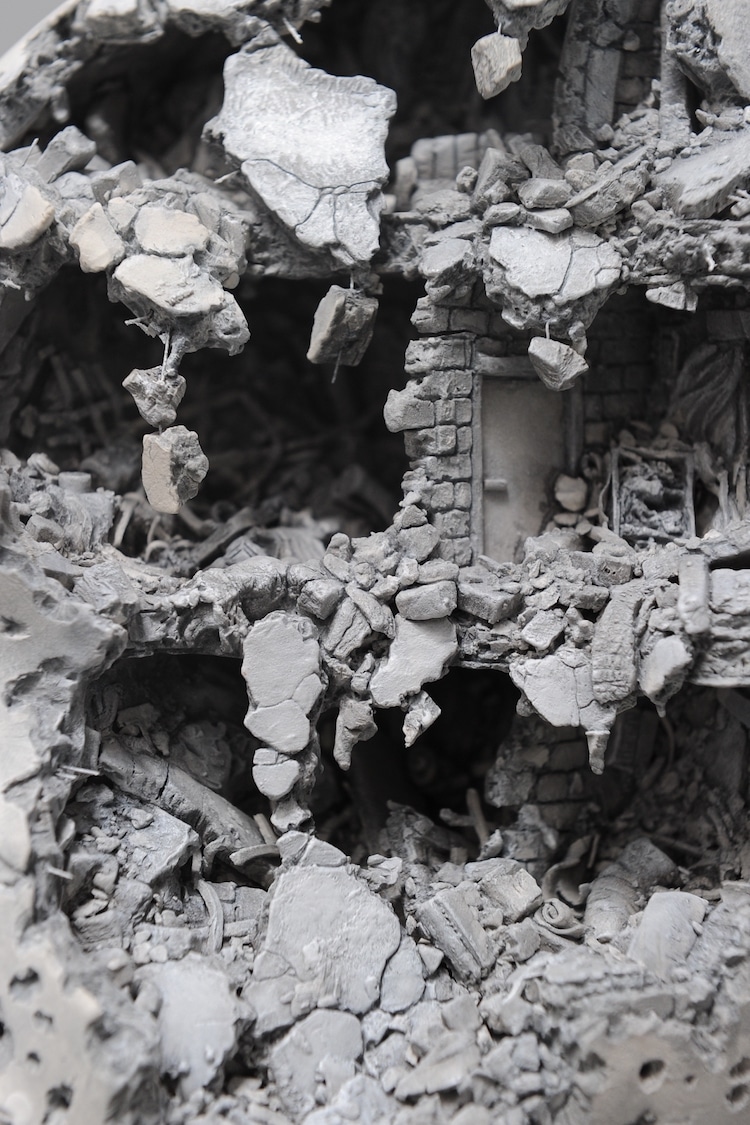
Lucid Dream II_Here and There (Detail)
Here and There, for example, features a human face with the eyes closed in a resting expression. Half of the face is human, while the other half appears as a crumbling building. The face is three-dimensional with gaping holes and debris. It looks like the building is going through major demolition. Just as people appear to be in peace, they may be torn down on the inside with nobody knowing.
Lawful Custody is another instance where Tsang combines realistic facial sculptures with his surrealist imagination. This sculpture looks like a broken shell with a human face on the inside. The face is at a similar resting position like Here and There is. The face is behind bars and could represent a number of powerful messages here. Is it a clever way of showing that people are limited by their own subconscious? Or could it be the fact that people lock away their genuine emotions?
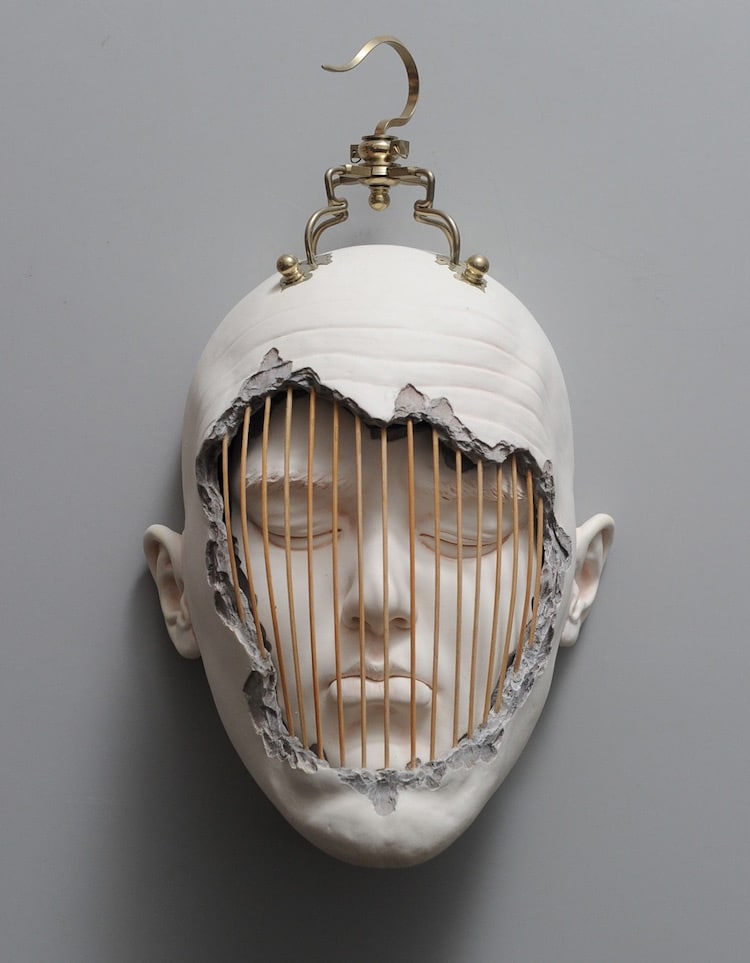
Lucid Dream II_Lawful Custody
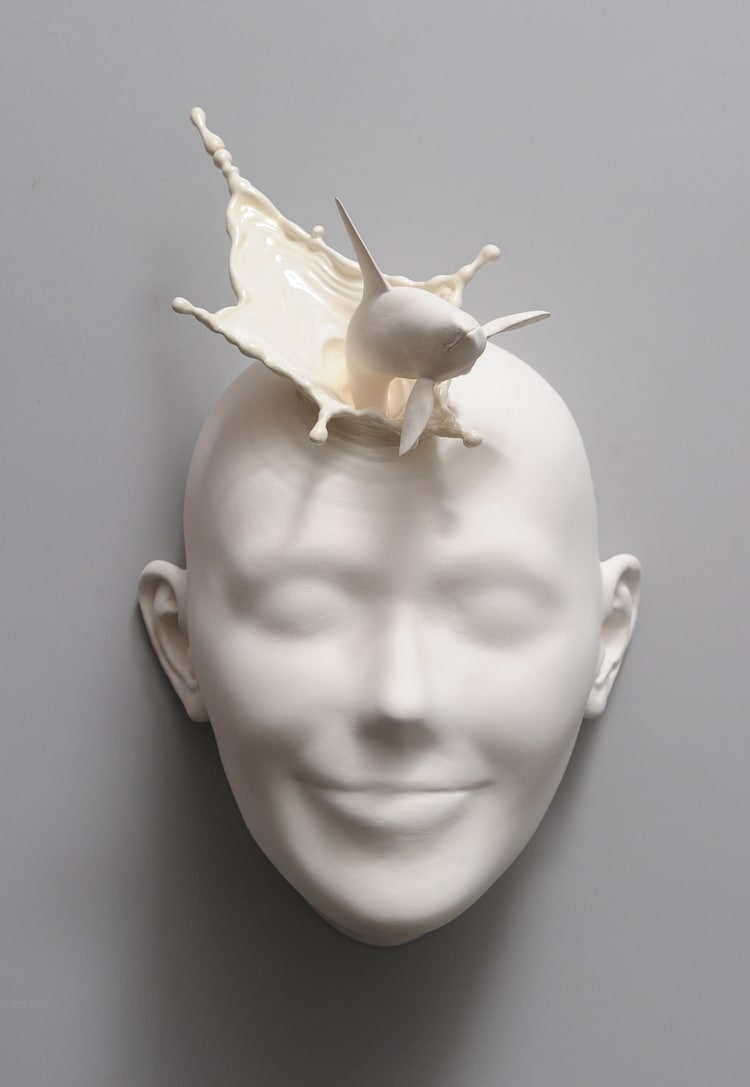
Lucid Dream II_Just Listen
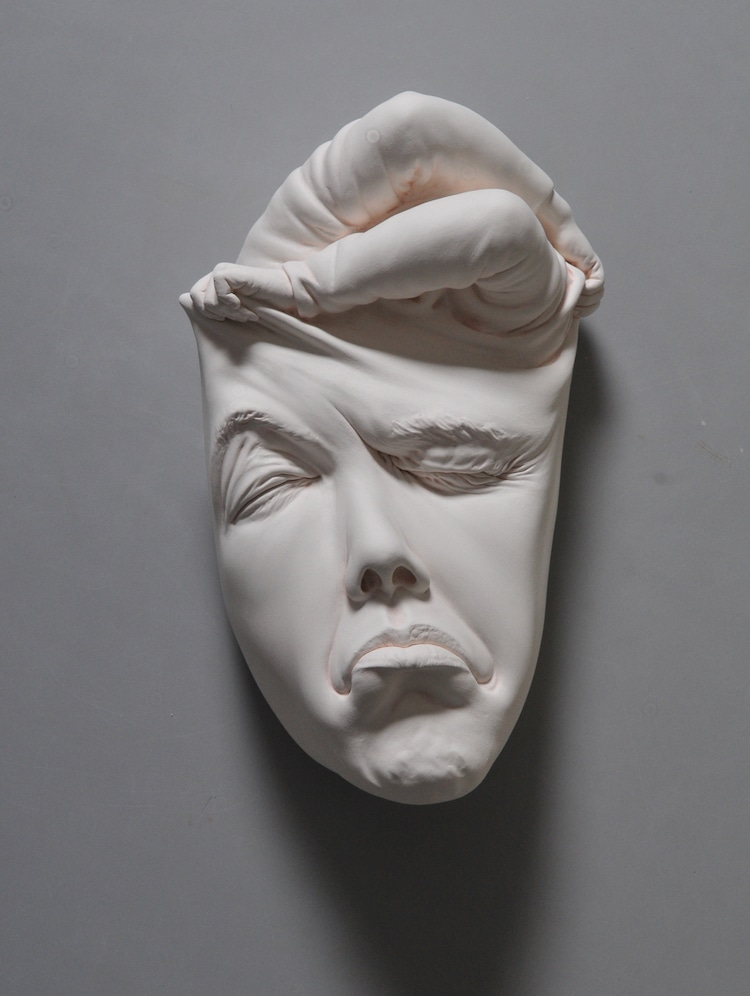
Lucid Dream II – Extrication
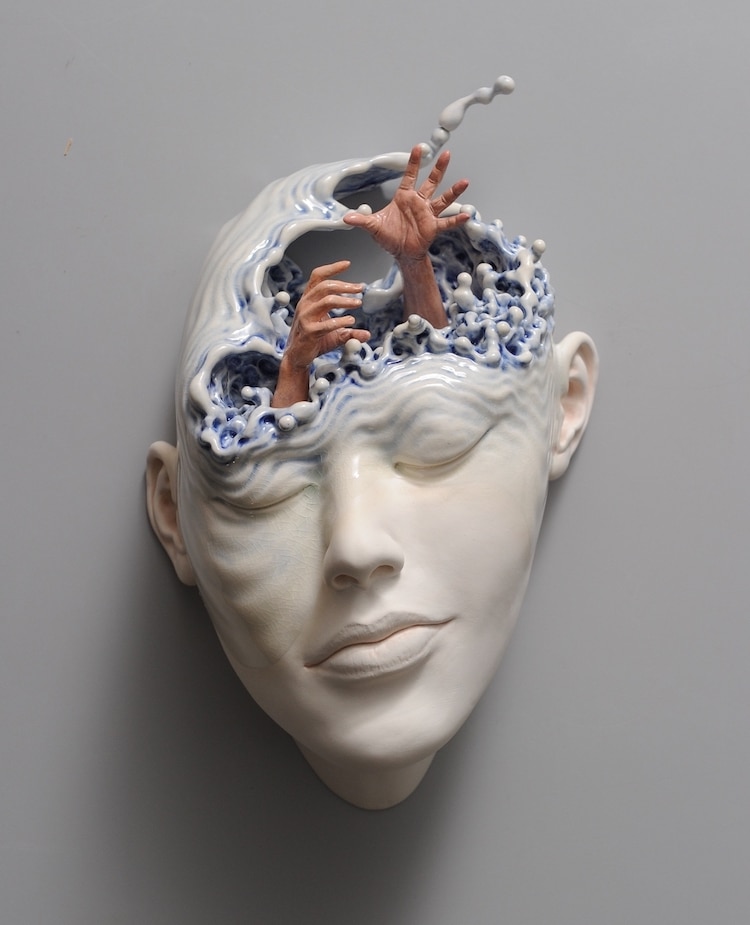
Lucid Dream II_Falling in Love
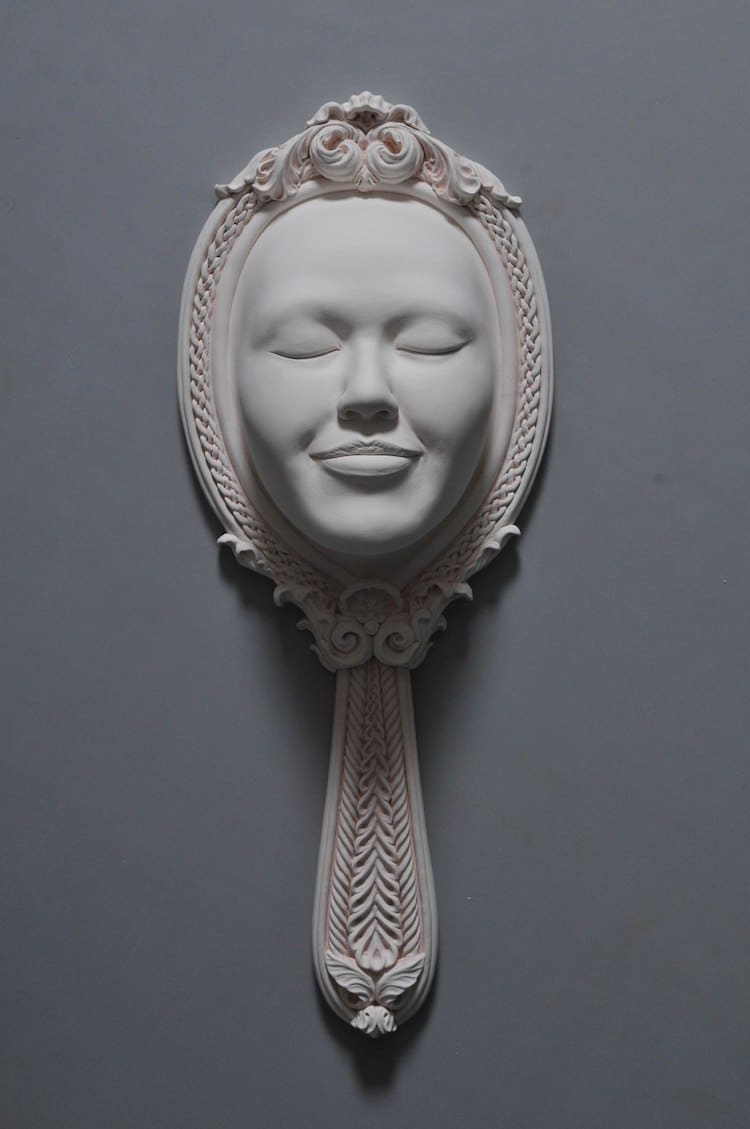
Lucid Dream II_Mirror Mirror
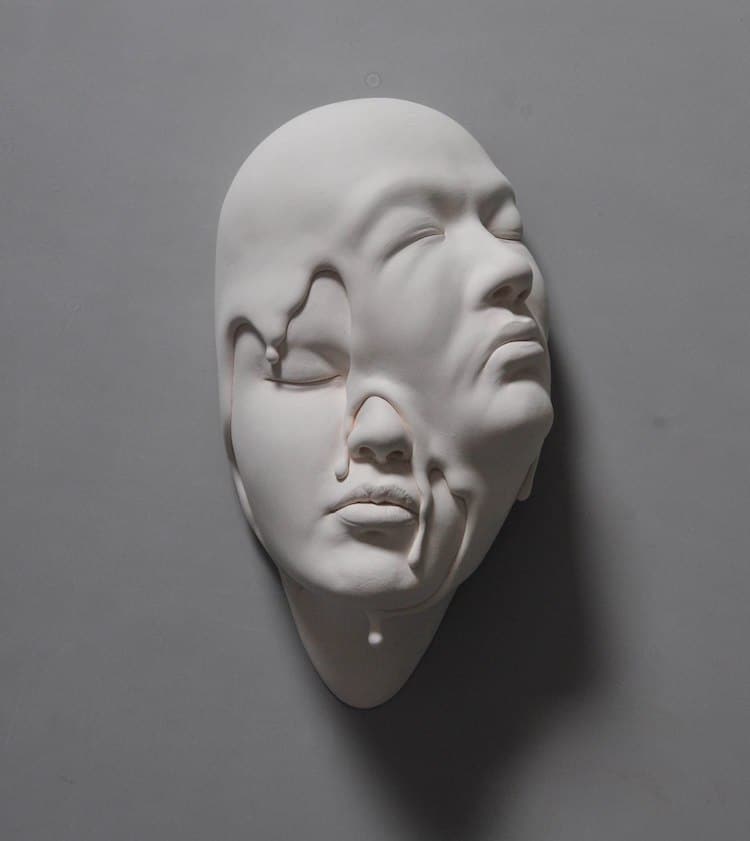
Lucid Dream II_Remembrance
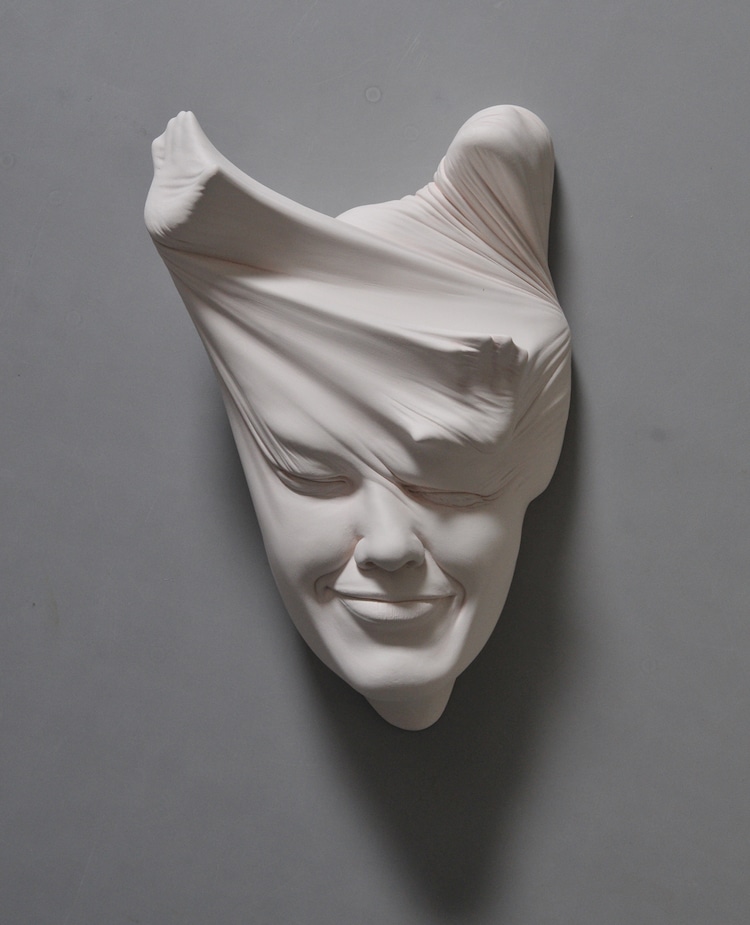
Lucid Dream II – Under the Skin
All images via Johnson Tsang.
-End-