
Art Appreciation of Nine Outstanding Contemporary Artists

Do you remember the mood when you saw your first art collection?
I believe everyone will not forget the throbbing and excitement of your heart when you first meet with art. Maybe it's the boldness of the brushwork expresses your ideal aspirations, or the dazzling colors give you a good mood, or the strangeness and wonderful wisdom you've never seen before brightens your eyes. Looking back at the beginning, what attracted us to stop and hold our breath may be irrelevant to the creator’s fame and the future value of the work, but simply attracted by the “art” itself. Encountering spiritual resonance from different regions and cultures, so as to get another way of "watching, understanding, thinking" the world, and enriching our life experience. This is the fun of collecting.
Focusing on 9 outstanding artists who dare to challenge tradition and insist on self-innovation, through their works, let us be surprised, moved, shocked, and taste and return to the original intention of collecting.
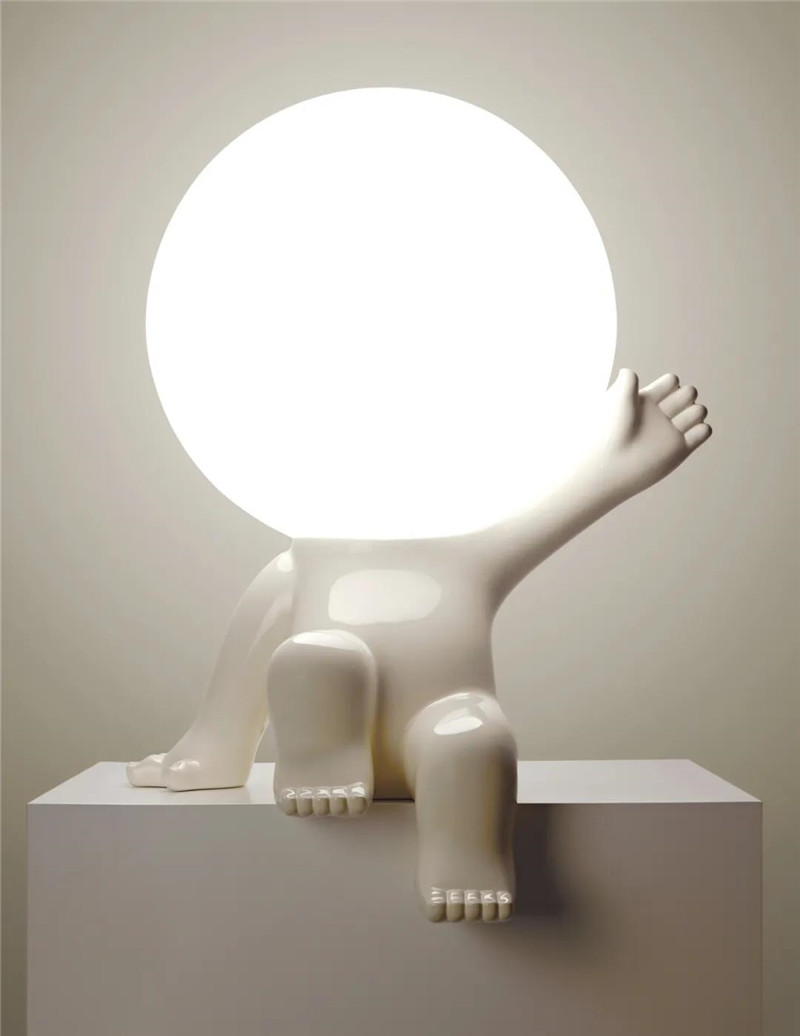
Say Hi 2 by Lin Jianrong
Lin Jianrong, Taiwan's leading artist, has created a healing "bulb man" image through the perfect combination of lighting technology and art, which was collected by the National Taiwan Museum of Art and Beijing Today Art Museum. The "Say Hi 2" presented this time is a classic of this series. The villain sitting alone greets the audience, and the round head emits warm halos, illuminating people's hearts in the dark, which realize the artist's space creation concept of "integrating art into life", making the works like friends who accompany them, quietly warming everyone's heart.
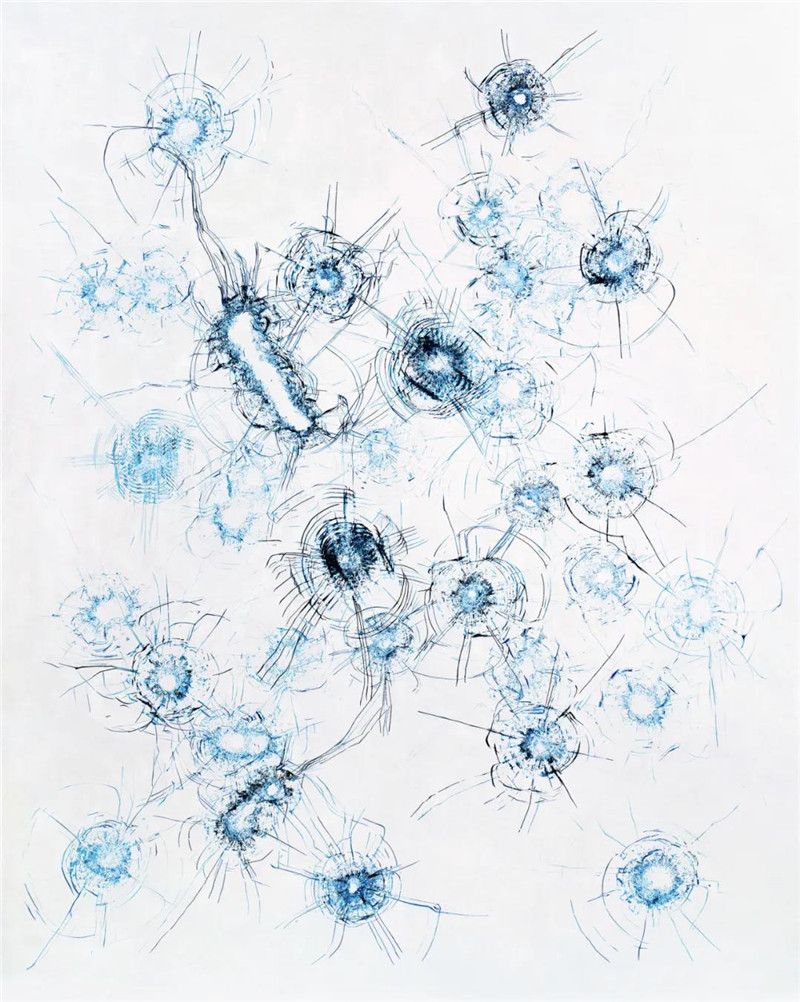
Constellations by Zhao Zhao
"Constellations" comes from Zhao Zhao's Constellations series widely praised by the eastern and western academic circles. It is the largest work in the white background and densely porous composition. There are only three such large-scale works in the Constellations series so far in his life. He uses clean, sharp, and powerful lines to show the process of "violence", invisibly condensing the power to break through the appearance. In contrast, the naming of romantic works conveys the individual's desire for security, the huge contrast between the theme and the media, and the mutual transformation of "violence and beauty", which stimulates the awakening of free will. His works have been collected by more than 25 art museums around the world, including the Ullens Foundation in Switzerland, Daimler Art in Berlin, and DSL Art in Paris.
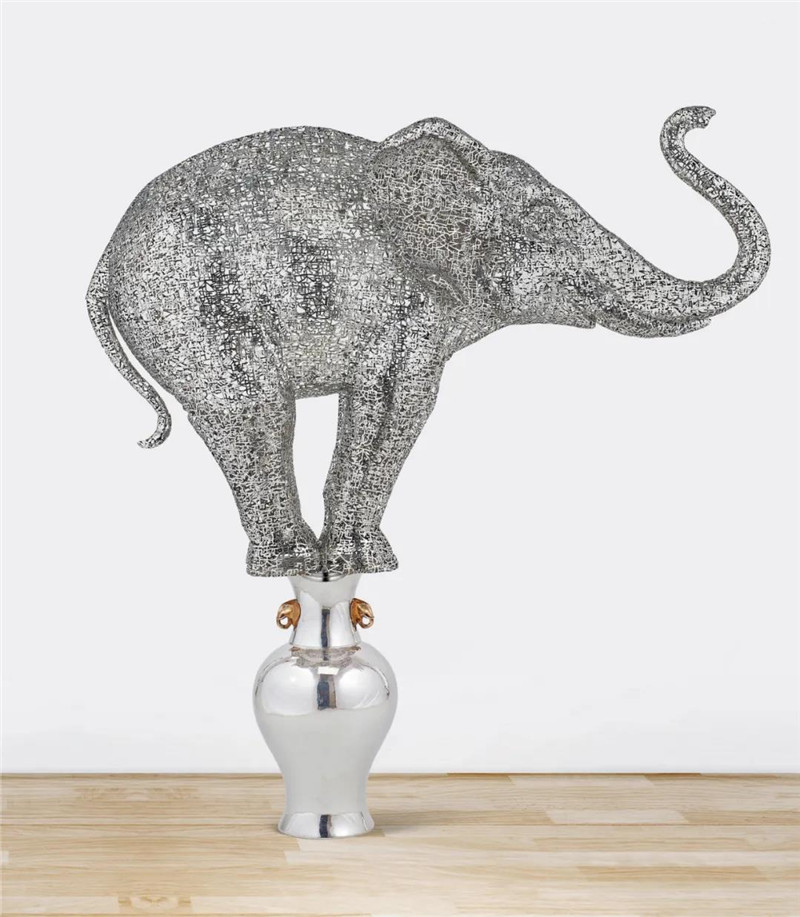
Elephant in a Peaceful Land by Zheng Lu
Zheng Lu, a contemporary sculptor, has become famous in recent years and his works have been collected by institutions such as the National Centre for the Performing Arts, Nanjing Museum, and UBS. This time, he brought his most representative Chinese stainless steel sculpture "Elephant in a Peaceful Land". The shape of the work originates from the traditional image of "an elephant carrying a treasure bottle", which means "if a country own elephants, then peace reigns over the land". The words on it are from the upper hexagram "Qian" in the 64 hexagrams of The Book of Changes, abstracting the "elephant" into "all kinds of things", which makes the interpretation of the words and the shape of the work create an interesting contrast and achieve "calligraphy and painting integration", and through the hollowed-out shape, the works are endowed with "emptiness" oriental philosophy and return the clarity of spirit.
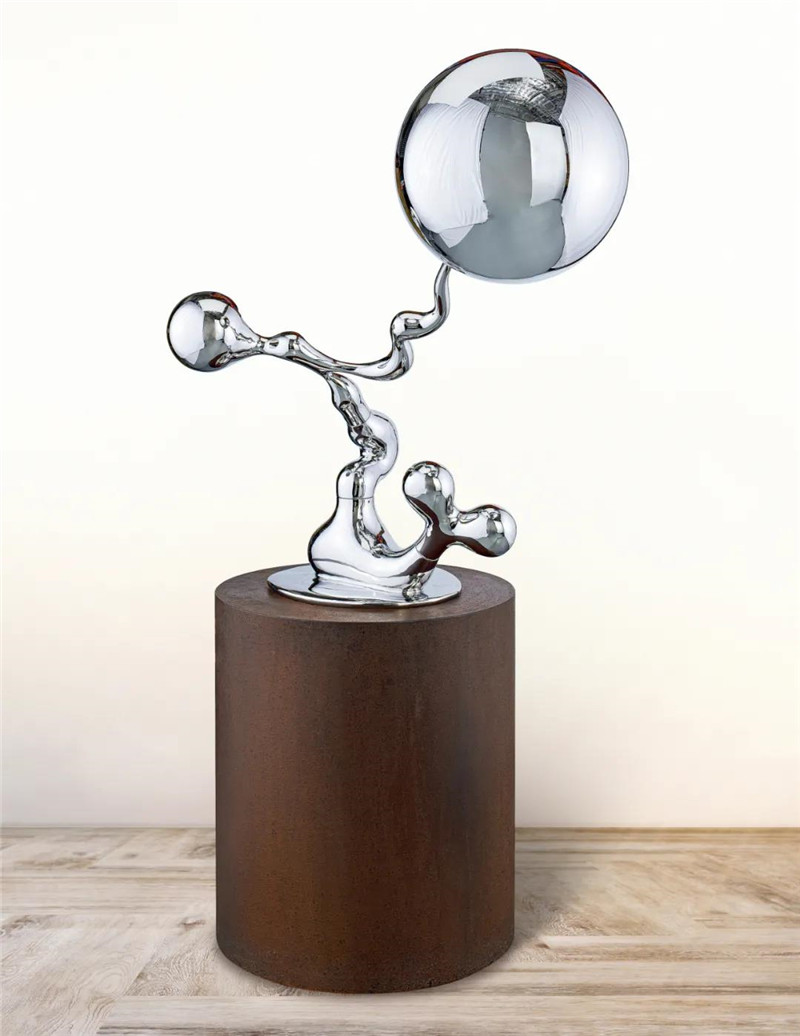
Zhuan Jin Lun 23AT1033-34 by Liang Renhong
Liang Renhong won the "Taipei Fine Arts Award" and the "Kaohsiung Municipal Fine Arts Award" in 2001, and was selected into the production plan of large-scale public art projects, meanwhile, his artworks are collected by the Kaohsiung Museum of Art. His creation focuses on exploring the relationship between nature, machinery and philosophy. "Zhuan Jin Lun 23AT1033-34" presents a dynamic whale that ejects a jet of water and breathes freely. If the viewer pushes the top, middle sphere and fishtail of the work, it can rotate, showing the beauty of the moving balance in the change. The artist uses the weight of machinery to show the lightness of the flow, in the cycle of movement, showing the endless life of nature, and the truth that "change is eternal".
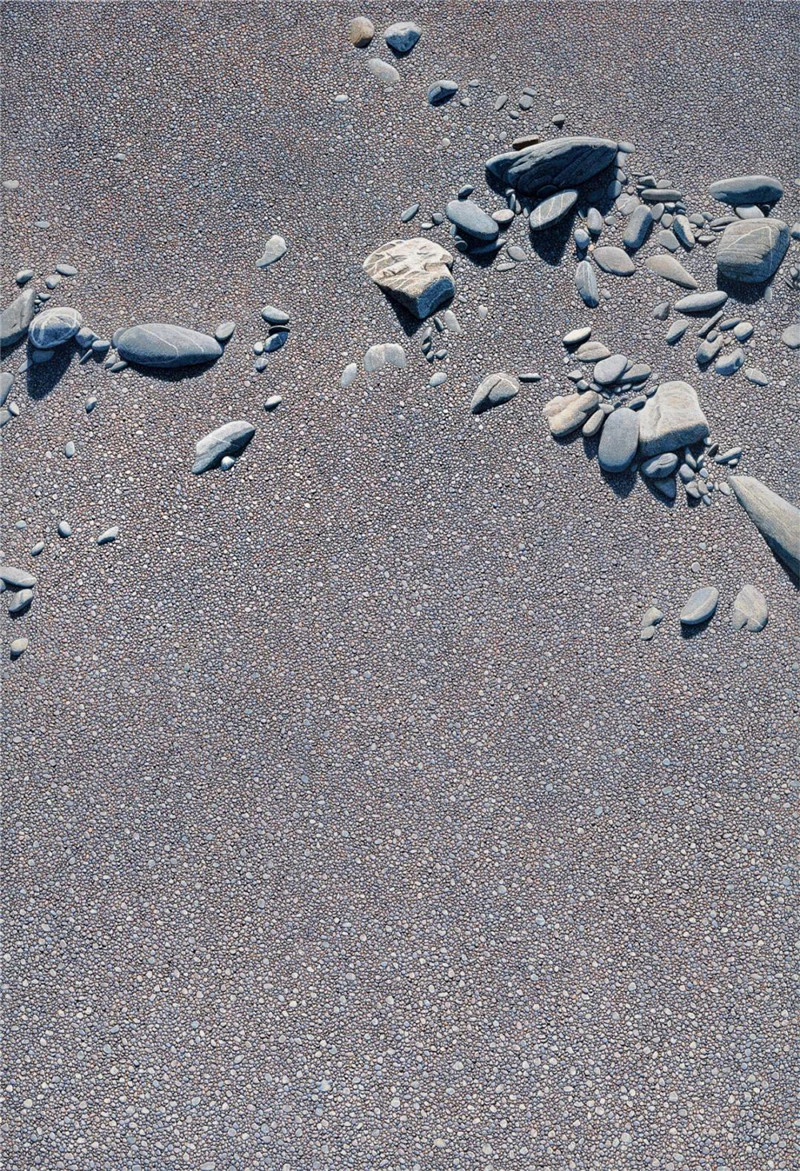
Stones Islet by Chou Chu-Wang
Chou Chu-Wang took the seemingly ordinary pebbles on the beaches of his hometown as the object of creation for nearly ten years, opening up the artistic horizon of observing nature and painting stones. "Stones Islet" is a witness to the maturity of the techniques in his works. The endless tiny sand and stone are created by fine brushstrokes, spreading out the space-time dimension like the universe. The creative perseverance gained from the natural vision has become the karmic construction for artists to write their own lives and reproduce the aura of life above reality. His work has been collected by institutions such as the National Taiwan Museum of Fine Arts, Taipei Municipal Art Museum, and White Rabbit Museum of Australia.
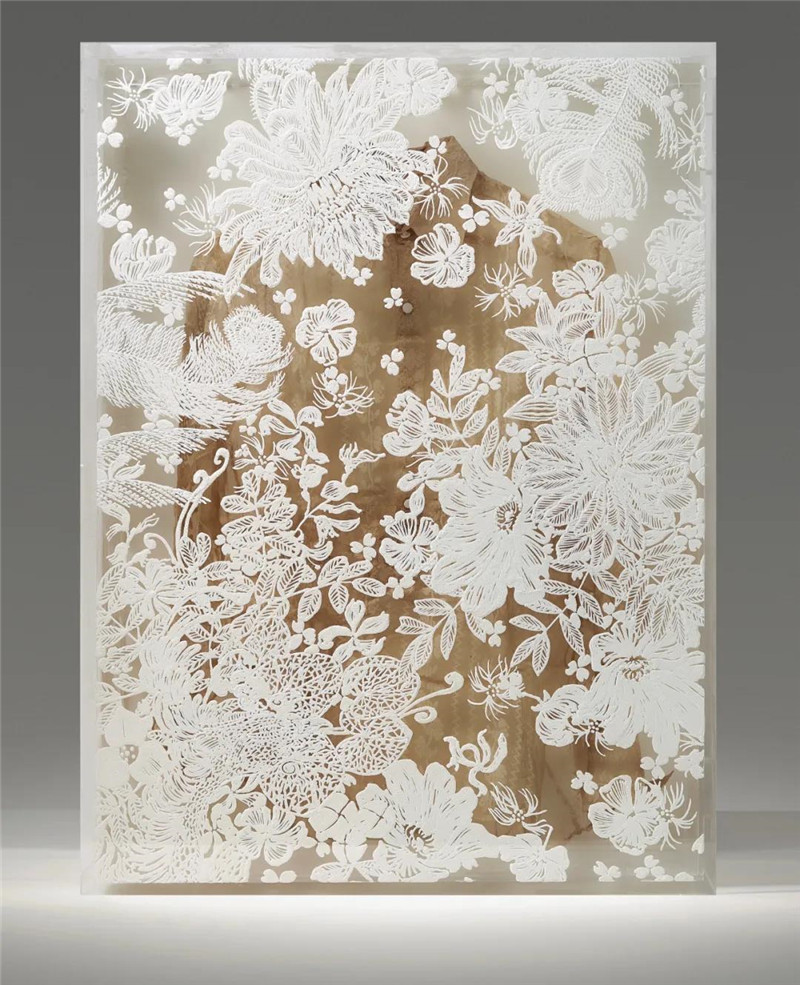
Echoes Crystallization - White Shirt by Shinji Ohmaki
Shinji Ohmaki, a new star of contemporary art, has made great achievements at the Art Basel and the Seto Inland Sea Art Festival in recent years. His works have been collected by 25 public institutions including Takamatsu City, Kumamoto City Museum of Modern Art, and National Taiwan Museum of Art. Echoes Crystallization - White Shirt, which was first shown at the auction, is the only five rare works of similar form. The work seals the Philippine traditional Baron shirt with an acrylic cover, and paints white flowers with toner and correction fluid outside, so that the traditional stitching pattern and modern color material overlap, telling the value of the treasured civilization and history, and making the beauty of nature Reborn in poetic art.
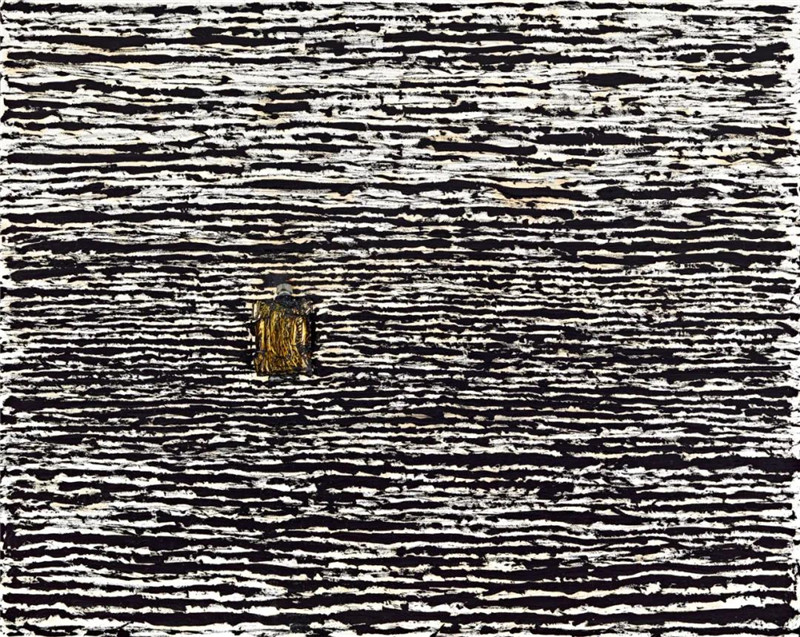
Pen Walking #92 by Shi Jin-Hua
Shi Jinhua, a performance artist from Taiwan, closely integrates artistic creation with life thinking and physical experience. Through the creative method of the pen, the concept of "a pen is a metaphor for a person's life" is deeply rooted in the hearts of the people. He has won the first prize of the "Taipei Art Award" and "Kaohsiung Award". In recent years, he has successively held exhibitions in Kaohsiung Museum of Art, Shanghai Mingyuan Art Museum and other places. "Pen Walking #92" is the artist's oil painting trial instead of the pencil in recent years. It records the trajectory of time through the paint-like path of life fluctuations, and at the end it cuts the paint tin tube and puts it in the center, such as using the body as a sign of the end to create a spiritual life picture.
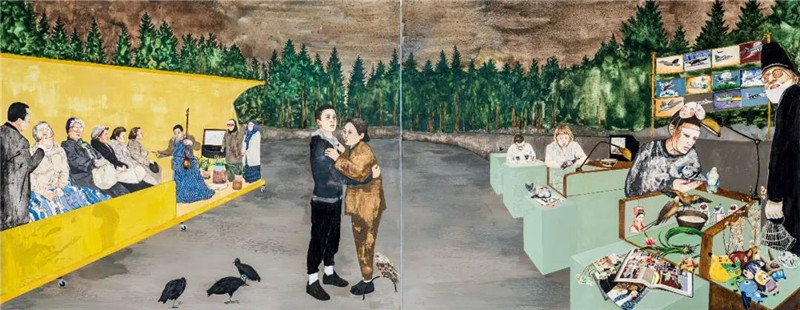
Days in the Wilderness by Maya Hewitt
The perfect combination of Oriental elements and Western art history constitutes an international art vocabulary with distinctive Maya style and natural beauty. Her works have been collected by the "me Collector Room" foundation in Berlin and won the Tokyo Wonder Site in 2009 and 2014 respectively, as well as the village-based artists' projects in Luzhu village, Miaoli, Taiwan. Days in the Wilderness, which was first presented in Asia auctions, use a huge 2-meter-long double panel to build a surreal field full of technology and a sense of the future, showing the life situation of individuals in the racing era. It also depicts the characters and objects with oriental style and exquisite realistic brushwork and injects life-related memories and insights, showing the life aesthetics of emotional intersection in a discrete space like a dream.
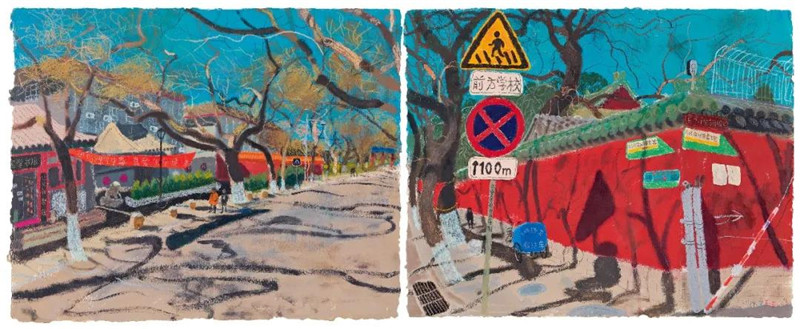
The Imperial College by Wang Yuping
As an important representative of Chinese "New Expressionism" painting from the 1980s to 1990s, Wang Yuping recorded the city of life in the way of sketching, and showed the gentle colors in his childhood memory through the symbolic pure coloring. The work The Imperial College is the representative of his series of "painting Beijing". This double works with a continuous picture that tells the city atmosphere of the Imperial College Street in the early spring. With the consistent use of bright colors and flat shapes, it gives the scene of sketching a beautiful taste of time recollection, and presents the ancient and modern style and warmth of Beijing with real scenes. His works have been shown in important exhibitions such as the Venice Biennale and the Chinese Oil Painting Exhibition, and have been collected by the National Art Museum of China and the Kaohsiung Mountain Art Museum.