The First Element of Russian Impressionism: Korovin's Gorgeous Colors

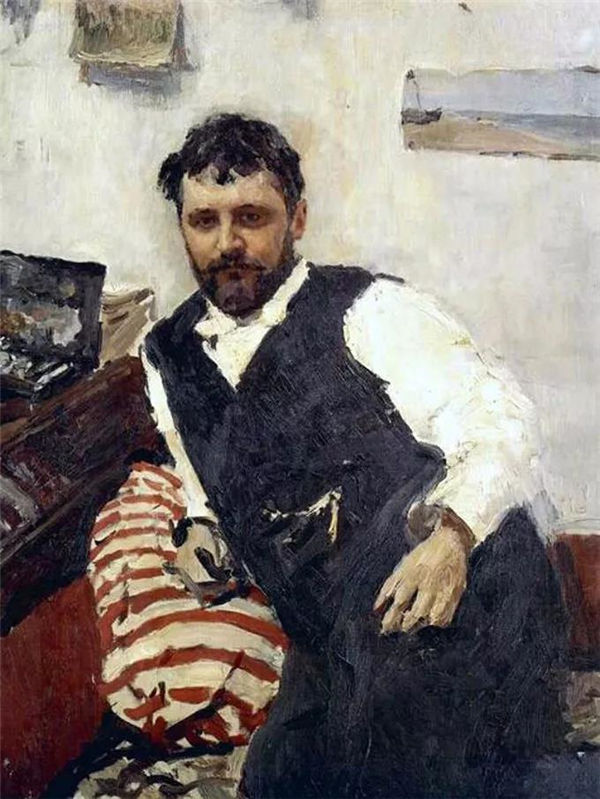
Korovin is Russia's leading impressionist painter, and his name is closely related to Russian Impressionism. This art genre was born in France and was widely spread throughout Europe in the last 25 years of the 19th century.
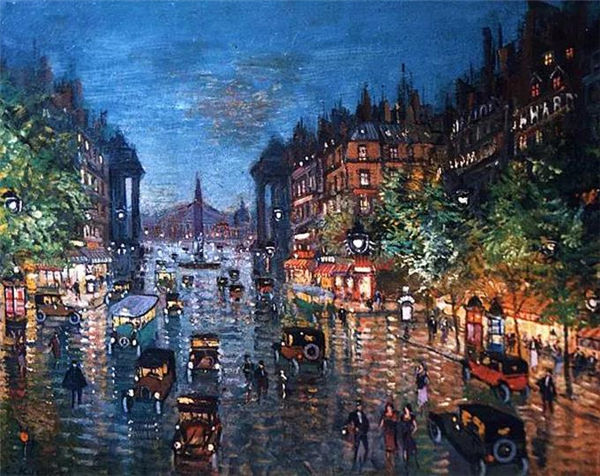
Korovin was born in a merchant family as "peasants of Vladimir Siberian" in Moscow. His father Aleksey Mikhailovich Korovin received a university degree and inherited the family business established by Korovin's grandfather. Korovin's older brother, Sergeor Korovin, is a notable realist painter.
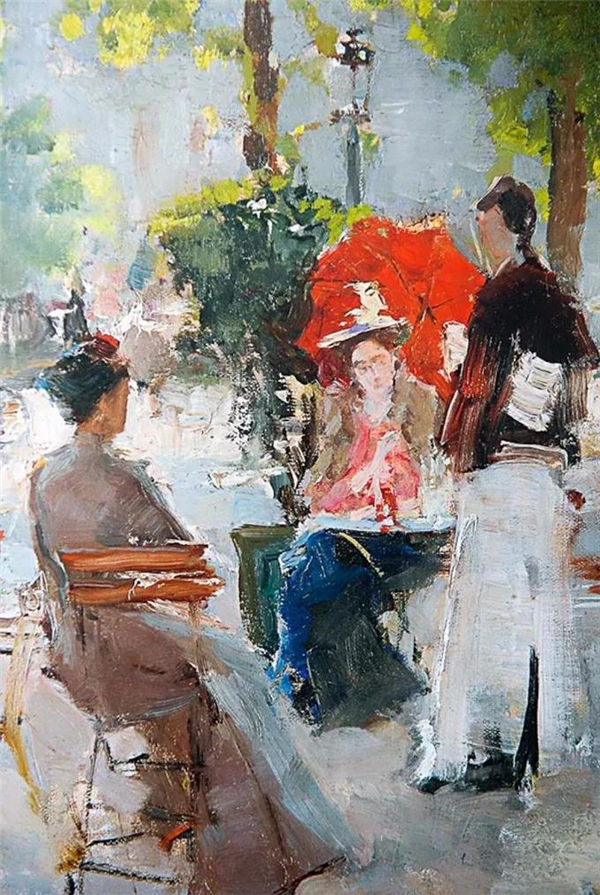
In 1875, Korovin entered the Moscow Academy of Architecture and Art to study painting, and studied with Vasily Perov and Alexei Safrasov. At that time, his brother Sergey was already a student in this school. When Korovin was a student, he became friends with classmates Valentin Serov and Isaac Levitan, and maintained their friendship throughout their lives.
In 1885, Korovin went to Paris and Spain. "Paris was shocking to me...Impressionists...with them, I learned everything that I could not learn in Moscow," he later wrote.
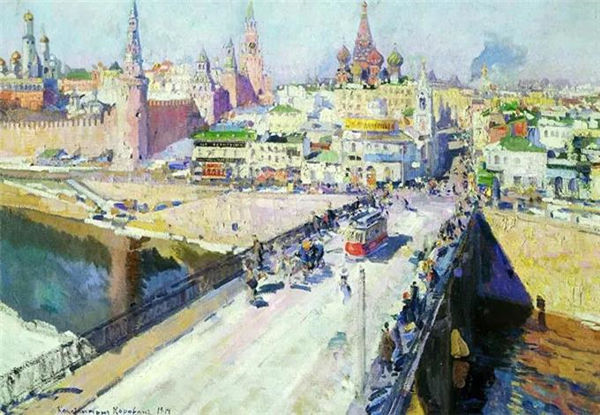
Light and color became the "protagonists" of Impressionist paintings, represented by Monet, Sisley, Van Gogh, Renoir and others.
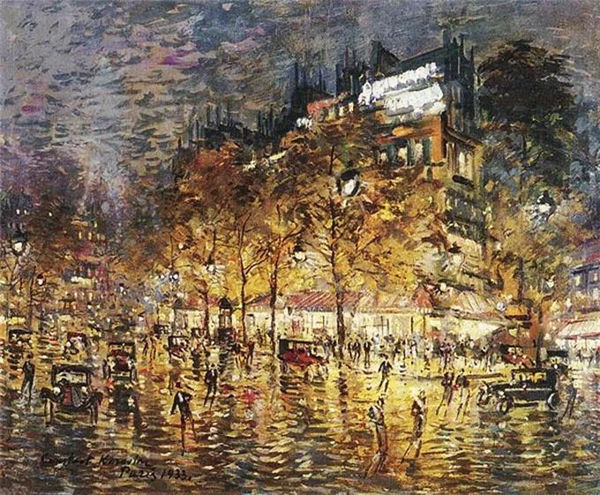
During World War I, Korovin served as a disguise consultant in the Russian army. Prior to this, he had been working in theaters in 1900, having served as stage manager at the Bolshoi Theater, Mariinsky Theater, and Milan La Scala.
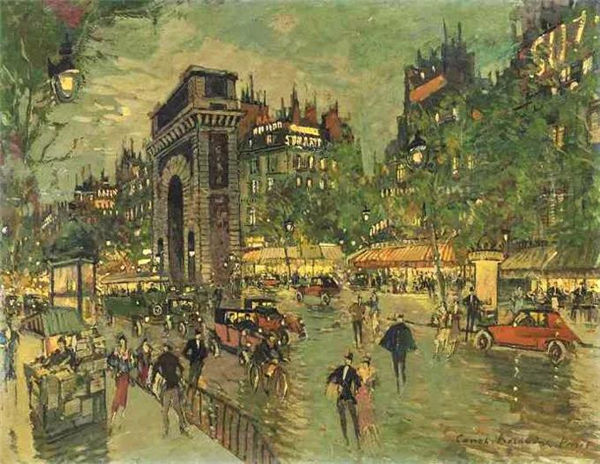
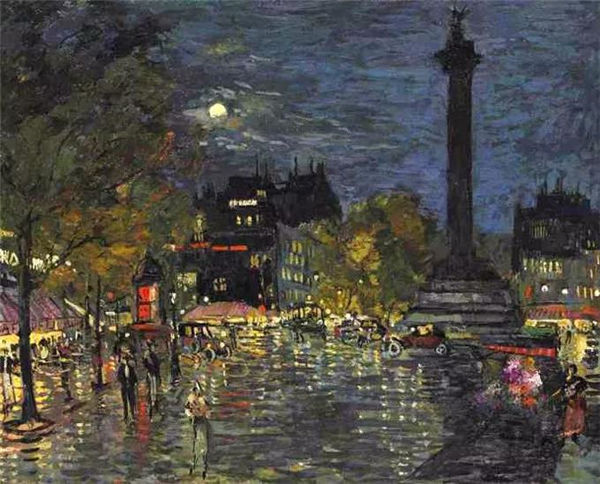
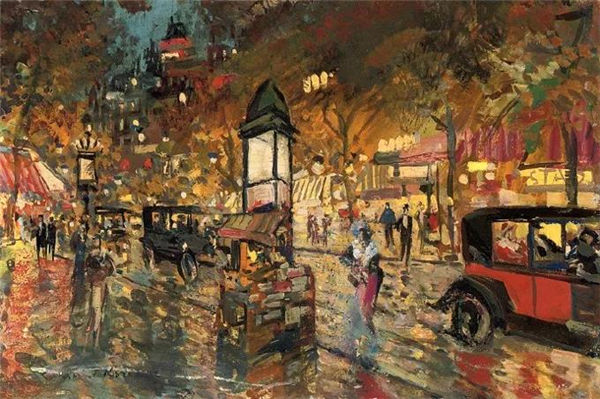
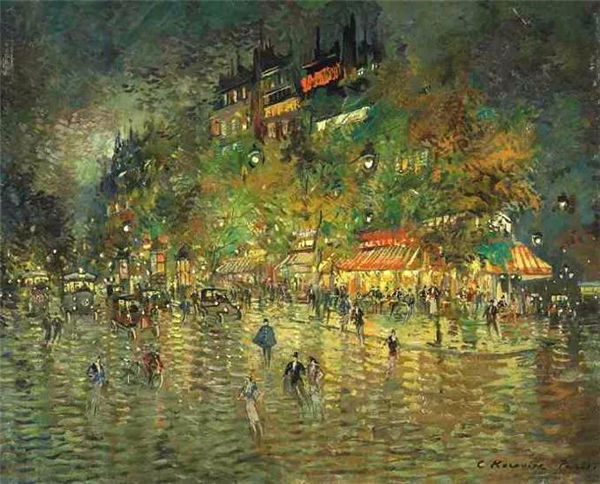
He has traveled to the Caucasus, Ukraine, Spain and France. Paris has always been a very special place, which has had a profound influence on Korovin's artistic creation. On September 11, 1939, Korovin died in Paris, France.
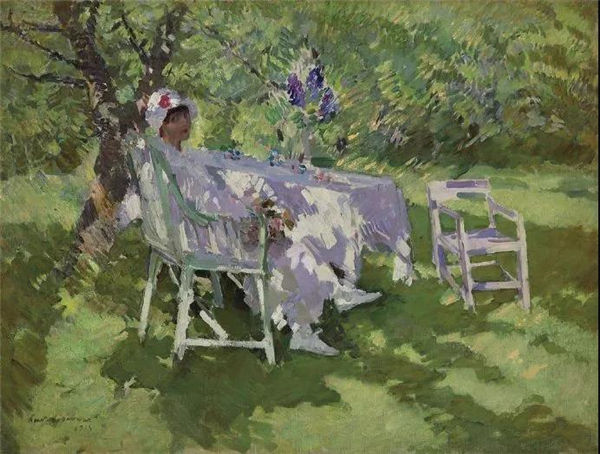
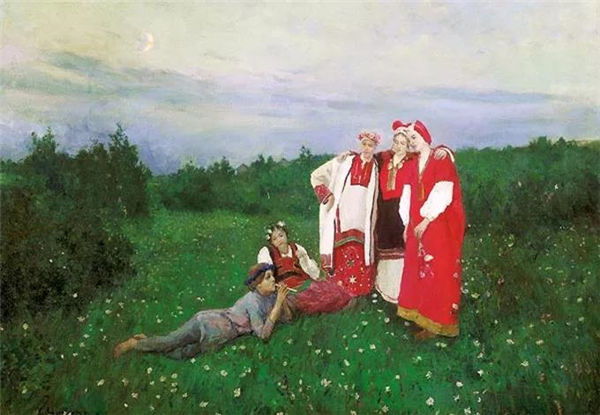
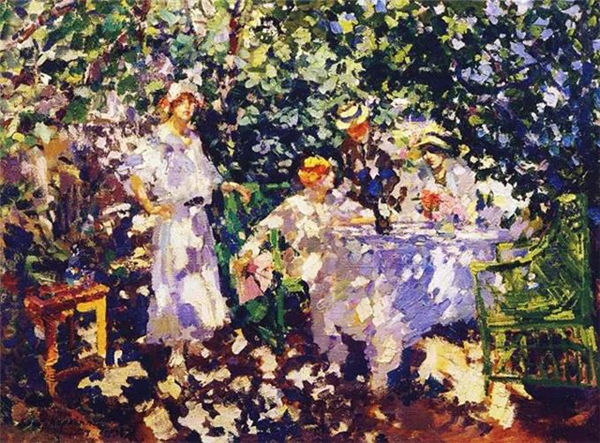
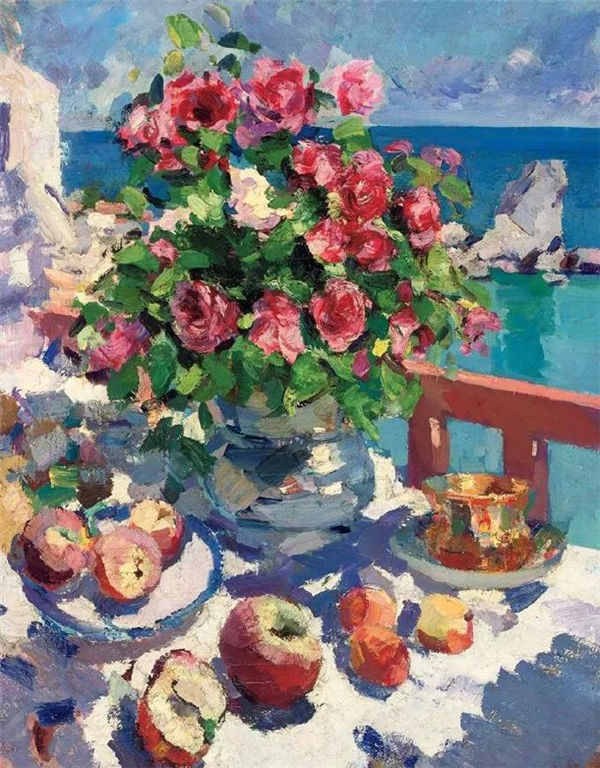
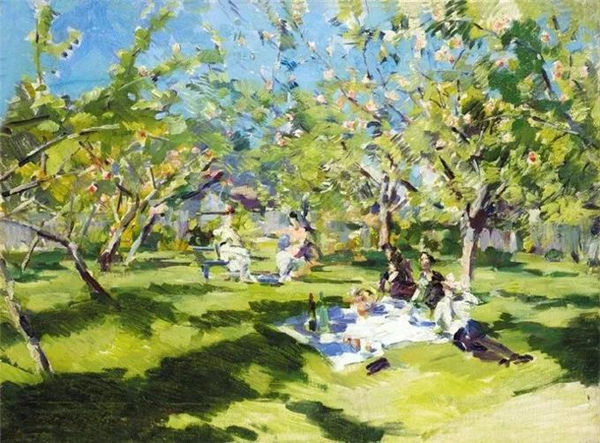
This work is in sharp contrast to the gloomy landscape created by the dark Northern Expedition of Norway and Russia in the beginning of this century. It is the white lady sitting in the garden, which is the color and light of his mature works. Since 1915, when the work was painted, he rejected his more monotonous palette and adopted a bolder spectrum. He felt that only such creation could express "the breath of nature".
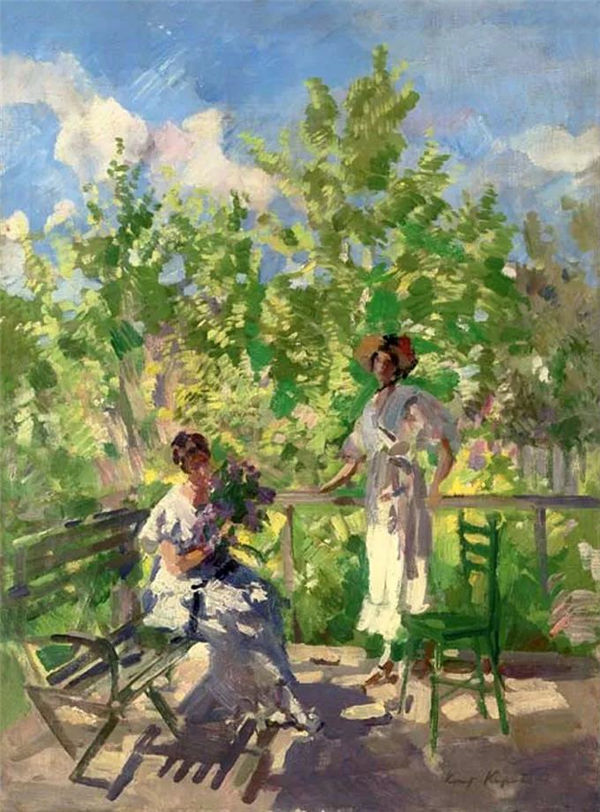
Korovin further experimented with the interaction between color and light of a white lady sitting in a garden. The central figure dressed in white lights up the composition and inspires the apple green hue on the surrounding trees and lawns. The white on the tablecloth and the contrast texture in the leaves of the trees cleverly use to further enhance the effect. These abbreviations can also be seen in Corwin's "terrace" in 1916, in which Corwin used similar elements to create the brilliance of natural sunlight.
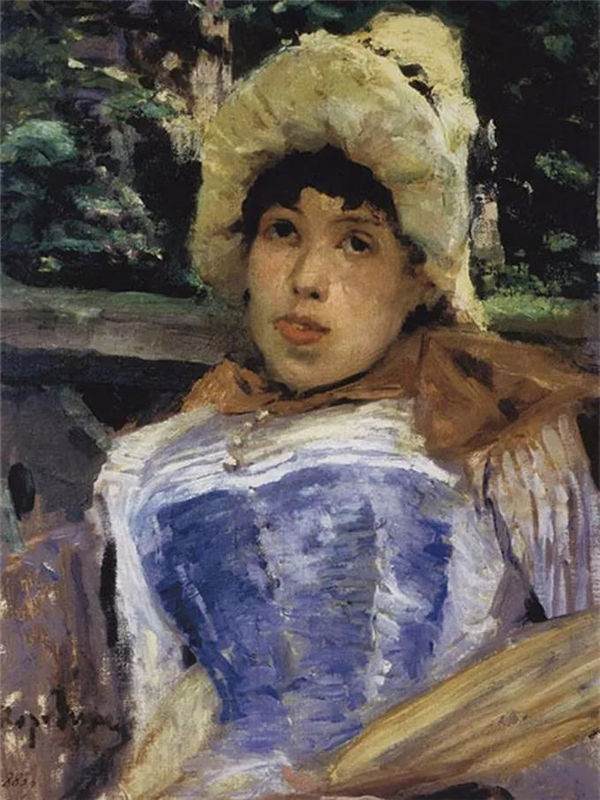
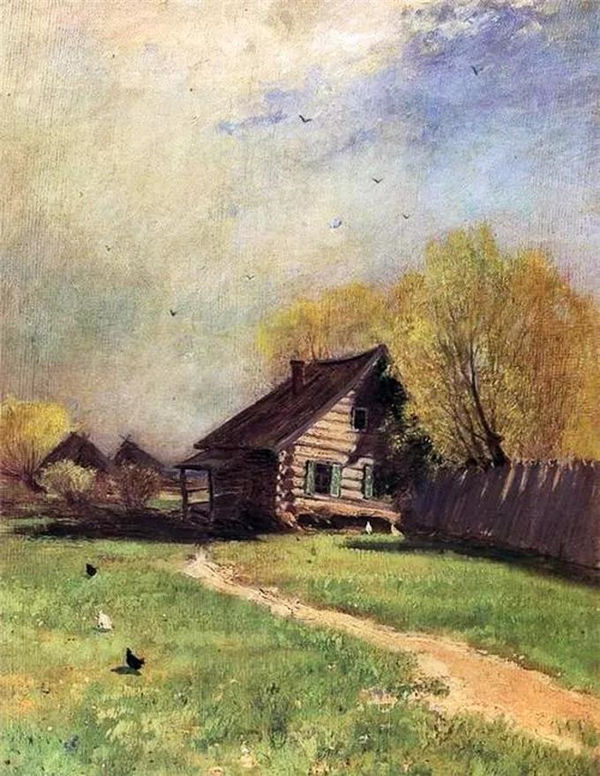
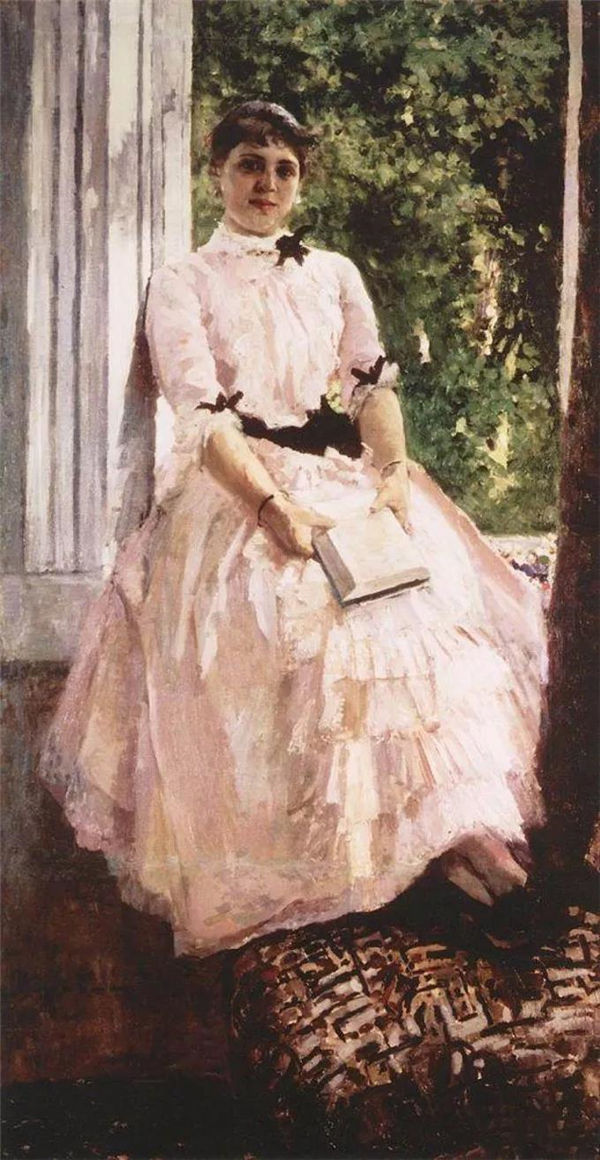
Impressionist painters often work outdoors. Therefore, their works are full of unprecedented freshness and pure colors. These paintings reflect a reflection on self-consciousness and ordinary life. This randomness does not follow the general rules of composition. "Portrait of a Choir Girl" (1883) is considered to be the earliest Russian impressionist work.