
What's the Difference between Minimalism and Maximalism?


Frank Stella
Born in Massachusetts in 1936, Frank Stella entered the Phillips Academy in Andover to study art at the age of 14, and then went to Princeton University to study history after graduation. After setting up a personal studio in New York, his simple geometric paintings made him the leader of the minimalist abstract art movement in the 1960s and one of the first painters to use three-dimensional canvas. He was awarded the Julio Gonzalez Award (Lifetime Artistic Achievement Award) in 2009.
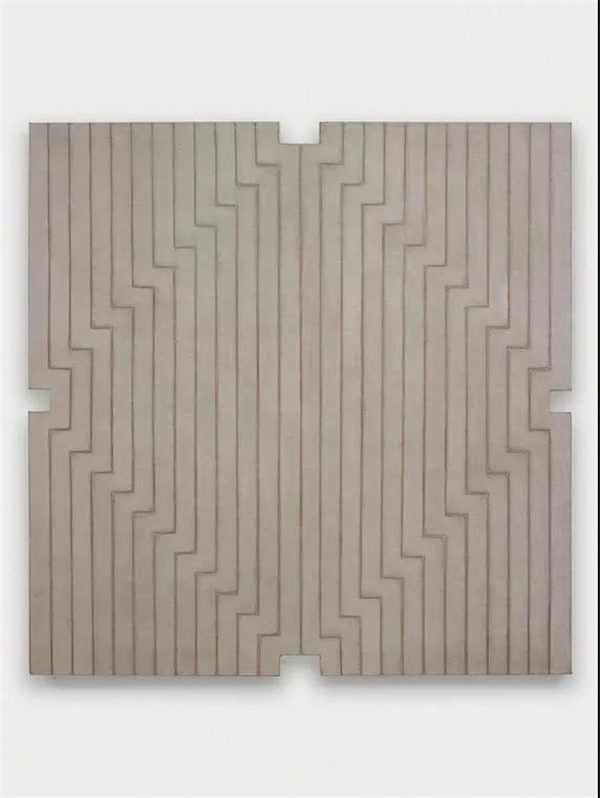
Averroes, 1960 Aluminum paint on canvas 116.4 × 227 cm
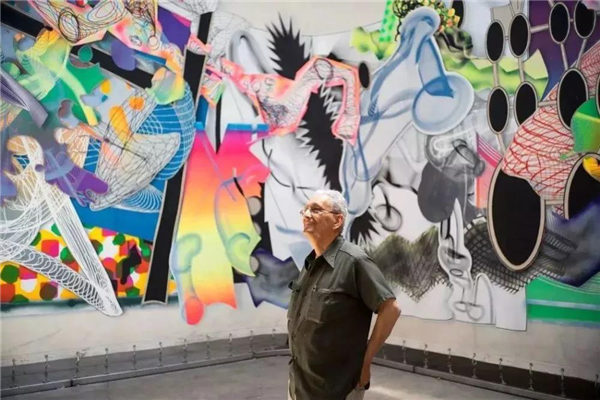
Frank Stella and his work《The Michael Kohlhaas Curtain》
In November 2017, the new exhibition "Experiment and Change" by Frank Stella, a representative of post-war abstract art, opened at the NSU Art Museum in Florida. The exhibition showed nearly 300 paintings and sculptures spanning 60 years of his career, "Many of these works have not been exhibited before and will not be exhibited again, because they are my collection - sorry, they are my wife's collection. "The artist told me.
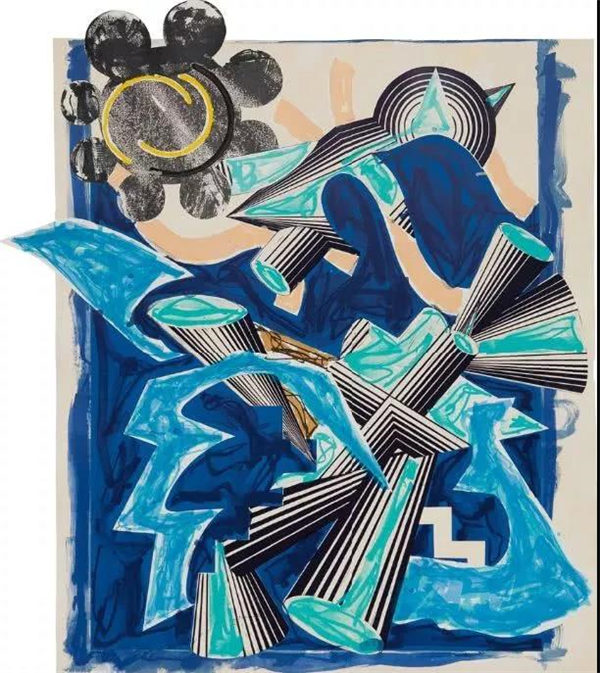
Had Gadya: Back Cover, from Illustrations After El Lissitzky\\\\'s Had Gadya, 1982-84
Frank Stella is 81 years old. His works can be found in the modern and contemporary collections of almost any major art museum in the United States. In the minimalism movement of the 1960s, Stella pioneered "Black Paintings", and then from three-dimensional canvas to the combination of collage and relief painting, from minimalism to maximalism... His exploration and practice in the past six decades is just a microcosm of art in the changing times.
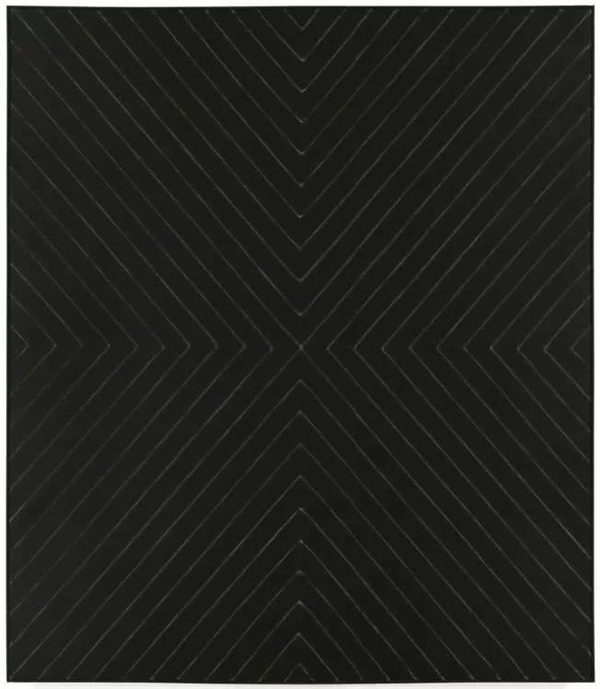
Zambezi, 1959 Enamel paint on canvas 230.5 × 200 cm
Stella became famous very early. In 1959, just one year after graduating from the Department of History of Princeton University, he was selected for the group exhibition "Sixteen American" at the Museum of Modern Art (MoMA) in New York with his work "The Marriage of Reason and Squalor II". This exhibition is regarded as one of the beginnings of the American minimalism movement in the 1960s. While the bold creation is controversial, it also gains the affirmation of many art critics: "there is no doubt that they are 'Innovating', and the old form can no longer carry their ideas."
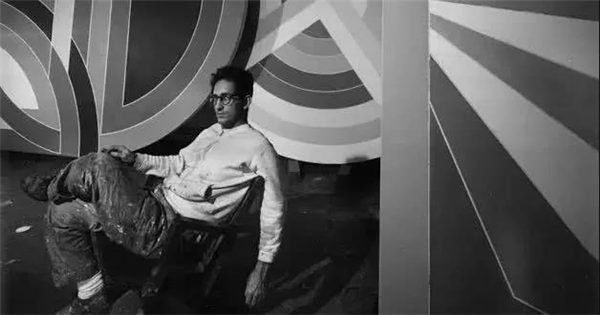
Young Frank Stella
Stella's paintings were included in the permanent collection of MoMA after the exhibition. His pioneering work was distinctive and powerful: on the large canvas with symmetrical composition, ordinary household painting brushes and enamel were used, and black with the width of brush was spread parallel on the background, leaving the space between the original color lines of the canvas. He rejected the expressiveness of brush strokes, but emphasized the recognition of canvas as an integrated structure of two-dimensional plane and three-dimensional objects. This technique is reminiscent of the way of factory work with the pure structure and abstract visual expression. A few years later, he uttered the famous saying in a radio interview, "what you see is what you see", which became the most famous footnotes of his own works and the whole minimalist movement. The "Benjamin Moore" series, which was created in 1961, was fully collected by Andy Warhol. This set of simple monochromatic square paintings directly inspired Warhol's Pop series.
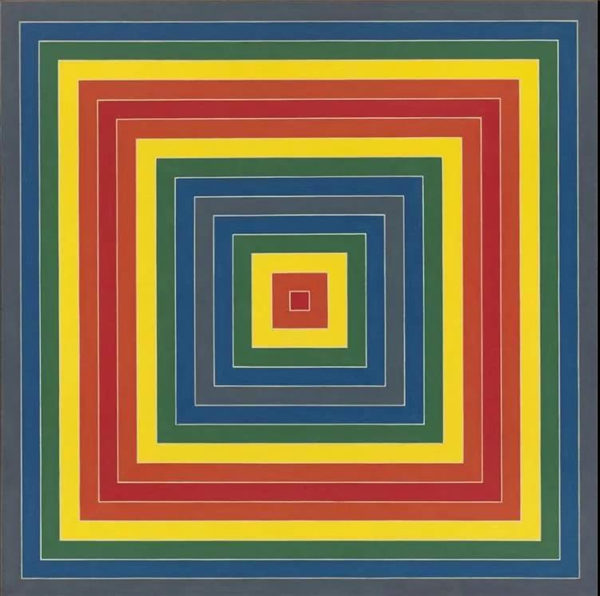
Gran Cairo, 1962 Alkyd on canvas 217.3 × 217.3 cm
Stella, who had a profound influence on the latecomers, also talked about the influence he received from the classical masters. He grew up with modernism and studied 20th-century painting at school, from Manet in the 1860s to his own fame in the 1960s. Stella said that "the past is real", but "what is real" is a problem for everyone, and there are many problems with the translation of the word "real" into art.
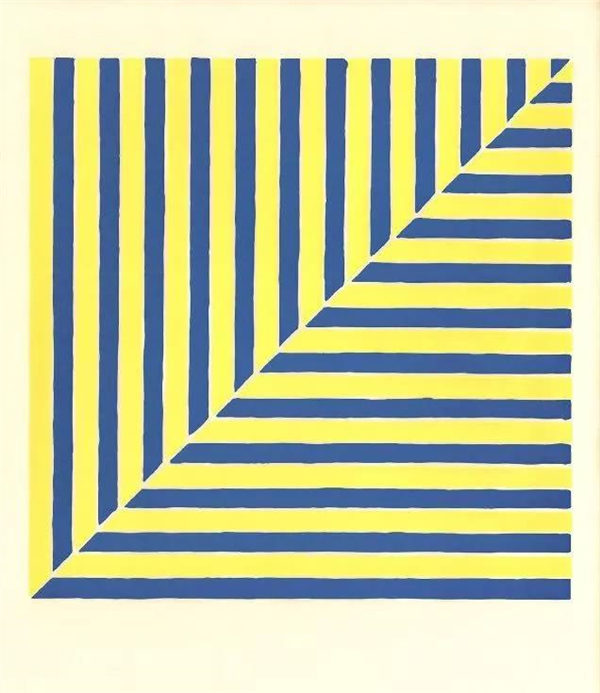
Untitled (Rabat) (From Ten Works by Ten Painters), 1964 61 × 50.8 cm
Stella, who became famous at the age of 23 and ushered in his first personal retrospective at the age of 34, has always practiced at the forefront of art. The series "Polish village", which started in 1971, has irregular geometry and bright colors. It refers to the Polish synagogue destroyed in Hitler's period. From this series, Stella experimented with computer-aided composition and Sketchpad cutting. Three years later, he used the "Brazilian" series to visually emphasize the trace of approaching to the hand. Blank space and brush strokes can be seen everywhere, but in fact, this is the opposite of the artist's personal work. It is the first time that he has completely used metal materials and outsourced it to a factory.
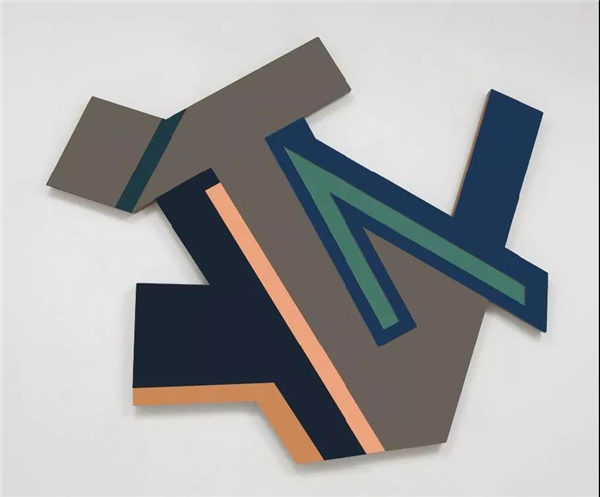
Jablonow, 1972 Mixed media on canvas 248.9 × 294.6 cm
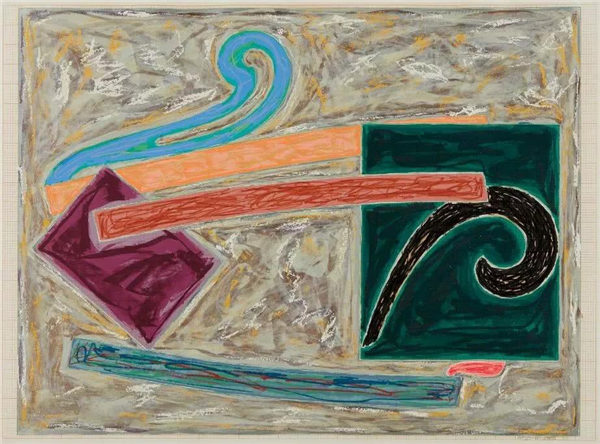
Inaccessible Island Rail, 1977
At the end of the 1970s, starting from "Exotic Bird", he no longer used the simple square or geometric abstraction of the early years. He felt the natural flexibility through bird observation and made extensive use of metal and multi-material relief painting forms to express rich curves, and gradually transited to "maximalism". By the early 1990s, Stella's canvases were extended to the facades of urban buildings, and his expressive visual style was magnified in frescoes, such as "Dusk" for the Pacific Bell Building in Los Angeles. At the same time, Stella began to use 3D drawing programs to create image renderings and thus turned more to sculpture.
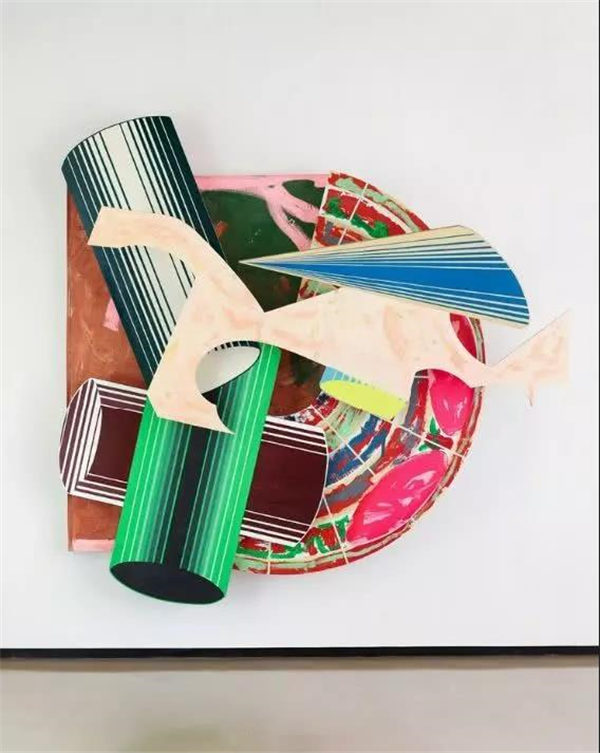
La Scienza della Fiacca
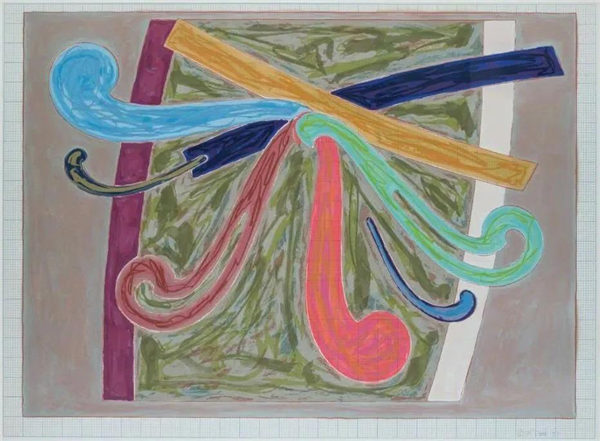
Puerto Rican Blue Pigeon (from Exotic Bird Series), 1977
Stella is not an art star in the general sense. He was called "the sculptor's painter" by the sculptor John Chamberlain, and was also dubbed "high-I.Q.art" by the New York Times. In his paintings and sculptures, he often refers to music, literature and philosophy, and injects intriguing connotations into abstract works. For example, the "Diderot" series in 1974 was named after an 18th-century French philosopher; the "Scarlatti" series in 2006, each piece of work was named after the 18th-century keyboard sonata by the Italian musician.
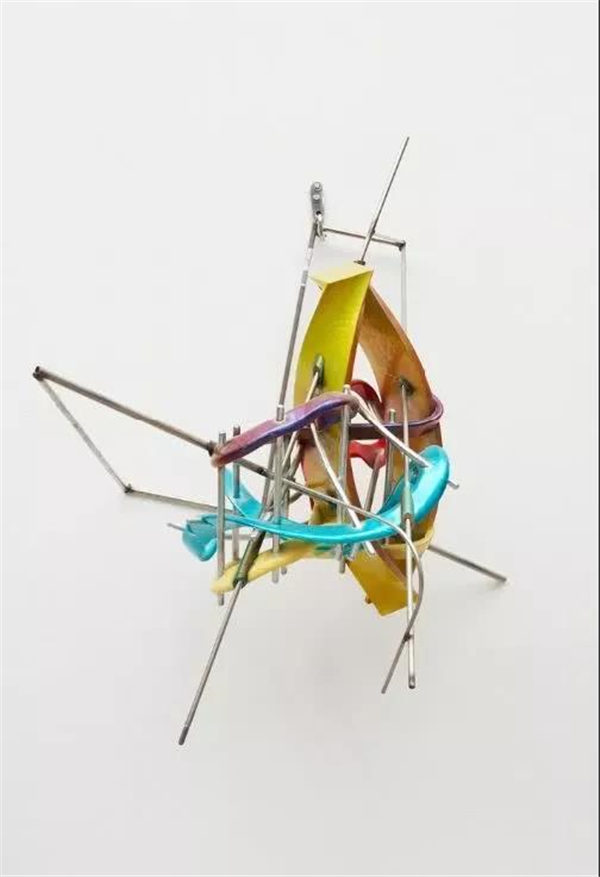
Bow Ties with Ribbons, 2016
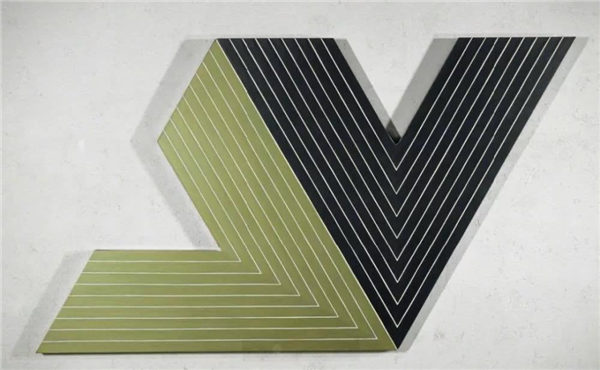
Ifafa II, 1964 Metallic powder and acrylic on canvas 197 × 331.5 × 7.5 cm
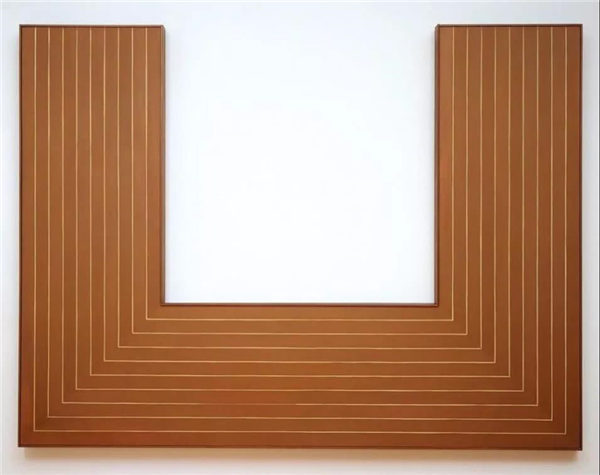
Lake City (Second Version)
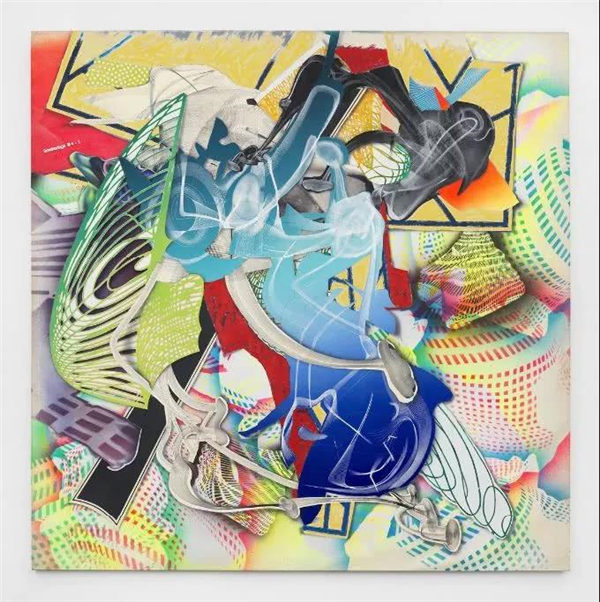
Cantahar, 1998 Acrylic on canvas
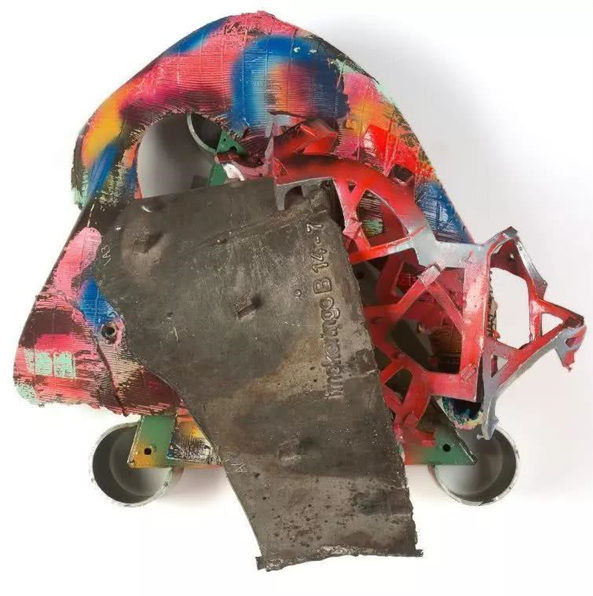
Anecdote from the Recent War, 1999
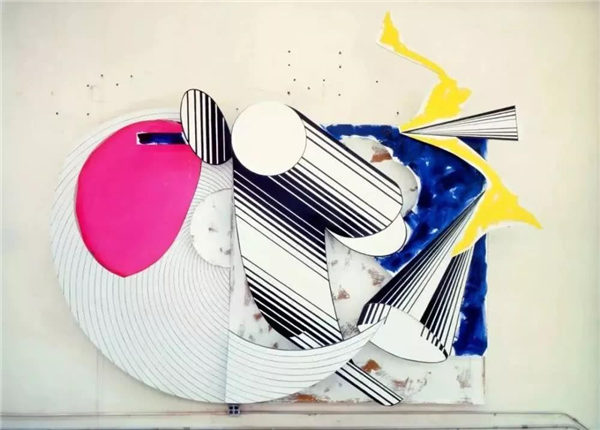
Diavolozoppo,#2,4x,1984
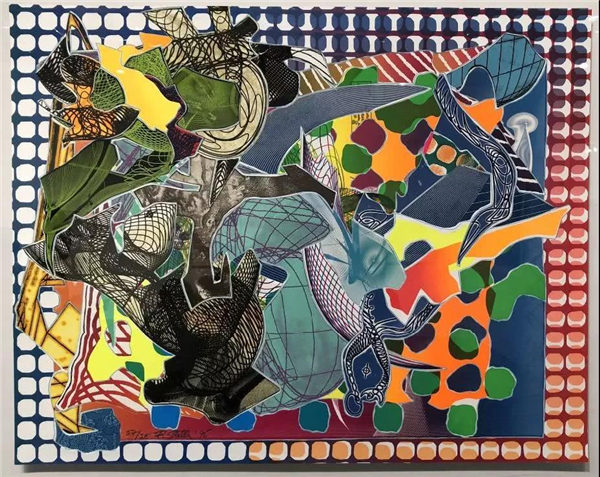
East Euralia, from Imaginary Places, 1995